Large households put more demand on a water filter, so capacity, flow rate, contaminant coverage, and replacement costs matter as much as taste. The best under-sink water filters for large homes can deliver cleaner drinking and cooking water without taking up the space of a whole-house system.
This roundup compares high-capacity carbon, ultrafiltration, and reverse osmosis systems, including models designed for long service intervals and higher daily usage. Use the buying guide below to match filtration performance and installation requirements to your water source and household size.
Best 10 Under Sink Water Filters for Large Homes Picks for 2026
Long-Life Value Pick

- Five-year advertised filter life
- Three-stage inline filtration
- No-drill installation; does not reduce TDS
Best For: Large households seeking low-maintenance faucet filtration
Compact UF System
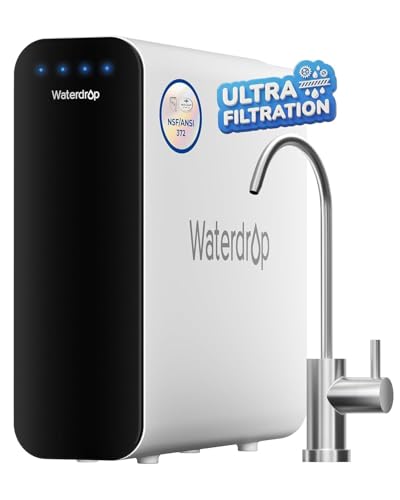
- 0.01-micron three-stage ultrafiltration
- 1.05 GPM maximum flow with no wastewater
- Smart filter reminder; requires faucet drilling
Best For: Municipal-water homes needing compact, mineral-retaining filtration
Maximum Reduction Choice

- 75 GPD, six-stage reverse osmosis
- Reduces TDS by 93–98%
- NSF/ANSI 58 certified with alkaline remineralization
Best For: Homes prioritizing broad contaminant and TDS reduction
Fast Direct-Connect Pick

- Up to 19,000 gallons or 24 months
- Installs in under three minutes
- NSF/ANSI 42 and 372 certified; retains minerals
Best For: Municipal-water homes wanting quick, high-capacity filtration
Best Certified Filtration

- IAPMO-certified against NSF/ANSI 42 and 53
- 0.5-micron, eight-layer filtration
- 2.5 GPM maximum flow
Best For: Homes prioritizing certified contaminant reduction while keeping beneficial minerals
Best High-Capacity Option

- 40,000-gallon stated capacity
- 2.5 GPM tested full flow rate
- Direct-connect installation
Best For: Large municipal-water households wanting infrequent filter changes
Best Budget-Friendly Choice

- Low-cost replacement filters
- Three-minute installation and quick changes
- NSF/ANSI 42 certified
Best For: Municipal-water households seeking affordable, compact filtration
High-Capacity Classic
iSpring US31 3-Stage Under-Sink Filter

- 10,000-gallon capacity and up to 12-month filter life
- Three-stage filtration targets chlorine, sediment, and odors
- Includes a dedicated faucet and visible first-stage housing
Best For: Large households wanting a durable, traditional filter with a separate faucet
Long-Life Direct Connect
PUREPLUS 22,000-Gallon Under-Sink Filter

- 22,000-gallon capacity with a stated five-year filter life
- 2.5 GPM rated flow for high-demand kitchen use
- Direct-connect design targets chlorine, metals, sediment, and odors
Best For: Large households seeking fewer filter changes and a fast direct-connect setup
Deep-Reduction Choice
Waterdrop TSA 8-Layer Under-Sink Filter

- Eight-stage filtration targets PFAS, fluoride, chlorine, and sediment
- Up to 1.5 GPM flow with filter life up to 18 months
- Push-to-connect design fits 3/8-inch and 1/2-inch cold-water tubes
Best For: Municipal-water households wanting broad filtration without a separate faucet
Long-Life Value Pick – CuZn UC-200
For large homes that want dependable drinking-water improvement without frequent filter changes, the CuZn UC-200 is a practical option among under sink water filters for large homes. Its inline design connects directly to a cold-water faucet without drilling, while the three-stage media targets chlorine, lead, PFAS, PFOA/PFOS, sediment, and taste concerns.
Best For: Households prioritizing a long filter life, simple installation, and mineral-retaining filtration.
Pros:
- Advertised five-year filtration life can reduce replacement frequency.
- Three-stage filtration uses sediment membranes, KDF-55, and coconut-shell carbon.
- Includes installation parts and requires no drilling for the inline connection.
- NSF/ANSI 42-certified components and materials; designed to retain beneficial minerals.
Cons:
- Does not reduce TDS.
- Direct-connect design filters the connected faucet rather than the entire home.
The UC-200 stands out when low maintenance matters more than maximum contaminant reduction. It is especially appealing for a busy, high-use kitchen, provided you do not need reverse-osmosis-style TDS reduction.
Compact UF System – Waterdrop TSU
The Waterdrop TSU is a space-conscious choice for large homes with steady municipal-water demand and limited cabinet room. Its 0.01-micron ultrafiltration membrane, three-stage design, and 1.05 GPM maximum flow are aimed at improving taste and reducing chlorine, PFAS, odor, and heavy metals without wastewater or a power connection.
Best For: Municipal-water households wanting a compact, high-flow system with a filter-life reminder.
Pros:
- 0.01-micron ultrafiltration system reduces 30-plus substances while retaining minerals.
- Compact dimensions suit crowded cabinets, including spaces with a large disposal.
- Smart panel provides filter-change reminders.
- Includes a brushed-nickel faucet and supports 1/2-inch and 3/8-inch connections.
Cons:
- Requires countertop drilling for the included faucet.
- Does not reduce TDS.
- Designed for municipal cold water, not hot water or well water.
The TSU balances capacity, cabinet efficiency, and convenient maintenance. Its separate faucet and drilling requirement are the main trade-offs, but the long UF filter interval and no-waste operation can suit a high-use household.
Maximum Reduction Choice – iSpring RCC7AK-BN
For large homes where broad contaminant reduction and lower TDS are priorities, the iSpring RCC7AK-BN offers a more comprehensive under-sink approach than basic carbon or ultrafiltration units. This six-stage, 75 GPD reverse-osmosis system is NSF/ANSI 58 certified for the full system and adds an alkaline remineralization stage for a more balanced taste.
Best For: Households seeking reverse-osmosis filtration, substantial TDS reduction, and remineralized drinking water.
Pros:
- Six-stage RO system reduces TDS by 93–98% and targets PFAS, lead, fluoride, chlorine, and numerous other contaminants.
- NSF/ANSI 58 certification applies to the entire filtration system.
- Alkaline stage adds minerals and supports a balanced pH.
- Top-mounted faucet fastener and quick fittings simplify installation from above the counter.
Cons:
- Replacement filters have different service intervals, from six months to three years.
- RO systems generally involve more components and maintenance than direct-connect filters.
- Supplied notes do not specify the system’s wastewater ratio or storage-tank capacity.
The RCC7AK-BN is the strongest fit here for shoppers who specifically want RO-level reduction rather than simply better taste. Its transparent first-stage housing, replacement-filter options, and lifetime technical support add practical ownership advantages.
Fast Direct-Connect Pick – Waterdrop 15UA
The Waterdrop 15UA is designed for large households that want a straightforward faucet-connected filter with a generous rated capacity. It connects to common cold-water lines in under three minutes, delivers a tested 0.75 GPM flow rate, and targets chlorine, lead, PFAS, PFOA/PFOS, heavy metals, sediment, taste, and odor.
Best For: Municipal-water users wanting quick installation, high capacity, and mineral-retaining filtration.
Pros:
- Rated for up to 19,000 gallons and a maximum service life of 24 months with municipal water.
- Push-to-connect installation requires no professional plumber and includes adapters for 3/8-inch and 1/2-inch lines.
- NSF/ANSI 42 and 372 certifications cover taste, odor, and lead-free materials; lead reduction is also third-party tested against NSF/ANSI 53.
- Large filtration area is designed to improve dirt adhesion and reduce clogging risk.
Cons:
- Suitable for municipal cold water, not hot water or well water.
- Does not reduce TDS or remove beneficial dissolved minerals.
- Replacement filter life depends on water conditions and household use.
The 15UA is a compelling everyday choice when installation speed and long service life matter. It is less suitable for homes needing TDS reduction, but its direct-connect format keeps the setup compact and maintenance simple.
Best Certified Filtration – Frizzlife SK99
For large homes seeking under sink water filters for large homes, the Frizzlife SK99 combines certified filtration, a 0.5-micron rating, and a compact under-counter design. Its 2.5 GPM maximum flow rate can support everyday drinking and cooking needs, while an optional ice-maker kit can extend service to a refrigerator.
Best For: Households wanting certified reduction of lead, chlorine, particulates, taste, and odor while retaining dissolved minerals.
Pros:
- IAPMO-certified against NSF/ANSI 42 and 53, with NSF/ANSI 372 material certification noted.
- Eight-layer, 0.5-micron filtration is designed to reduce lead, chlorine, PFAS-related compounds, chloramine, taste, odor, and particulates.
- Twist-in filter changes and stated under-15-minute DIY installation simplify maintenance.
- Replaceable filter cores reduce the need to discard the full housing.
Cons:
- The system does not reduce TDS, so it is not a reverse-osmosis replacement.
- The compact cabinet footprint still requires about 14.5 inches of length and 14.1 inches of height.
- The capacity claim is based on manufacturer internal testing.
The SK99 is a strong choice when certification breadth and contaminant-focused filtration matter more than TDS reduction. Confirm cabinet clearance and replacement-filter availability before buying.
Best High-Capacity Option – ICEPURE WFS5300A
The ICEPURE WFS5300A stands out among under sink water filters for large homes with its stated 40,000-gallon capacity and five-year replacement interval when used with municipal water. Its direct-connect design and 2.5 GPM tested flow rate are suited to households that want high-volume chlorine and odor reduction without adding a separate faucet.
Best For: Large municipal-water households looking for long filter life, high flow, and direct connection to an existing faucet.
Pros:
- NSF/ANSI 42 and NSF/ANSI/CAN 372 certified, with claims covering chlorine, odor, sediments, rust, impurities, and lead-free materials.
- Stated 40,000-gallon capacity and up to five-year service life can reduce replacement frequency.
- Plug-and-play installation and approximately two-second filter changes are convenient.
- Tested full flow rate is 2.5 GPM at 60 PSI.
Cons:
- The 21.1-inch height may not fit under every sink cabinet.
- It is intended for cold municipal water and does not suit hot water or well-water applications.
- Connection compatibility should be checked for 1/2-inch or 3/8-inch female NPT fittings.
For a busy household, the WFS5300A’s main advantage is reduced maintenance through its large stated capacity. Measure the cabinet carefully and verify the cold-water connection before ordering.
Best Budget-Friendly Choice – Waterdrop 10UA
For shoppers comparing under sink water filters for large homes on an ongoing budget, the Waterdrop 10UA offers a compact, direct-connect setup with a one-year maximum service life for municipal water. Its twist-and-lock design, low-cost replacement filter, and expanded filtration area make it practical for routine household use.
Best For: Households wanting an affordable, compact filter for municipal cold water, with simple replacement and flexible upgrade options.
Pros:
- NSF/ANSI 42 certified and designed to reduce PFAS, PFOA/PFOS, lead, chlorine, taste, and odor.
- Twist-and-lock construction supports installation in about three minutes and replacement in about three seconds.
- Replacement filters are listed at less than $25.99, and the system can be upgraded with UF or MZ filters.
- Its enlarged filtration area is intended to improve dirt adhesion and reduce clogging risk.
Cons:
- The tested full flow rate is 0.75 GPM at 60 PSI, lower than some higher-flow options.
- It is limited to cold municipal water and is not suitable for well water or hot water.
- The maximum service life is 12 months, so larger households may need more frequent replacements depending on use.
The 10UA is a sensible value pick when low replacement cost and easy installation are priorities. Its lower tested flow rate and one-year service limit make it less suited to exceptionally high-demand use than the ICEPURE model.
High-Capacity Classic – iSpring US31 3-Stage Under-Sink Filter
For large homes looking at under sink water filters for large homes, the iSpring US31 offers a familiar three-stage design, a separate faucet, and a 10,000-gallon rated capacity. Its reusable housings and standard-size cartridges make ongoing maintenance straightforward.
Best For: Households wanting a traditional, high-capacity system with its own faucet and visible first-stage housing.
Pros:
- 10,000-gallon capacity with a stated filter life of up to 12 months
- Three-stage PP, GAC, and CTO filtration reduces chlorine, sediment, odors, and unpleasant taste
- Separate brushed-nickel faucet, transparent first-stage housing, and above-counter faucet installation
- Rated flow of up to 1 GPM and includes a one-year manufacturer warranty
Cons:
- Does not reduce TDS or address scale; an RO system is recommended for those needs
- Requires cartridge replacement rather than a single quick-change filter
- Designed for cold-water use up to the listed 100°F upper temperature rating
The US31 is a practical choice when capacity, serviceability, and a dedicated drinking-water faucet matter more than compact quick-change convenience. It retains minerals while targeting common municipal-water concerns.
Long-Life Direct Connect – PUREPLUS 22,000-Gallon Under-Sink Filter
The PUREPLUS WFS5300A stands out among under sink water filters for large homes with its 22,000-gallon capacity and 2.5 GPM rated flow. It connects directly to a compatible existing faucet, helping avoid the footprint of a separate filtered-water tap.
Best For: Large families prioritizing extended filter life, high flow, and a compact direct-connect installation.
Pros:
- 22,000-gallon capacity with a stated five-year filter life
- Up to 2.5 GPM flow at 60 PSI for faster filling and kitchen use
- NSF/ANSI 42-certified filtration claims 99.99% chlorine reduction and targets heavy metals, sediment, and odors
- Quick-connect design and lead-free, BPA-free materials noted in the product information
Cons:
- Faucet compatibility should be checked; it is intended for 1/2-inch or 3/8-inch female NPT connections
- No separate faucet is included, so the existing faucet must be compatible
- Does not change TDS or remove dissolved solids
With its unusually large rated capacity and fast flow, this PUREPLUS system is designed to reduce replacement frequency in busy kitchens. Verify the faucet thread and cold-water connection before ordering.
Deep-Reduction Choice – Waterdrop TSA 8-Layer Under-Sink Filter
The Waterdrop TSA is a strong option among under sink water filters for large homes when broader contaminant reduction is a priority. Its three filters provide eight-stage filtration aimed at PFAS, PFOA/PFOS, fluoride, chlorine, sediment, rust, and cysts, with a rated flow of up to 1.5 GPM.
Best For: Municipal-water households seeking broader filtration and manageable cartridge replacement without adding a separate faucet.
Pros:
- Eight-stage filtration targets PFAS, PFOA/PFOS, fluoride, chlorine, sediment, rust, and cysts
- Filter lifespans range from six months to 12–18 months, depending on the cartridge
- Push-to-connect installation is designed for 3/8-inch and 1/2-inch cold-water tubes
- Reinforced construction and testing are described as addressing cracking, pressure, and leakage concerns
Cons:
- No faucet is included, and compatibility with existing faucet connections should be confirmed
- Maximum flow is 1.5 GPM, and deep filtration may flow more slowly than an untreated tap
- Not intended for hot water; well-water users are advised to add pre-filtration
The TSA favors filtration breadth over the highest possible flow. Its staged replacement schedule and direct-connect format can suit a large household, provided the existing faucet and cold-water plumbing are compatible.
How We Picked the Best Under Sink Water Filters for Large Homes
We focused on systems with enough capacity for frequent drinking, cooking, and beverage use in a busy household. The selection includes long-life direct-connect filters, multi-stage systems, ultrafiltration units, and reverse osmosis models. We also considered published NSF/ANSI certifications, stated contaminant-reduction claims, rated capacity, flow rate, installation style, filter-change frequency, and whether a dedicated faucet or drain connection is required.
Certification numbers should be read carefully: NSF/ANSI 42 generally addresses aesthetic contaminants such as chlorine and taste, while NSF/ANSI 53 covers certain health-related contaminants. NSF/ANSI 58 is the relevant standard for reverse osmosis systems. Always check the manufacturer’s performance data for the specific contaminant you want reduced.
Quick Comparison
| System type | Best for | Main trade-off |
|---|---|---|
| Direct-connect carbon | Simple installation and high capacity | Usually narrower contaminant coverage |
| Multi-stage carbon | Improved taste, odor, and broader filtration | More frequent filter changes or larger housings |
| Ultrafiltration | Fine particle filtration without a storage tank | Does not remove every dissolved mineral or salt |
| Reverse osmosis | Broad dissolved-contaminant reduction | Requires more space, a drain connection, and reject water |
Key Buying Factors for Under-Sink Water Filters for Large Homes
Capacity and Replacement Schedule
Compare rated gallons with your household’s actual usage rather than choosing solely by the longest advertised lifespan. A large family may use several gallons daily for drinking, cooking, coffee, and ice. Longer-life filters can reduce maintenance, but replacement costs and availability still affect ownership value.
Flow Rate and Pressure
A filter with a slow output can become frustrating when filling pots or pitchers. Check the rated gallons-per-minute figure and the minimum inlet pressure. Reverse osmosis systems commonly produce water more slowly than carbon or ultrafiltration systems, although tankless designs can save cabinet space.
Contaminant Goals
Start with a local water report or an independent test. Carbon filters are useful for chlorine, taste, and odor; some certified models address lead, PFAS, or other specified contaminants. Reverse osmosis is typically the stronger choice for many dissolved solids, fluoride, and broader purification needs, but it may also remove beneficial minerals.
Installation and Cabinet Space
Direct-connect models can use the existing faucet and usually need less equipment. Systems with a dedicated faucet, storage tank, drain saddle, or smart monitoring panel require more room and installation work. Measure the cabinet, shutoff valve, and available power before ordering.
Who Should Buy Which Under Sink Water Filters for Large Homes?
- Choose a long-life direct-connect model if your priority is high capacity, minimal maintenance, and fast installation.
- Choose a multi-stage carbon system for better taste and odor control when your municipal water is otherwise acceptable.
- Choose ultrafiltration if you want fine filtration without a tank or the wastewater associated with reverse osmosis.
- Choose reverse osmosis if testing shows dissolved contaminants that carbon filtration may not adequately address and you have room for a more involved installation.
Whichever system you select, replace cartridges on schedule, inspect connections for leaks, and verify current certification and performance claims before purchase. For large homes, the best fit is the model that balances daily capacity, verified filtration, usable flow, and long-term replacement cost.