Choosing the right pump is essential for maintaining stable flow, oxygenation, filtration, and circulation in a saltwater aquarium. The wrong model can create dead spots, excessive noise, or insufficient turnover.
We compared 10 aquarium pumps across flow rate, control options, installation flexibility, noise, power use, and suitability for reef and sump systems.
Best 10 Aquarium Water Pumps for Saltwater Tanks Picks for 2026
Best Adjustable Return Pump

- 71 speed settings and feeding mode
- Inline or submersible saltwater use
- 13.1-foot maximum lift
Best For: Coral reef tanks and adjustable sump returns
Best Simple High-Lift Pump
VIVOSUN 800 GPH Submersible Pump

- 800 GPH flow and 10-foot lift
- Adjustable knob with three nozzles
- Tool-free detachable cleaning
Best For: Compact submersible aquarium and fountain setups
Best Quiet Nano Return Pump

- 20 adjustable speed settings
- Below-25 dBA quiet operation
- Inline or submersible installation
Best For: Nano reef tanks and compact sumps
Best Budget Submersible

- 550 GPH adjustable flow
- Three interchangeable nozzles
- Suction cups and 5.9-foot cord
Best For: Smaller aquariums and basic circulation
Best Overall Return Pump
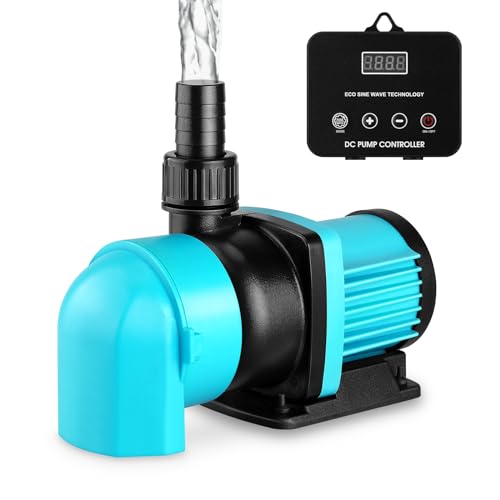
- 1850 GPH flow and 18-foot lift
- 20 speeds with LCD controller
- Submersible or inline installation
Best For: High-flow saltwater sump systems needing adjustable output
Best Value Circulation Pair

- Two 480 GPH circulation pumps
- 360-degree adjustable suction mounts
- Compact 3W submersible design
Best For: Adding distributed flow to 45–60 gallon saltwater tanks
Best Simple DC Return Pump
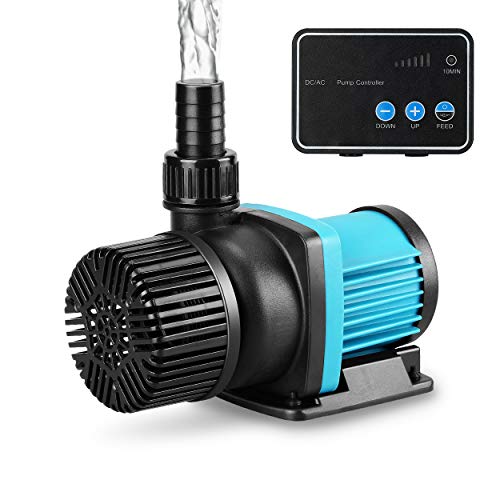
- 1850 GPH flow and 14.8-foot lift
- Six adjustable speed settings
- Submersible or inline installation
Best For: Controllable saltwater sump return systems
High-Flow Choice
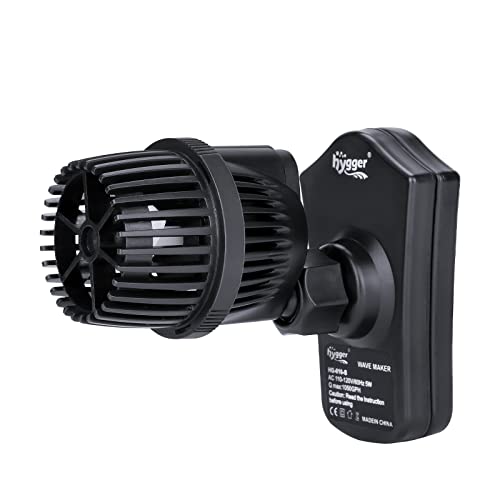
- 1050 GPH flow for strong circulation
- 360-degree directional adjustment
- Stable magnetic mounting for saltwater tanks
Best For: 20- to 60-gallon tanks needing powerful, directed water movement
Flexible Utility Pick

- 290 GPH fixed flow for steady circulation
- Submersible or inline installation
- Fresh- and saltwater compatible design
Best For: Moderate-flow aquarium, filter, and reservoir circulation
Quiet Versatile Option

- Quiet 185 GPH-class aquarium pump
- Works wet, dry, submersible, or inline
- Vibration-reducing suction cups included
Best For: Indoor saltwater setups prioritizing quiet, flexible operation
Best Adjustable Return Pump – 1350 GPH Hygger DC Pump
For aquarists comparing aquarium water pumps for saltwater tanks, the Hygger 24V DC pump stands out for its adjustable flow, external controller, and flexible inline or submersible setup. It offers up to 71 speed settings, a feeding pause, and a 13.1-foot maximum lift.
Best For: Coral reef tanks, sumps, and installations that need fine flow control.
Pros:
- Adjustable speed with up to 71 settings and a 10-minute feeding mode
- Can operate inline or submerged in freshwater or saltwater
- Auto shutoff helps protect against dry running or overvoltage
- 24V design uses 33 watts and includes multiple fittings and intake screens
Cons:
- Hose is not included
- Controller and fittings may require extra installation space
This is a versatile choice when return-pump control and lift height matter more than a simple plug-and-play setup.
Best Simple High-Lift Pump – VIVOSUN 800 GPH Submersible Pump
The VIVOSUN 800 GPH pump is a straightforward option among aquarium water pumps for saltwater tanks, with a control knob for flow adjustment and a maximum lift of 10 feet. Its compact body, long power cord, and tool-free cleaning make it practical for basic circulation or return applications.
Best For: Aquariums, fountains, and setups needing a compact submersible pump with adjustable output.
Pros:
- 800 GPH maximum flow with up to 10 feet of lift
- Flow-control knob and three included nozzles
- Detaches for cleaning without tools
- Can be positioned flat, angled, or vertically
Cons:
- Submersible-only design
- AC pump lacks the external digital control and dry-run protection listed on the DC models
Choose this model for uncomplicated water movement and flexible placement rather than advanced return-pump programming.
Best Quiet Nano Return Pump – JEREPOND 660 GPH DC Pump
For smaller saltwater systems, the JEREPOND 660 GPH pump combines a compact footprint with DC speed control. It provides 20 settings, a display for speed and operating status, a 10-minute feeding mode, and both inline and submersible installation options.
Best For: Nano reef tanks and sumps where quiet operation and precise flow adjustment are priorities.
Pros:
- 20 adjustable speeds from 30% to 100% output
- Quiet operation rated below 25 dBA
- Supports inline or submersible use in saltwater or freshwater
- Dry-run or blockage shutoff adds a safety feature
Cons:
- 660 GPH capacity is lower than the larger Hygger model
- Maximum lift is 10 feet
This compact 25W pump is a sensible fit when a small aquarium needs controlled, quiet return flow without a larger pump body.
Best Budget Submersible – GROWNEER 550 GPH Pump
The GROWNEER 550 GPH pump is a practical entry-level option for aquarium water pumps for saltwater tanks and other water features. Its flow-control knob, three nozzles, suction cups, and 7.2-foot lift make it easy to position and adapt for straightforward circulation needs.
Best For: Smaller aquariums, fountains, hydroponic systems, and basic submersible circulation.
Pros:
- Adjustable flow up to 550 GPH
- Includes three nozzle sizes for different water outputs
- Four suction cups support vertical or horizontal placement
- Compact design with a 5.9-foot power cord
Cons:
- Submersible-only operation
- 7.2-foot maximum lift is lower than the other return pumps here
- No digital controller or stated dry-run protection
This pump works best when you want simple manual adjustment and secure placement at a lower flow rate, rather than advanced saltwater return control.
Best Overall Return Pump – 1850 GPH LCD DC Aquarium Pump
For aquarists comparing aquarium water pumps for saltwater tanks, this JEREPOND model combines high flow, adjustable output, and return-pump versatility. Its 20-speed controller, 18-foot maximum lift, and submersible or inline installation make it suitable for demanding sump setups.
Best For: Saltwater sump systems needing high flow, lift, and precise electronic control.
Pros:
- 1850 GPH maximum flow with an 18-foot maximum lift.
- 20 adjustable speeds, LCD status display, feeding mode, and wave-maker mode.
- Quiet operation rated below 25 dBA, with dry-run and blockage shutoff protection.
- Can be used submersibly or inline in saltwater and freshwater applications.
Cons:
- Its 7.5-inch length and 55W output may be more than needed for smaller tanks.
- Requires the included DC24V power supply and controller.
This is the most feature-rich option in the group for a saltwater return setup. The broad speed range and safety shutdowns add practical control, while the included intake covers support lower-water-level use.
Best Value Circulation Pair – 480 GPH Saltwater Wave Makers
This two-pack is a practical choice for aquarists seeking aquarium water pumps for saltwater tanks where circulation and surface agitation matter more than return-pump lift. Each compact 3W powerhead delivers 480 GPH and can be aimed in multiple directions.
Best For: Saltwater aquariums needing distributed circulation, oxygenation, and dead-spot reduction.
Pros:
- Two compact 480 GPH pumps provide circulation from separate positions.
- 360-degree articulating suction-cup mounts help direct flow.
- Surface agitation supports water movement and oxygenation.
- Designed for recommended saltwater tank sizes of 45–60 gallons.
Cons:
- These are circulation pumps rather than high-lift sump return pumps.
- The manufacturer cautions against connecting them to a timer or controller.
- They must remain fully submerged during operation.
Choose this pair when your priority is creating current throughout the display rather than moving water vertically from a sump. The compact bodies and adjustable mounts make placement straightforward, but the operating restriction limits automation options.
Best Simple DC Return Pump – 1850 GPH 24V Aquarium Pump
For buyers comparing aquarium water pumps for saltwater tanks, this 24V DC model offers high flow and flexible installation without the more extensive 20-speed control system of the leading option. It supports submersible or inline use and includes feeding and wave-maker functions.
Best For: Saltwater or freshwater sump systems needing a controllable 1850 GPH return pump.
Pros:
- 1850 GPH maximum flow with a 14.8-foot maximum lift.
- Six speed settings adjust output from 30% to 100%.
- Includes 10-minute feeding mode and wave-maker function.
- Automatic shutoff helps protect against dry running or blockage.
Cons:
- Provides six speed settings, fewer than the comparable 20-speed model.
- Its rated noise level is below 30 dBA, rather than below 25 dBA.
- The product details list a 14.8-foot lift, lower than the 18-foot rating of the similar alternative.
This pump is a balanced return-pump choice when you want DC control and installation flexibility at a straightforward specification level. Its safety shutoff and multiple operating modes add useful sump functionality, while the lift rating should be matched to your plumbing layout.
High-Flow Choice – hygger 1050 GPH Wave Maker
For aquarists comparing aquarium water pumps for saltwater tanks, the hygger 1050 GPH Wave Maker is a strong option when the priority is broad, directional water movement. Its 360-degree rotation and magnetic mounting system make it useful for creating currents in saltwater and coral aquariums.
Best For: 20- to 60-gallon saltwater or coral tanks needing powerful circulation and adjustable flow direction.
Pros:
- 1050 GPH flow supports strong circulation and helps move debris.
- 360-degree rotation lets you direct the current where needed.
- Strong magnetic base and suction cups support stable placement.
- Designed for quiet operation and freshwater or saltwater use.
Cons:
- Its strong flow may be more than some smaller or low-flow setups need.
- The pump must be fully submerged during operation.
- Installing or separating the magnetic base requires careful handling.
This model stands out as a circulation-focused powerhead rather than a general transfer pump. Choose it when wave movement, oxygenation, and flexible positioning matter more than adjustable pump speed.
Flexible Utility Pick – EcoPlus Eco 264 290 GPH Pump
The EcoPlus Eco 264 is a practical choice among aquarium water pumps for saltwater tanks when you need steady, moderate flow for a tank, reservoir, filter system, or related setup. It supports either submersible or inline installation and includes multiple inlet and outlet fittings.
Best For: Aquariums and saltwater circulation setups that need a compact 290 GPH fixed-flow pump with flexible installation.
Pros:
- Provides steady 290 GPH flow for circulation and filtration setups.
- Can be used submersibly or inline.
- Oil-free magnetic drive has one moving part for simple operation.
- Ceramic shaft, bearings, and a built-in strainer support durability and debris protection.
Cons:
- Fixed flow offers less control than an adjustable pump.
- Its 290 GPH output is lower than high-flow wave-maker options.
- It uses a 120V corded power connection, which may require planning around tank placement.
With fresh- and saltwater compatibility plus inline versatility, this EcoPlus pump is well suited to straightforward circulation duties. It is a sensible fit when reliable moderate flow is more important than wave-making power.
Quiet Versatile Option – SICCE Syncra Silent 0.5 Pump
For shoppers seeking aquarium water pumps for saltwater tanks with an emphasis on quiet operation, the SICCE Syncra Silent 0.5 combines 185 GPH-class pumping with wet or dry installation flexibility. Its taller suction cups are designed to reduce vibration, while the included stainless steel shaft and stepped hoses support varied setups.
Best For: Indoor aquariums, protein skimmers, and other saltwater applications where low-noise operation and versatile installation are priorities.
Pros:
- Designed for extreme silence and energy-efficient operation.
- Suitable for both submersible and inline applications.
- Can be used wet or dry.
- Taller suction cups help limit vibration, and an AISI 316 stainless steel shaft is included.
Cons:
- Its 185 GPH-class output is better suited to moderate-flow needs than high-flow circulation.
- Regular maintenance and care are needed for long-term performance.
- Its maximum lifting height is listed as 4 feet.
The Syncra Silent 0.5 is a strong match for setups where pump noise could be distracting. Its wet/dry flexibility broadens installation options, although aquarists needing aggressive current may prefer a higher-output wave maker.
How We Picked the Best Aquarium Water Pumps for Saltwater Tanks
We focused on pumps that can support common saltwater aquarium tasks, including sump returns, internal circulation, wave-making, and auxiliary filtration. Selection criteria included published flow capacity, lift performance, DC or AC power design, controller availability, installation options, noise expectations, and ease of maintenance.
Because advertised gallons per hour are usually measured with little or no head pressure, we also considered whether each pump appears suited to low-head circulation or more demanding return-line installations. Models with adjustable controls, magnetic mounts, or inline and submersible flexibility received additional consideration where those features improve real-world usability.
Quick Comparison
| Pump type | Best suited for | What to prioritize |
|---|---|---|
| DC return pump | Sump-based reef aquariums | Adjustable flow, reliable controller, adequate head height |
| Submersible utility pump | Small tanks, water changes, fountains, and auxiliary circulation | Quiet operation, included fittings, saltwater compatibility |
| Wave maker or powerhead | Increasing internal circulation | Wide flow pattern, secure mounting, controllability |
| Fixed-flow pump | Simple filtration or compact setups | Correct flow rate, compact size, easy cleaning |
Key Buying Factors for Aquarium Water Pumps for Saltwater Tanks
Flow Rate and Head Pressure
Choose a pump based on its actual operating flow, not only the maximum rating on the package. Vertical lift, elbows, tubing, valves, and media all reduce output. For a return pump, check the head-height chart when available and avoid sizing so close to your target that minor restrictions cause poor turnover.
Return Pump or Circulation Pump?
A return pump moves water between the display tank and sump. It should provide consistent, controllable flow and fit your plumbing. A wave maker or powerhead circulates water inside the display and is better for eliminating stagnant areas around rockwork. Many reef tanks need both rather than one pump doing every job.
Control, Noise, and Power
DC pumps with speed controllers make it easier to fine-tune turnover and reduce flow during feeding or maintenance. Look for soft-start behavior and thermal protection where available. Quiet operation matters in living spaces, but vibration from an unstable mount or dirty impeller can make any pump noisy.
Saltwater Durability and Maintenance
Confirm that the pump is intended for saltwater use and inspect the impeller, shaft, seals, and power cord regularly. Salt creep and calcium buildup can reduce performance, so choose a design that can be disassembled and cleaned without special tools.
Who Should Buy Which Aquarium Water Pumps for Saltwater Tanks?
Choose an adjustable DC return pump if you run a reef aquarium with a sump and need to balance flow against plumbing resistance. Pick a magnetic powerhead or wave maker if your main problem is weak circulation inside the display. A compact fixed-flow pump is practical for nano tanks, reactors, water changes, or simple filtration loops. For ponds, fountains, or occasional utility work, prioritize included nozzles, lift height, and easy submersible operation over reef-specific controls.
Before buying, verify the pump’s dimensions, voltage, connection size, maximum lift, and compatibility with your aquarium’s overflow and sump. Slightly oversizing an adjustable pump can provide useful flexibility, but excessive flow can overwhelm an overflow, disturb livestock, or create unnecessary noise.