The right fins can make ocean sessions more efficient, comfortable, and controlled. This roundup compares 10 options across snorkeling, scuba diving, freediving, spearfishing, and travel-focused use.
We focus on propulsion, fit, blade design, pocket style, adjustability, durability, and portability so you can choose fins that match your experience level and the conditions you expect to encounter.
Best 10 Diving Fins for Ocean Use Picks for 2026
Deep-Dive Performer

- Reactive polypropylene long blade
- Anatomical elastomer foot wrap
- Wear with or without neoprene socks
Best For: Deep skin-diving, freediving, and spearfishing
Adjustable All-Rounder

- Open heel with adjustable buckles
- Balanced polypropylene and TPR blade
- Designed for efficient propulsion
Best For: Scuba, snorkeling, and recreational freediving
Upgradeable Freediving Choice

- 29-degree efficiency-focused blade
- Interchangeable blade system
- Comfortable power-transfer foot pocket
Best For: Freediving, spearfishing, and skill progression
Heavy-Duty Jet Fin
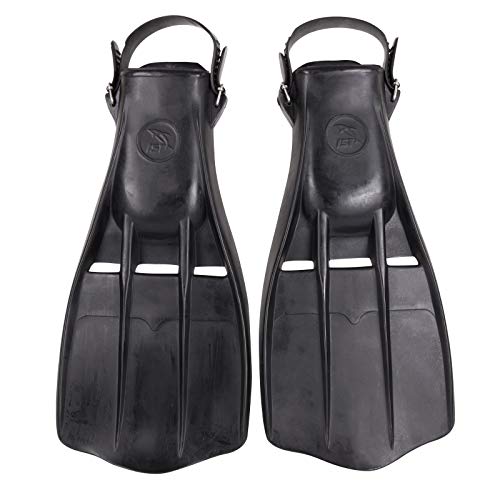
- Durable rubber construction
- Jet grooves for a powerful kick
- Open heel fits dive booties
Best For: Heavy-duty scuba diving with booties
Long-Fin Performance Choice

- Long fins for scuba and freediving
- Sized for 2.5mm neoprene boots
- Available in six sizes and three colors
Best For: Spearfishing, apnea, freediving, and scuba diving
Travel-Friendly Adjustable Pick

- Short and lightweight for travel
- Adjustable open-heel strap fits varied feet
- Durable buckles and thumb loop
Best For: Traveling swimmers and recreational snorkelers
Balanced Ocean Starter
Cressi Agua Pro Full-Foot Fins

- Self-adjusting pocket for bare feet or neoprene socks
- Medium blade supports energy-efficient kicking
- Suitable for snorkeling and scuba diving
Best For: Beginners seeking versatile full-foot fins
Travel-Friendly Classic

- Lightweight for travel and recreational swimming
- Soft pocket slips on and off easily
- EVA blade delivers responsive kicking
Best For: Casual snorkelers and traveling swimmers
Deep-Dive Performer – Gara 2000 HF
For divers seeking diving fins for ocean use with a long-blade design, the Cressi Gara 2000 HF emphasizes lightness, reactivity, and efficient power transfer. Its full-foot pocket can be worn with or without neoprene socks.
Best For: Deep skin-diving, freediving, and spearfishing, with some appeal for experienced scuba divers and instructors.
Pros:
- Three-material construction is designed for performance and control.
- Polypropylene blades aim to balance reactivity with low weight.
- Soft anatomical elastomer foot wrapping supports leg-to-fin power transfer.
- Can be worn with or without neoprene socks.
Cons:
- Long-blade full-foot design is more specialized than a general recreational fin.
- Its 3.8-pound weight may feel substantial for travel.
The Gara 2000 HF is a focused choice for divers who prioritize responsive long-blade performance and a secure full-foot fit over compact packing.
Adjustable All-Rounder – Open Heel Dive Fins
These open-heel diving fins for ocean use combine polypropylene and TPR for a balanced feel, while adjustable buckles make them practical for scuba diving, snorkeling, and freediving. The design targets propulsion with reduced leg strain.
Best For: Adult divers who want versatile open-heel fins for scuba trips, instruction, snorkeling, or recreational freediving.
Pros:
- Dual-material construction is designed for lightness and balanced flexibility.
- Channel Thrust Technology and a below-blade foot pocket support efficient propulsion.
- One-finger-release buckles allow easy adjustment and removal.
- Includes a manual and mesh bag.
Cons:
- Open-heel fins are intended to be used with an adjustable fit rather than a fixed full-foot pocket.
- The 30-day money-back guarantee is shorter than the lifetime breakage warranty.
With a streamlined profile and easy-release buckles, this model is a practical multipurpose option for divers who value adjustability and efficient kicking.
Upgradeable Freediving Choice – Gara Modular Impulse
The Cressi Gara Modular Impulse is a strong candidate for diving fins for ocean use when efficiency and future customization matter. Its angled polypropylene blade is designed to reduce effort, and the interchangeable-blade system lets divers adapt the setup as their skills develop.
Best For: Freedivers, spearfishers, and divers who want a long-blade fin system that can be upgraded for different purposes.
Pros:
- The 29-degree blade angle is designed to improve kick-cycle efficiency.
- Interchangeable blades allow customization as diving skills increase.
- Self-adjusting multi-compound foot pocket balances comfort and power transfer.
- Rondine tail and side ribs support control, directionality, and water flow management.
Cons:
- Long-blade full-foot construction is specialized for freediving rather than general-purpose use.
- At 2 kg, it may be less convenient for travelers prioritizing minimal luggage weight.
This is an appealing growth-oriented fin for divers who want efficient long-blade performance now and the ability to change blades for future diving goals.
Heavy-Duty Jet Fin – IST Rubber Rocket
IST Rubber Rocket Scuba Diver Fins, Military Special Ops Gear, Deep Sea Diving Heavy Duty Equipment
Check Price On AmazonFor divers who need rugged diving fins for ocean use, the IST Rubber Rocket uses a heavy-duty rubber construction and jet-style channels to direct water backward. Its open-heel pocket is designed for use with dive booties.
Best For: Scuba divers seeking durable open-heel fins for demanding diving and a boot-compatible fit.
Pros:
- Strong rubber construction is designed for long-term durability.
- Curved, tapered blades support propulsion.
- Deep jet-style grooves channel water backward for a powerful kick.
- Adjustable open-heel straps fit over dive booties.
Cons:
- At 6 pounds, these are notably heavy for travel.
- The heavy-duty rubber design may be less suitable for divers seeking lightweight fins.
The Rubber Rocket favors durability, thrust, and boot compatibility, making it a sensible choice when rugged construction matters more than packability.
Lightweight Snorkeling Pick – Cressi Rondinella Full-Foot Fins
For casual diving fins for ocean use, the Cressi Rondinella is a practical full-foot option for snorkeling and swimming. Its soft, flexible polypropylene blade keeps the fin light and easy to use, while the integrated blade-and-pocket design delivers straightforward propulsion without demanding excessive effort.
Best For: Adults and youth who want lightweight full-foot fins for snorkeling, swimming, and relaxed ocean use.
Pros:
- Very light, flexible blade is comfortable for recreational finning.
- Full-foot thermo-rubber pocket is designed for comfort.
- Heel pull-tab helps with putting the fins on and taking them off.
- Two-year limited warranty is included.
Cons:
- Full-foot design offers less fit adjustability than an open-heel fin.
- Designed for snorkeling and swimming rather than specialized long-fin disciplines.
The Rondinella makes sense when simplicity, low weight, and easy handling matter more than maximum thrust. Its full-foot construction is best suited to users who expect a consistent fit and recreational use.
Long-Fin Performance Choice – Seac Shout Diving Fins
Seac Shout, Long Fins for Scuba Diving, Spearfishing and Freediving, Black, 9.5-10, Made in Italy
Check Price On AmazonThe Seac Shout is a long-fin choice for diving fins for ocean use, with applications across scuba diving, spearfishing, apnea, and freediving. It is sized for use with 2.5mm neoprene boots and emphasizes return thrust, comfort, and prolonged use.
Best For: Adult divers, spearfishers, and freedivers seeking long fins with boot-compatible sizing and strong blade return.
Pros:
- Long blade is intended for scuba diving, spearfishing, apnea, and freediving.
- Designed for use with 2.5mm neoprene boots.
- Blade return thrust can support longer sessions with less effort.
- Available in six sizes and three colors.
Cons:
- Long dimensions—up to 1 meter—are less convenient for travel and storage.
- Reported weight ranges from 1 kg to 1.24 kg, making it less lightweight than travel fins.
The Shout is the specialized option in this group. Its long profile and boot-oriented fit favor divers who prioritize propulsion and extended-use comfort over compact packing.
Travel-Friendly Adjustable Pick – Cressi Tonga Open-Heel Fins
For travelers comparing diving fins for ocean use, the Cressi Tonga offers a compact short-fin design with an adjustable open heel. Its lightweight construction, flexible fit, and durable buckles make it convenient for outdoor or indoor swimming and snorkeling.
Best For: Travelers and recreational swimmers who need lightweight, adjustable fins that can accommodate different foot shapes.
Pros:
- Short, lightweight design is easy to pack and transport.
- Adjustable strap and open heel accommodate different foot shapes.
- Robust buckles are designed for extended use.
- Large thumb loop simplifies putting the fins on and taking them off.
Cons:
- Short blade is less oriented toward the propulsion of long diving fins.
- Adjustable fit may be shared only among users with similar sizes.
The Tonga is a sensible compact option when portability and fit flexibility are priorities. Its composite blade is designed to support comfortable finning and help reduce leg cramping during recreational use.
Balanced Ocean Starter – Cressi Agua Pro Full-Foot Fins
For shoppers comparing diving fins for ocean use, the Cressi Agua Pro offers a beginner-friendly full-foot design for snorkeling and scuba diving. Its medium-length blade emphasizes energy return and stable maneuvering, while the self-adjusting pocket is designed to accommodate bare feet or neoprene socks.
Best For: Beginners who want one versatile fin for snorkeling and scuba diving.
Pros:
- Self-adjusting foot pocket is designed for a snug, pressure-free fit.
- Medium-length blade helps reduce fatigue on longer swims.
- Blade structure supports directional stability and straighter tracking.
- Backed by a 2-year limited warranty.
Cons:
- Full-foot construction may offer less sizing flexibility than an adjustable-strap fin.
- The notes identify it primarily as a snorkeling fin, despite its scuba versatility.
The Agua Pro is a practical choice when comfort, easy handling, and cross-activity versatility matter more than specialized performance.
Travel-Friendly Classic – Cressi Clio Full-Foot Fins
The Cressi Clio is a lightweight option for diving fins for ocean use, snorkeling, underwater recreation, and swimming. Its soft full-foot pocket is easy to put on and remove, while the EVA blade is designed to provide responsive power with different kicking styles.
Best For: Travelers and recreational swimmers who prioritize light weight and easy use.
Pros:
- Lightweight design is convenient for travel.
- Soft full-foot pocket is designed for comfort and easy slip-on wear.
- EVA blade is built for durability and responsive kicking.
- Available in a broad size range for children and adults.
Cons:
- Designed for amateur snorkeling and recreational use rather than specialized diving.
- Full-foot fit provides less adjustment than a strap-style pocket.
With its established design, travel-friendly weight, and straightforward fit, the Clio suits casual ocean recreation and swimmers who want low-fuss fins.
Simple Travel Pick – Cressi Agua Self-Adjustable Fins
For shoppers seeking diving fins for ocean use with a straightforward travel profile, the Cressi Agua combines a self-adjustable full-foot pocket with a lightweight construction. Its blue adult design is intended for outdoor lifestyle use and comes with a 2-year limited warranty.
Best For: Adult travelers wanting simple, lightweight full-foot snorkeling fins.
Pros:
- Self-adjustable full-foot pocket is designed for comfortable wear.
- Lightweight construction weighs approximately 0.45 kg.
- Pull-on design keeps setup simple.
- Includes a 2-year limited warranty.
Cons:
- The supplied notes provide limited information about blade materials and propulsion.
- Regular full-foot sizing offers less fit adjustment than open-heel fins.
The Agua is a sensible option for uncomplicated snorkeling trips, especially when low weight and a self-adjusting pocket are higher priorities than detailed performance features.
How We Picked the Best Diving Fins for Ocean Use
We evaluated these fins by matching their design to real ocean activities rather than treating every pair as interchangeable. Key considerations included thrust, kicking efficiency, foot-pocket comfort, blade length, material durability, adjustability, and ease of transport.
The selection includes full-foot fins for warm-water snorkeling and simple travel, adjustable open-heel models for scuba boots, and longer fins designed for freediving or spearfishing. We also considered whether each design suits beginners, experienced divers, or demanding conditions such as deeper water and stronger currents.
Quick Comparison
| Best For | Recommended Design | Why It Matters |
|---|---|---|
| Travel snorkeling | Light full-foot fins | Easy to pack and quick to put on |
| Warm-water scuba | Adjustable open-heel fins | Works with dive boots and allows fit adjustment |
| Freediving | Long-blade fins | Efficient propulsion with fewer powerful kicks |
| Heavy-duty use | Rubber or reinforced blades | Better resistance to frequent, demanding use |
Key Buying Factors for Diving Fins for Ocean Use
Fit and Foot-Pocket Comfort
A secure pocket should hold your foot without painful pressure, slipping, or excessive movement. Full-foot pockets are convenient for bare feet and warm water, while open-heel pockets are more versatile and can be worn with neoprene boots. Check the manufacturer’s sizing guidance carefully, especially when purchasing online.
Blade Length and Stiffness
Long, flexible blades are common in freediving and spearfishing because they generate strong propulsion efficiently. Shorter blades are easier to control and typically better for casual snorkeling, travel, and confined spaces. Stiffer blades can deliver more power but may fatigue beginners or divers with less leg strength.
Open-Heel Adjustability
Adjustable buckles and straps make it easier to fine-tune the fit and accommodate dive boots. They add versatility but can also increase weight and create more parts that require rinsing and maintenance. For warm-water snorkeling, a well-fitting full-foot design may be simpler.
Materials and Ocean Conditions
Look for construction suited to your use. Lightweight composite or plastic blades are practical for recreational outings, while rubber fins can feel durable and stable for scuba diving. Rinse fins with fresh water after every saltwater session and store them flat or supported to help prevent deformation.
Who Should Buy Which Diving Fins for Ocean Use?
- Beginners and casual snorkelers: Choose short, lightweight full-foot fins that are comfortable and easy to control.
- Frequent travelers: Prioritize compact, light designs with simple full-foot pockets or manageable adjustable straps.
- Scuba divers: Select adjustable open-heel fins if you routinely wear boots or dive in varied conditions.
- Freedivers and spearfishers: Consider long-blade fins with an efficient, responsive kick and a secure pocket.
- Hard-use divers: Favor durable rubber or reinforced designs if reliability matters more than minimum weight.
Before ordering, confirm sizing, intended footwear, blade length, and return policies. The best pair is the one that fits securely, matches your kicking strength, and suits the water conditions you actually encounter.