Choosing protective water gear for a child means balancing warmth, mobility, comfort, and dependable coverage. The options in this roundup include fully waterproof drysuits as well as thermal neoprene wetsuits for different activities and water temperatures.
Use the guide below to match the right construction, thickness, closure, and fit to your child’s age, skill level, and planned use.
Best 10 Drysuits for Children Picks for 2026
Best Performance Pick

- Waterproof and breathable three-layer construction
- Adjustable seals and waterproof front zipper
- Reinforced panels for frequent sailing use
Best For: Junior sailors facing wet, windy conditions
Best Value Wetsuit
XUKER Kids 3mm Full-Body Wetsuit

- 3mm neoprene helps retain body heat
- Full-body coverage for varied water sports
- Stretch construction with an easy back zipper
Best For: Recreational swimming, snorkeling, and boating
Best Easy-Entry Design
Seaskin Kids 3mm Front-Zip Wetsuit

- Insulating 3mm construction
- Front zipper for easier dressing
- Suitable for lessons and several water sports
Best For: Children who need a simple thermal suit
Best Visibility Pick

- Flexible 3/2mm neoprene construction
- Protective full-body coverage
- High-visibility blue stripe detailing
Best For: Active kids using multiple water-sport activities
Cold-Water Comfort Pick
Hevto 3/2mm Kids Back-Zip Wetsuit

- 3/2mm neoprene is designed for cooler water
- Back zipper simplifies dressing and removal
- Bright pink design supports visibility
Best For: Kids swimming, snorkeling, or paddling in cooler water
Easy-Entry Adventure Pick
Jsnorklet 3mm Kids Front-Zip Wetsuit

- 3mm neoprene provides a cold-water thermal layer
- Front zipper helps simplify self-dressing
- Stretchy joints support active movement
Best For: Kids needing an easy-entry suit for varied water adventures
Best All-Around Warmth

- 3mm neoprene for 68–81°F water
- UPF 50+ full-body coverage
- Back zipper with kid-sized pull cord
Best For: Cool-water lessons, beach trips, snorkeling, and kayaking
Best for Active Water Sports
XUKER 3mm Kids Full-Length Wetsuit

- Flexible underarm neoprene
- Flatlock seams for durability
- Protective knee pads
Best For: Surfing, kayaking, and active beach play
Best Gray Fullsuit Option
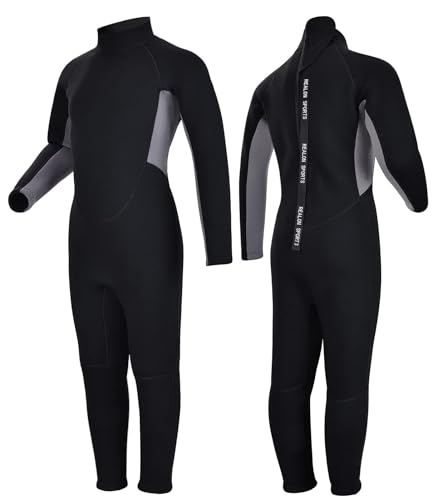
- 3mm neoprene for cool water
- UPF 50+ full-body protection
- Reinforced back zipper
Best For: Lessons, snorkeling, kayaking, and family beach trips
Best Performance Pick – Gill Junior/Kids Pro Drysuit
For young sailors who need true weather protection, the Gill Junior Pro is one of the most capable drysuits for children in this roundup. Its waterproof, breathable three-layer fabric, taped seams, and waterproof front zipper are designed for demanding time on the water.
Best For: Junior sailors, regattas, training camps, and cold, wet, windy conditions.
Pros:
- Waterproof, windproof, and breathable XPLORE+ three-layer fabric
- Adjustable Glideskin neck and cuff seals support a watertight fit
- Reinforced knees, seat, and built-in fabric socks improve durability
- Internal suspenders and a stretch waist support movement and comfort
Cons:
- Designed primarily for sailing rather than general recreational swimming
- At 0.9 kg, it may feel more substantial than a lightweight wetsuit
This is the strongest choice when staying dry and protected matters more than simplicity. The tailored fit, sailing-focused construction, and durable panels make it well suited to frequent junior use.
Best Value Wetsuit – XUKER Kids 3mm Full-Body Wetsuit
The XUKER full-body suit is a practical alternative to drysuits for children when warmth, flexibility, and broad water-sport use are the priorities. Its 3mm neoprene helps retain body heat while providing coverage for swimming, snorkeling, boating, and similar activities.
Best For: Kids and teens participating in multiple recreational water sports.
Pros:
- 3mm neoprene provides thermal insulation in cooler water
- Full-body, long-sleeve design helps shield against UV exposure and abrasions
- Stretch material and flatlock stitching support flexibility and durability
- Back zipper makes putting on and removing the suit easier
Cons:
- A wetsuit is not a substitute for a fully waterproof drysuit
- Back-zip closure may require assistance for some younger children
Choose this suit for water activities where warmth and mobility are more important than complete dryness. The full-body coverage and versatile design make it a flexible option for families using one suit across several sports.
Best Easy-Entry Design – Seaskin Kids 3mm Front-Zip Wetsuit
Families looking for a straightforward thermal suit may prefer the Seaskin 3mm wetsuit. It is built for children taking part in swimming, diving, surfing, kayaking, snorkeling, and other water sports, with a front zipper intended to make dressing easier.
Best For: Swim lessons and recreational water activities where warmth and easy entry are important.
Pros:
- 3mm construction is designed to provide insulation in the water
- Front zipper simplifies putting on and taking off the suit
- Full-body design suits swimming, kayaking, snorkeling, diving, and surfing
Cons:
- It is a wetsuit, so it does not offer the full waterproof protection of a drysuit
- Care requires cold-water handwashing and flat drying
- Accurate sizing depends on using the Seaskin size chart
The front entry is the main practical advantage here, especially for children who need a suit that is less cumbersome to put on. Check the manufacturer’s size chart carefully and follow the recommended care routine.
Best Visibility Pick – Hevto Kids 3/2mm Wetsuit
The Hevto Guard series is a versatile choice for children who move between swimming, snorkeling, paddleboarding, kayaking, and surfing. This 3/2mm neoprene wetsuit combines thermal coverage with a snug, flexible fit and blue detailing intended to improve visibility on and in the water.
Best For: Active children participating in varied recreational water sports.
Pros:
- 3/2mm neoprene provides warmth while allowing movement
- Full-body coverage helps protect against wind, sun, and scratches
- Back zipper supports flexibility and straightforward entry
- Wing-shaped shoulders and blue stripes improve visual recognition
Cons:
- Not fully waterproof like a dedicated drysuit
- The snug fit requires careful attention to sizing
- Its 3mm thickness may be less insulating than a heavier cold-water suit
This suit is a good fit for families wanting one flexible layer for several activities, especially where visibility is useful. It offers thermal and protective coverage without the bulk of a dedicated sailing drysuit.
Flexible Full-Coverage Pick – Skyone 2.5mm Kids Full-Body Wetsuit
For parents comparing drysuits for children, this full-body Skyone wetsuit is a practical option for warm-water activities and added coverage. Its 2.5mm neoprene construction, long sleeves, and UPF 50+ protection are suited to swimming, snorkeling, surfing, and other water sports.
Best For: Children who need flexible full-body coverage for varied water activities.
Pros:
- 2.5mm neoprene offers warmth, flexibility, and buoyancy.
- Full-body, long-sleeve design provides UPF 50+ sun protection and coverage from abrasions.
- Back zipper and stretch construction support easier dressing and unrestricted movement.
- Flatlock stitching is designed for durability.
Cons:
- The suit may feel tight when first tried on dry.
- Parents must consult the size chart carefully because fit varies by child.
This is a versatile wetsuit rather than a true drysuit, with useful thermal, sun, and abrasion protection. The broad activity range and full coverage make it a solid choice for active children.
Cold-Water Comfort Pick – Hevto 3/2mm Kids Back-Zip Wetsuit
When evaluating drysuits for children for cooler-water outings, the Hevto kids wetsuit emphasizes warmth, mobility, and easy access. Its 3/2mm neoprene construction is designed for swimming, snorkeling, surfing, paddleboarding, and kayaking.
Best For: Kids who need thermal support and an easy-on back-zip design in cooler water.
Pros:
- Soft 3/2mm neoprene helps keep children warm and provides buoyancy.
- Back zipper makes the full-body suit easier to put on and remove.
- Flexible fit supports unrestricted movement during water activities.
- Bright pink styling is designed for visibility above and below the water.
Cons:
- The supplied information identifies this model in pink, which may not suit every preference.
- As with other close-fitting wetsuits, selecting the correct size is important.
Hevto focuses on practical cold-water comfort without sacrificing mobility. Its back zipper and vivid design may be especially useful for family beach trips and lessons where dressing and visibility matter.
Easy-Entry Adventure Pick – Jsnorklet 3mm Kids Front-Zip Wetsuit
For families comparing drysuits for children, this Jsnorklet full-body wetsuit stands out for its front zipper and 3mm neoprene thermal layer. It is designed for kids participating in snorkeling, swimming, surfing, kayaking, boating, and similar activities.
Best For: Children who value easy front entry and flexible movement across several water sports.
Pros:
- 3mm neoprene and nylon create a thermal barrier for cold-water comfort.
- Front zipper is intended to make independent dressing easier.
- Stretchy limbs and joints support unrestricted paddling and diving movement.
- Durable neoprene is designed to resist wear from rough surfaces.
Cons:
- New neoprene may have a temporary odor and should be aired out.
- The product has no listed warranty.
- It is available in the supplied details in blue, limiting color choice for this listing.
The front-zip configuration is the main convenience advantage, while the 3mm construction targets thermal comfort in colder water. Follow the size chart and rinse the suit with cold water after use to support care.
Best All-Around Warmth – REALON 3mm Kids Fullsuit
For families comparing drysuits for children, this REALON full wetsuit is a practical option for cool-water lessons and recreation. Its 3mm neoprene construction is designed for 68–81°F water, while the full-coverage design helps protect against sun, wind, abrasions, and minor marine stings.
Best For: Swimming lessons, beach trips, snorkeling, kayaking, and other cool-water activities for children ages 2–16.
Pros:
- 3mm neoprene helps retain body heat in cool water.
- UPF 50+ full-body coverage provides added sun and abrasion protection.
- Back zipper with a kid-sized pull cord supports easier dressing.
- Available for toddler-to-youth sizing when chest, waist, and height are measured first.
Cons:
- Hand washing and shade drying are recommended for maintenance.
- The 68–81°F temperature guidance may not suit very cold water.
This is a versatile choice when warmth, coverage, and easy entry matter more than a specialized drysuit-style design. Be sure to compare the child’s measurements with the size map before ordering.
Best for Active Water Sports – XUKER 3mm Kids Full-Length Wetsuit
XUKER Kids Wetsuit for Boys Girls Toddlers 3mm Thermal Full Length Back Zip Wetsuit
Check Price On AmazonWhen evaluating drysuits for children who spend time surfing or kayaking, the XUKER full-length wetsuit emphasizes movement and durability. It combines 3mm neoprene with underarm flexibility, flatlock stitching, anti-rub openings, and reinforced knee protection.
Best For: Toddlers and children participating in active water sports such as surfing, kayaking, and beach play.
Pros:
- 3mm neoprene helps provide warmth in cold conditions.
- Neoprene under the arms supports a full range of motion.
- Four-thread flatlock seams are designed for durability.
- Protective knee pads help reduce discomfort on hard or rocky surfaces.
Cons:
- The supplied notes do not specify a temperature rating.
- Anti-rub features may not eliminate fit issues if sizing is incorrect.
The XUKER stands out for children who need flexibility and knee coverage during active outings. Check the size map carefully, particularly because the listed product details identify a toddler age range and size 8.
Best Gray Fullsuit Option – REALON 3mm Gray Kids Wetsuit
This REALON gray fullsuit is a practical pick for shoppers seeking drysuits for children with broad activity coverage. The 3mm neoprene suit is intended for 68–81°F water and includes full-body sun protection, a reinforced back zipper, and coverage suitable for lessons and recreational water sports.
Best For: Children who need a gray full-body suit for swimming lessons, snorkeling, surfing, kayaking, or family beach trips.
Pros:
- 3mm neoprene helps retain warmth in cool water.
- UPF 50+ coverage helps protect skin from sun, abrasions, and minor marine stings.
- Reinforced back zipper is designed for repeated use and easier dressing.
- Full-body design covers children from toddler through youth sizes.
Cons:
- The listed small size has a 25-inch chest and 22-inch waist, so measuring is important.
- Care instructions call for hand washing and shade drying rather than machine care.
Choose this version if the gray color and the REALON fullsuit feature set fit your child’s measurements. Its stated temperature range makes it better suited to cool water than extreme cold.
How We Picked the Best Drysuits for Children
We focused on construction, thermal performance, coverage, ease of dressing, and suitability for common children’s water activities. The selection includes full-body neoprene wetsuits and a waterproof junior drysuit, since these products serve different purposes despite often being grouped under the same search term. We also considered practical details such as zipper placement, stated water-temperature use, material thickness, mobility, and available child-to-youth sizing.
Always check the manufacturer’s size chart rather than relying only on age. A secure fit is important for warmth and comfort, but restrictive sleeves, legs, or torso can interfere with swimming and other activities.
Quick Comparison
| Type | Best For | Main Advantage | Watch For |
|---|---|---|---|
| Waterproof drysuit | Cold, wet, or windy conditions | Helps keep water and wind outside | Usually needs suitable base layers |
| 3mm neoprene wetsuit | Swimming, snorkeling, surfing, and lessons | Insulation with flexible movement | Not fully waterproof |
| 2.5mm neoprene wetsuit | Milder water and active children | Lighter, less bulky feel | Less warmth than thicker neoprene |
Key Buying Factors for Drysuits for Children
Choose the Right Protection Level
A true drysuit is designed to limit water entry and is useful for sailing, paddling, boating, or prolonged exposure to cold spray. Neoprene wetsuits work differently: they allow a controlled amount of water inside, then use the material and body heat to provide insulation. For swimming lessons, snorkeling, and surfing, a full-body 3mm wetsuit may be the more practical choice.
Check Thickness and Coverage
Thicker neoprene generally provides more warmth, while thinner material can feel easier to move in. Full-length sleeves and legs offer better coverage than shorty designs. Look for smooth, comfortable openings at the neck, wrists, and ankles without excessive tightness or chafing.
Prioritize Fit and Closures
Back zippers are familiar and often easy for adults to manage; front zippers can make some suits simpler to put on independently. The zipper should lie flat and close securely. Avoid oversized suits, since loose areas can reduce insulation and create drag.
Consider Layering and Care
A waterproof shell may require thermal layers underneath, while neoprene is normally worn as the primary insulating layer. Rinse either type with fresh water after use, allow it to dry fully away from direct heat, and follow the care instructions to protect seams, zippers, and coatings.
Who Should Buy Which Drysuits for Children?
Choose a waterproof junior drysuit for children who spend time boating, sailing, paddling, or playing near cold water and need wind and splash protection. Choose a 3mm full-body wetsuit for regular swimming, snorkeling, surfing, diving, or lessons in cool water. Choose a lighter 2.5mm suit when flexibility and easier movement matter more than maximum insulation.
Parents should also confirm whether the activity requires additional safety equipment. A drysuit or wetsuit is not a substitute for a properly fitted life jacket, supervision, or cold-water safety planning.