Stable water chemistry is essential for healthy freshwater fish, but choosing between liquid reagents, test strips, and single-parameter kits can be confusing. The right option depends on your aquarium’s size, stocking level, maintenance routine, and testing priorities.
We’ve gathered 10 aquarium test kits for freshwater tanks, covering everyday monitoring, new-tank cycling, ammonia and nitrite testing, and convenient multi-parameter checks.
Best 10 Aquarium Test Kits for Freshwater Tanks Picks for 2026
Best Overall Coverage
API Freshwater Master Test Kit

- Tests pH, high-range pH, ammonia, nitrite, and nitrate
- Includes solutions, tubes, and color card
- Made for weekly freshwater monitoring
Best For: Routine testing and troubleshooting in freshwater aquariums
Best Quick-Check Strips

- Checks six parameters on one strip
- Results in 60 seconds
- Suitable for freshwater and saltwater tanks
Best For: Fast routine checks and testing after water changes
Best for Nitrite Monitoring

- Provides up to 180 nitrite tests
- Includes solution, tube, and color card
- Useful during setup and ongoing monitoring
Best For: Focused nitrite checks during cycling and routine maintenance
Best Multi-Parameter Strips

- Checks 11 listed water parameters
- Includes 150 strips and testing accessories
- Suitable for multiple aquarium types
Best For: Broad routine screening with one strip-based kit
Best Overall Strips
API 5-in-1 Aquarium Test Strips

- Checks pH, nitrite, nitrate, carbonate, and general hardness
- Includes 100 test strips
- Fast dip-and-compare testing
Best For: Routine freshwater water-quality monitoring
Best All-in-One Coverage
EASYTEST 8-Way Aquarium Test Strips

- Measures eight aquarium water metrics
- Includes ammonia testing
- Results develop in 15 to 60 seconds
Best For: Multi-tank owners wanting broad strip coverage
Best for High-Range pH

- Reads pH from 7.4 to 8.8
- Provides up to 160 tests
- Includes solution, tube, cap, and color card
Best For: Higher-pH tanks with goldfish or African cichlids
Broad-Spectrum Coverage

- Checks 11 water parameters
- Includes 125 test strips
- Ammonia requires a separate reading step
Best For: Aquarists wanting broad coverage and plentiful strips
Simple Weekly Checks

- Tests five core water parameters
- Uses a quick dip-and-read method
- Includes four strips in the box
Best For: Fast routine monitoring of freshwater or saltwater aquariums
Ammonia-Focused Monitoring
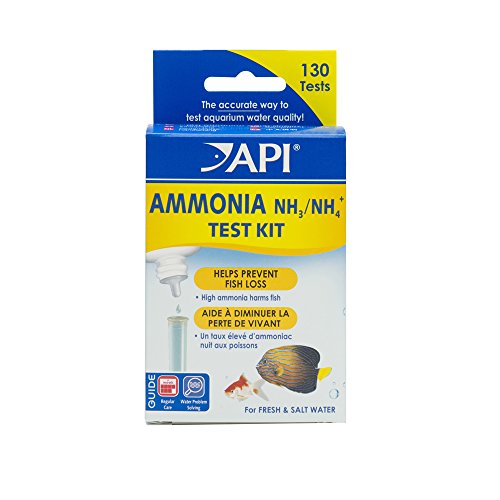
- Measures ammonia from 0 to 8 ppm
- Provides up to 130 tests
- Uses liquid reagents and a color card
Best For: Cycling tanks and tracking ammonia levels
Best Overall Coverage – API Freshwater Master Test Kit
API Freshwater Master Test Kit 800-Test Freshwater Aquarium Water Kit, White, Single, Multi-Colored
Check Price On AmazonFor aquarists who want a traditional liquid-testing setup, the API Freshwater Master Test Kit is a comprehensive choice among aquarium test kits for freshwater tanks. It checks five core parameters—pH, high-range pH, ammonia, nitrite, and nitrate—with included solutions, tubes, and a color card.
Best For: Weekly freshwater monitoring and troubleshooting water or fish problems.
Pros:
- Tests five vital freshwater water-quality parameters.
- Includes seven testing-solution bottles, four capped tubes, and a color card.
- Designed for weekly monitoring and investigating water problems.
Cons:
- For freshwater aquariums only.
- Liquid testing requires following the individual test instructions.
This is a strong all-around option when you want broader core-parameter coverage than a single-parameter kit and prefer a reusable testing format.
Best Quick-Check Strips – Tetra EasyStrips 6-in-1
Tetra EasyStrips are a convenient pick for shoppers seeking fast aquarium test kits for freshwater tanks. One strip checks six water conditions—nitrate, nitrite, hardness, chlorine, alkalinity, and pH—and results are read after a 60-second wait.
Best For: Fast weekly checks, post-water-change testing, and new-fish monitoring.
Pros:
- Tests six water-quality issues with one strip.
- Provides results in about 60 seconds.
- Works in both freshwater and saltwater aquariums.
Cons:
- Pack contains 25 strips.
- Does not list ammonia testing among its six tests.
Choose these strips when speed and simplicity matter most, especially for regular checks between more targeted tests.
Best for Nitrite Monitoring – API Nitrite Test Kit
The API Nitrite Test Kit is a focused option for aquarium owners who need to track nitrite specifically. This freshwater and saltwater kit includes a testing solution, color card, and capped test tube, with enough supplies for up to 180 tests.
Best For: Monitoring nitrite during aquarium setup and after the biological filter is established.
Pros:
- Provides up to 180 nitrite tests.
- Includes a solution, color card, and test tube with cap.
- Directions recommend frequent testing during initial setup and weekly testing afterward.
Cons:
- Tests nitrite only, so additional kits are needed for other parameters.
- Requires a separate testing step rather than a multi-parameter strip.
This kit makes sense as a dedicated supplement when nitrite is your immediate concern, particularly during cycling or when investigating fish-health issues.
Best Multi-Parameter Strips – 11-in-1 Aquarium Test Kit
This 11-in-1 kit offers broad coverage for shoppers comparing aquarium test kits for freshwater tanks. Its strips are designed to check ammonia, pH, iron, chlorine, hardness, carbonate, nitrate, nitrite, alkalinity, copper, and temperature, with 150 strips, a color chart, testing tubes, and an eBook included.
Best For: Aquarists who want many routine readings from a single strip-based kit.
Pros:
- Tests 11 listed aquarium-water parameters.
- Includes 150 strips, a color chart, testing tubes, and an eBook.
- Designed for freshwater, saltwater, betta tanks, and fish ponds.
Cons:
- Opened strips are recommended for use within three months for maximum accuracy.
- Strip-based testing may be less targeted than a dedicated single-parameter kit.
Its main advantage is breadth: it can provide a wide snapshot of water conditions without requiring separate kits for every listed parameter.
Best Overall Strips – API 5-in-1 Aquarium Test Strips
API 5-IN-1 TEST STRIPS Freshwater and Saltwater Aquarium Test Strips 100-Count Box
Check Price On AmazonFor routine aquarium test kits for freshwater tanks, the API 5-in-1 strips offer a quick way to check five important water parameters. Dip a strip, compare the colors, and use the results for weekly monitoring or when fish or water conditions change.
Best For: Freshwater keepers who want simple, regular checks of pH, nitrite, nitrate, carbonate hardness, and general hardness.
Pros:
- Tests five key aquarium water parameters in one strip.
- Includes 100 test strips for frequent monitoring.
- Simple dip-and-compare color testing with no extra equipment noted.
Cons:
- Does not test ammonia, chlorine, or alkalinity.
- Color-based strips may provide less detailed information than a liquid test for some users.
This is a practical choice for ongoing freshwater maintenance, especially when you want broad coverage and a generous strip count without a more involved testing process.
Best All-in-One Coverage – EASYTEST 8-Way Aquarium Test Strips
Among aquarium test kits for freshwater tanks, EASYTEST stands out for covering eight water metrics, including ammonia. The strips are designed for quick at-home checks, with most results read at 15 seconds and nitrate and nitrite results read at 60 seconds.
Best For: Aquarists managing freshwater, planted, betta, shrimp, or multiple tanks who want the widest listed strip-based coverage.
Pros:
- Tests ammonia, pH, hardness, alkalinity, chlorine, nitrate, nitrite, and carbonate.
- Clear graded color chart identifies safer and riskier ranges.
- Supports freshwater and several other aquatic environments.
- Requires only a short dip and color-development process.
Cons:
- Includes 50 strips, fewer than the 100-count API strip package.
- Ammonia testing requires cutting off the ammonia pad for accurate testing.
- Different parameters require different reading times.
Choose this kit when ammonia testing and broad parameter coverage matter more than maximizing the number of strips. Its multiple reading times make following the instructions important.
Best for High-Range pH – API High Range pH Test Kit
API High Range pH Test Kit 160-Test Freshwater and Saltwater Aquarium Water Kit
Check Price On AmazonThis API liquid kit is a focused option among aquarium test kits for freshwater tanks when pH is the main concern. It reads the higher pH range of 7.4 to 8.8 and is intended for weekly monitoring or investigating changes caused by waste, uneaten food, or tap water.
Best For: Goldfish and African cichlid keepers, as well as aquarists with higher-pH freshwater conditions.
Pros:
- Provides 160 pH tests from one bottle of testing solution.
- Measures a high-range pH span of 7.4 to 8.8.
- Includes a test tube with cap and color card.
- Useful for tracking pH fluctuations over time.
Cons:
- Tests only pH, not ammonia, nitrite, nitrate, or hardness.
- Its high-range scale is not designed for lower-pH readings below 7.4.
- Liquid testing involves more steps than a dip strip.
This kit makes the most sense as a targeted pH monitor rather than a complete water-testing solution. Pair it with other tests if you need a broader view of aquarium conditions.
Broad-Spectrum Coverage – 11-in-1 Aquarium Test Strips
For aquarists seeking aquarium test kits for freshwater tanks, this 125-count strip kit offers a broad snapshot of water conditions. It checks 11 parameters, including ammonia nitrogen, but ammonia requires a separate fresh sample and a longer reading process.
Best For: Freshwater tank owners who want high test-strip volume and wide parameter coverage for routine maintenance or cycling.
Pros:
- Measures 11 parameters, including pH, hardness, nitrate, nitrite, and ammonia nitrogen.
- Includes 125 test strips, reducing the need to buy multiple separate kits.
- Upgraded pad design is intended to reduce color bleeding and improve readability.
- Suitable for aquariums, betta habitats, and ponds.
Cons:
- Ammonia testing requires cutting off used pads and collecting a second water sample.
- The ammonia pad needs about two minutes before reading, compared with 30 seconds for the first ten results.
This is a versatile option when you want many routine readings from one kit. Follow the two-stage directions carefully, especially when checking ammonia nitrogen.
Simple Weekly Checks – API 5-in-1 Test Strips
These API strips provide a quick way to monitor several core measurements when comparing aquarium test kits for freshwater tanks. Dip the strip, then compare the colors to check pH, nitrite, nitrate, carbonate hardness, and general hardness.
Best For: Aquarists who prefer a fast, straightforward strip test for weekly monitoring or investigating water and fish problems.
Pros:
- Checks five useful parameters: pH, nitrite, nitrate, carbonate hardness, and general hardness.
- Uses a simple dip-and-read process.
- Suitable for freshwater or saltwater aquariums.
- Designed for regular care and water-problem checks.
Cons:
- The package contains only four test strips.
- It does not test ammonia, chlorine, copper, or iron.
This compact kit is convenient for quick checks, but its limited strip count and five-parameter scope make it better suited to targeted monitoring than extensive testing.
Ammonia-Focused Monitoring – API 130-Test Ammonia Kit
Among aquarium test kits for freshwater tanks, this API kit is designed specifically for ammonia monitoring. It measures ammonia from 0 to 8 ppm and uses liquid reagents, a test tube, and a color card rather than test strips.
Best For: New-tank cycling and established aquariums where regular, focused ammonia checks are a priority.
Pros:
- Provides up to 130 ammonia tests.
- Reads ammonia levels from 0 to 8 ppm.
- Includes separate test solutions and a color card for freshwater or saltwater readings.
- Recommended for use several times weekly during setup, then weekly or when problems arise.
Cons:
- Tests ammonia only rather than multiple water parameters.
- Requires measured water, two reagent additions, shaking, and a five-minute development period.
- The test tube must be rinsed after use.
This is a strong complementary kit for aquariums where ammonia is the immediate concern. Choose a broader test kit separately if you also need routine readings for pH, hardness, nitrate, or nitrite.
How We Picked the Best Aquarium Test Kits for Freshwater Tanks
We focused on kits that cover the water parameters freshwater aquarists most often need to monitor: ammonia, nitrite, nitrate, pH, hardness, alkalinity, and, where available, chlorine or other useful indicators. We also considered test format, number of tests included, ease of reading results, and suitability for routine maintenance versus troubleshooting.
Liquid reagent kits generally provide more precise results when used carefully, while strips are faster and simpler for frequent checks. Because both formats serve different needs, this roundup includes a mix rather than treating one testing method as universally best.
Quick Comparison
| Test kit type | Best for | Main advantage | Trade-off |
|---|---|---|---|
| Multi-parameter liquid kit | New tanks and serious monitoring | Detailed, repeatable readings | More steps and cleanup |
| Single-parameter liquid kit | Ammonia, nitrite, or pH checks | Focused troubleshooting | Does not measure the full water profile |
| Multi-parameter test strips | Routine maintenance | Fast and convenient | Color matching can be less precise |
| High-count strip pack | Multiple tanks or frequent testing | Low cost per test | Storage and interpretation matter |
Key Buying Factors for Aquarium Test Kits for Freshwater Tanks
Parameters Covered
For a newly established aquarium, ammonia and nitrite are especially important because both can become toxic during cycling. Nitrate helps indicate whether maintenance and water changes are keeping waste under control. pH, general hardness, and carbonate hardness matter for species with specific water requirements and for maintaining stable conditions.
Strips Versus Liquid Reagents
Test strips are useful when you want a quick snapshot before feeding, adding livestock, or performing maintenance. Liquid kits take longer but usually offer clearer, more graduated readings. If fish are ill or results seem unusual, confirm a strip reading with a liquid test when possible.
Test Quantity and Shelf Life
Compare the stated number of tests, not just the package size. High-count strips can be economical for established tanks, while reagent bottles may expire before they are used in lightly stocked aquariums. Keep all components dry, sealed, and away from heat or direct sunlight.
Reading Accuracy and Consistency
Follow the timing instructions exactly. With strips, use the recommended dipping and waiting times, and compare colors under neutral lighting. With liquid kits, measure the sample carefully, shake reagents as directed, and rinse tubes between tests.
Who Should Buy Which Aquarium Test Kits for Freshwater Tanks?
- New aquarium owners: Choose a broad multi-parameter kit so you can monitor cycling and establish a baseline for your water.
- Experienced freshwater keepers: A reliable liquid master kit is a strong all-purpose choice, supplemented by focused ammonia or nitrite tests when needed.
- Busy hobbyists: Multi-parameter strips offer the fastest routine check with minimal cleanup.
- Fishkeepers with multiple tanks: High-count strip packs can reduce the cost and effort of frequent testing.
- Troubleshooting a water-quality problem: Prioritize dedicated ammonia, nitrite, or pH kits for more focused readings.
Whichever format you choose, test new aquariums more frequently and record results over time. A log can reveal gradual changes that a single reading may miss, helping you respond before water-quality problems affect your fish.