Choosing the right scuba tank comes down to more than size alone. Capacity, material, valve compatibility, certification, and how you plan to use it all affect safety, comfort, and underwater time.
Below, we break down the best scuba tanks for 2026, from full-size aluminum cylinders to compact portable options, so you can quickly narrow the field to the right fit.
Best 10 Scuba Tanks Picks for 2026
Training-Ready Aluminum S80
Cyl-Tec S80 80 cu ft Scuba Tank

- 80 cu ft capacity at 3000 PSI
- Convertible DIN/yoke valve
- Lightweight, corrosion-resistant aluminum
Best For: Training, rental-style use, and everyday recreational diving
Compact Backup Option

- 1L portable mini tank
- Estimated 15-20 minutes of air
- Multiple refill options
Best For: Beginners, backup air, and short emergency-use dives
Classic Full-Size Aluminum Tank
Cyl-Tec Aluminum 80 Scuba Tank

- 80 cu ft capacity at 3000 psi
- Convertible yoke-to-DIN valve
- DOT/TC certified aluminum cylinder
Best For: Divers wanting a standard full-size tank with flexible valve compatibility
Portable Deep-Dive Cylinder
TUDIVING 11.1L Aluminum Diving Tank
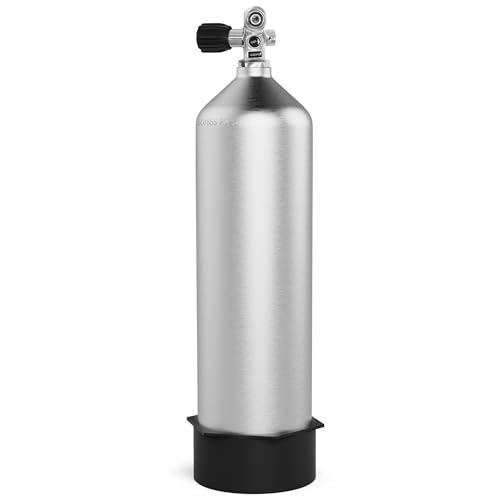
- 11.1L capacity for extended dives
- Lightweight aluminum alloy body
- Valve connector and protective base included
Best For: Deep-diving enthusiasts wanting a more stable portable cylinder
Portable Backup Tank
Mini Scuba Tank 1.9L Reusable Kit

- 1.9L tank with about 115 breaths of breathing time
- Food-grade silicone mouthpiece and 360° swivel joint
- Refillable at dive shops, with adapter, or with compressor
Best For: Lightweight backup use and shallow-water activities
Full-Size Cylinder Kit

- 11.1L / 80 cu. ft aluminum cylinder with regulator kit
- Includes triple gauge, two hoses, and first/second stage heads
- ISO certified with 5-year inspection cycle and 20-year life
Best For: Experienced divers seeking a larger-capacity tank kit
Portable Diving Kit
4L Scuba Tank with Mask and Adapter

- 4L tank supports about 30 to 50 minutes of breathing
- 6061 aviation aluminum build with 3000 PSI rating
- Includes mask, dual-shoulder clip, and inflation adapter
Best For: Recreational diving or emergency backup use
Travel-Ready Backup

- 0.5L tank with about 35 breaths at 200 bar
- DOT certified aluminum build with upgraded breathing valve
- Refills via dive shop, compressor, adapter, or hand pump
Best For: Shallow backup use, travel, and light underwater tasks
Portable Dive Time

- About 25-35 minutes of dive time with 16 cu ft capacity
- 30-inch 360-degree gauge makes air monitoring easier
- DOT-certified aluminum tank with safety valve and filters
Best For: Short recreational dives and hands-free underwater exploration
Compact Rescue Reserve

- CE/DOT dual certified with up to 20 minutes runtime
- Includes harness and adjustable control valve for hands-free use
- Refills by dive shop, adapter, compressor, or manual pump
Best For: Shallow reserve air, training, and practical underwater work
Training-Ready Aluminum S80 – Cyl-Tec S80 80 cu ft Scuba Tank
If you want a standard-size scuba tank for regular recreational diving, this Cyl-Tec S80 is built around the familiar 80 cu ft, 3000 PSI format. Its convertible DIN/yoke valve makes it easy to pair with different regulators, while the aluminum build helps resist corrosion in saltwater use.
Best For: Divers who want a trusted aluminum tank for training, rental-style use, boat dives, and everyday recreational diving.
Pros:
- 80 cu ft capacity with 3000 PSI working pressure
- Convertible DIN and yoke valve for broad regulator compatibility
- Lightweight aluminum construction for easier handling
- Predictable buoyancy profile for controlled trim underwater
Cons:
- Ships empty and must be filled locally
- May be more tank than casual snorkel-only users need
This is a practical, industry-standard choice if you want scuba tanks that are familiar, versatile, and easy to integrate into common dive setups.
Compact Backup Option – VEVOR 1L Portable Diving Tank
If you need a compact scuba tank for short underwater sessions, this 1L VEVOR kit is designed for portability and quick-use situations. It offers an estimated 15-20 minutes of breathing time at depths up to 98.43 ft, and the included inflation options make refilling more flexible than many mini tanks.
Best For: Beginners, backup-air users, emergency rescue kits, and casual divers who want a small portable cylinder.
Pros:
- Compact 1L design for easy transport
- Estimated 15-20 minutes of underwater breathing
- Supports multiple inflation methods, including adapter, compressor, or manual pump
- Aluminum construction with a food-grade silicone mouthpiece
Cons:
- Limited runtime compared with full-size scuba tanks
- Not intended for long, extended dive sessions
For short excursions and emergency support, this is a practical portable option, but it is best viewed as a supplement rather than a replacement for a full scuba setup.
Classic Full-Size Aluminum Tank – Cyl-Tec Aluminum 80 Scuba Tank
This Cyl-Tec aluminum scuba tank follows the familiar 80 cu ft, 3000 psi standard that many divers look for in a primary cylinder. It ships empty and DOT/TC certified, with a pro-style valve that converts from yoke to DIN for flexible regulator matching.
Best For: Divers who want a full-size aluminum tank with a standard footprint and convertible valve setup.
Pros:
- 80 cu ft air capacity at 3000 psi
- Pro-style valve converts from yoke to DIN
- DOT/TC certified and ships ready to fill
- Clear buoyancy figures for planning trim and weighting
Cons:
- Ships empty, so a local fill is required
- Heavier than mini or travel-oriented tanks
For divers comparing scuba tanks by standard size and compatibility, this is a straightforward, dependable aluminum option with the essentials covered.
Portable Deep-Dive Cylinder – TUDIVING 11.1L Aluminum Diving Tank
If you are comparing scuba tanks for a portable yet higher-capacity setup, this TUDIVING 11.1L cylinder is aimed at divers who want longer sessions than a mini tank can offer. Its aluminum alloy body, polished finish, and included valve connector and base make it a more complete cylinder-style option for underwater exploration.
Best For: Deep-diving enthusiasts who want a lightweight aluminum tank with added stability and protection features.
Pros:
- 11.1L capacity for longer dive times
- Lightweight aluminum alloy construction
- Includes valve connector and sturdy base
- Rubberized cylinder base helps protect against dragging and impact
Cons:
- No listed pressure rating in the supplied details
- Bulkier than compact mini tank options
This is a sensible pick if you want more capacity and a sturdier physical setup, but you should still verify compatibility and performance details before buying.
Portable Backup Tank – Mini Scuba Tank 1.9L Reusable Kit
If you want compact scuba tanks for shallow-water use, this 1.9L kit is built around portability and quick-access breathing support. It weighs just 7.98 lbs, includes an extended night-vision pressure gauge, and is designed for activities like underwater exploration, boat cleaning, practice dives, and underwater shooting.
Best For: Divers who want a lightweight backup or shallow-water tank with multiple refill options.
Pros:
- Compact 1.9L tank with about 200 bar / 115 breaths of underwater breathing time
- Food-grade silicone mouthpiece and 360° swivel joint for comfort and flexibility
- 5000 PSI burst-proof valve for pressure-release protection
- Can be refilled at local dive shops, with a refill adapter, or with the brand compressor
Cons:
- Not intended for deep-water use; the notes position it for shallow-water activities
- High-pressure hand pumps cannot fill this tank
- Refilling by compressor takes about 46 minutes
This is a practical pick if you want scuba tanks that are easy to carry and simple to use for short underwater sessions. The included vest and refill flexibility make it a convenient backup-style setup rather than a full-size dive solution.
Full-Size Cylinder Kit – TUDIVING 11.1L Aluminum Tank
For buyers comparing larger scuba tanks, this 11.1L aluminum cylinder is the more serious capacity option in the group. It’s paired with a regulator kit, triple gauge, and hoses, and the product notes point to experienced divers using it for scuba diving, underwater breathing, and freediving.
Best For: Experienced divers who want a full-size aluminum tank kit with regulator and gauges.
Pros:
- Large 11.1L / 80 cu. ft capacity for longer underwater sessions
- Includes first and second stage regulators, triple gauge, and two hoses
- Made from 6061 aerospace aluminum alloy with a cold extrusion process
- ISO certified with a 5-year inspection cycle and 20-year service life
Cons:
- Heavier and larger than portable mini tank options
- Certification is ISO, not DOT
- Best suited to experienced divers rather than casual first-time users
This kit stands out if your priority is capacity and a more complete breathing setup rather than maximum portability. The included regulator package and certification details make it a straightforward choice for divers who want a ready-to-use cylinder system.
Portable Diving Kit – 4L Scuba Tank with Mask and Adapter
This 4L option sits between a mini bottle and a full cylinder, making it a useful middle-ground among scuba tanks. The notes highlight 30 to 50 minutes of breathing support, a 3000 PSI rating, a dual-shoulder clip design, and an included mask and adapter for easier setup.
Best For: Recreational divers and emergency users who want a portable tank with included accessories.
Pros:
- 4L capacity supports about 30 to 50 minutes of underwater breathing
- Made from 6061 aviation aluminum and PT materials for durability
- Dual-shoulder clip design and adjustable straps help balance weight
- Includes a highly sealed diving mask and Yoke to 8mm inflation adapter
Cons:
- Smaller capacity than full-size scuba tanks
- Warranty is listed as 3 months in the notes
- Breathing time will vary with use and conditions
If you want a more portable tank kit without moving all the way down to a mini bottle, this one offers a balanced feature set. The included mask and adapter make it feel more complete out of the box for recreation or emergency readiness.
Travel-Ready Backup – SMACO S300 Mini Scuba Tank
If you want a compact option in the scuba tanks category, the SMACO S300 is built for short dives, backup air, and practical topside tasks like boat cleaning. Its 0.5L aluminum cylinder is DOT certified, rechargeable through several methods, and designed for easier breathing with an upgraded valve core.
Best For: Divers who want a small, reusable backup air source for shallow recreational use, travel, and light underwater jobs.
Pros:
- 0.5L tank delivers about 35 breaths at 200 bar in tested conditions
- DOT certified and made from aerospace-grade 6061 aluminum alloy
- Three-layer filtration system helps block dust and impurities
- Multiple inflation options, including dive shop refill and compatible compressor use
Cons:
- Maximum diving depth is limited to 16 ft for primary use
- Not intended as a full-sized tank replacement for longer dives
- Manual pump inflation is the slowest refill option
Overall, the S300 makes sense if portability and backup capability matter more than extended bottom time. It is especially appealing for travelers who like the idea of a disassembled tank they can take on a plane and refill through flexible methods.
Portable Dive Time – 2.3L Mini Scuba Tank
This 2.3L entry in scuba tanks is aimed at buyers who want noticeably more breathing time without moving to a full-size setup. It is DOT certified, uses an aluminum body, and includes a 30-inch expandable pressure gauge so you can monitor air without repositioning the tank.
Best For: Divers looking for a portable mini tank with longer runtime for short recreational dives and hands-free underwater exploration.
Pros:
- 16 cu ft capacity supports about 25-35 minutes of dive time
- 30-inch gauge rotates 360 degrees for easier air checks
- DOT-certified aluminum construction improves portability
- Includes safety features like a 5K explosion-proof valve and multi-layer filters
Cons:
- Tank is not pre-inflated, so setup and filling are required
- Maximum pressure is limited to 3000 psi
- Bulkier than smaller mini tank options
For shoppers prioritizing runtime, this model stands out because it offers more breathing reserve while still staying portable. The bracket and gauge setup also make it a practical pick for users who want easier handling underwater.
Compact Rescue Reserve – SEBiger 1.0L Mini Scuba Tank
Among compact scuba tanks, the SEBiger 1.0L model is built around portability, reserve-air use, and quick refilling options. It carries CE/DOT dual certification, uses 6061 aerospace-grade aluminum, and is designed for tasks like rescue practice, hull cleaning, and underwater photography.
Best For: Users who want a small reserve tank for shallow diving, training, and practical underwater work.
Pros:
- CE/DOT dual certification with claimed runtime up to 20 minutes under standard conditions
- Advanced constant-pressure breathing valve for smoother breathing
- Flexible refill options, including dive shop, adapter, compressor, or manual pump
- Includes a harness for hands-free use and secure body attachment
Cons:
- Recommended depth is only 17 ft for typical use
- Intended as a reserve air source in colder or deeper conditions
- Manual pump refill takes the longest at about 50 minutes
This is a sensible pick if you need a compact cylinder for backup breathing and short, controlled sessions. Its included strap and accessory set make it easier to put into service right away for practical tasks.
How We Picked These Scuba Tanks
We focused on practical factors that matter to real buyers: certified construction, usable air capacity, fill pressure, portability, valve setup, and whether each tank is suited to recreational diving, backup use, or short-duration underwater breathing. We also looked for clear product specs and the kind of features that help match a tank to your diving needs.
Quick Comparison: What Different Scuba Tanks Are Best for
Full-size aluminum 80-cubic-foot cylinders are the standard choice for traditional scuba diving, offering the best balance of runtime and manageability. Smaller mini tanks and portable cylinders are better for short underwater tasks, emergency backup, boat use, or training scenarios where portability matters more than long bottom time.
As a rule, more capacity usually means longer breathing time, but also more weight and bulk. If you want a true dive-tank experience, look for larger DOT/TC-certified aluminum models. If you want a compact option, make sure the tank is rated for your intended depth and use case.
Key Buying Factors for Scuba Tanks
Capacity and Runtime
Tank size is the biggest driver of underwater breathing time. Small 0.5L to 2.3L mini tanks can be useful for very short excursions, while 4L and 11.1L options offer more practical runtime. Standard 80 cu. ft. aluminum Scuba Tanks are better for longer dives and more conventional recreational use.
Material and Weight
Aluminum Scuba Tanks are popular because they resist corrosion and are easier to manage for many divers. Heavier or larger cylinders may feel more stable in the water, but they are harder to transport and store.
Pressure Rating and Certification
Always check the working pressure and certification marks. DOT and TC certification are important signals for North American buyers, while proper pressure ratings help you compare fill capacity and expected performance. Never exceed the listed limits.
Valve and Regulator Compatibility
Some Scuba Tanks come with convertible DIN/Yoke valves, while others include different adapters or regulator kits. Make sure the tank matches the gear you already own, especially if you want a plug-and-play setup.
Depth and Use Case
Mini Scuba Tanks are not substitutes for a full recreational setup unless the product is specifically designed and rated for your intended use. Check maximum depth guidance, breathing duration estimates, and whether the product is intended for emergency backup, snorkeling support, or short dive tasks.
Who Should Buy Which Scuba Tanks?
If you want a standard recreational setup, choose a full-size aluminum 80 scuba tank. If you need a compact secondary air source, look at mini Scuba Tanks in the 0.5L to 2.3L range. For portable utility work or short underwater sessions, a mid-size tank such as a 4L or 11.1L option may offer the best balance of runtime and convenience.
In short, the best choice depends on your dive goals, your existing gear, and how much underwater time you actually need. Match the tank to the mission, not just the size on the label.