Stable water chemistry is essential in saltwater aquariums, where small changes in ammonia, pH, alkalinity, or nitrate can quickly stress fish and corals. The right test kit makes routine monitoring more consistent and helps you respond before problems become visible.
This roundup compares 10 options, including reef-specific liquid kits, multiparameter strips, high-count value packs, and digital testing systems. Use the guide below to match testing depth and convenience to your tank.
Best 10 Aquarium Test Kits for Saltwater Tanks Picks for 2026
Reliable Saltwater Baseline
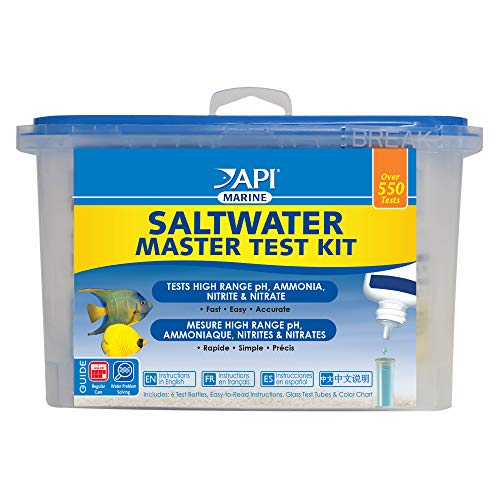
- Tests high-range pH, ammonia, nitrite, and nitrate
- Includes six solutions, four tubes, and a color card
- Designed for weekly saltwater monitoring
Best For: Routine saltwater aquarium water checks
Reef Parameter Coverage
Salifert Master Reef Testing Combo Kit

- Combines six professional reef tests
- Measures calcium, nitrate, phosphate, pH, alkalinity, and magnesium
- Covers core marine reef-tank parameters
Best For: Reef keepers seeking broad chemistry coverage
High-Count Strip Convenience
11-in-1 Aquarium Water Test Strips

- Includes 125 strips testing 11 parameters
- Covers ammonia nitrogen, nitrate, nitrite, pH, and hardness
- Color chart and upgraded pads support quick readings
Best For: Frequent multi-parameter screening
Targeted Reef Chemistry
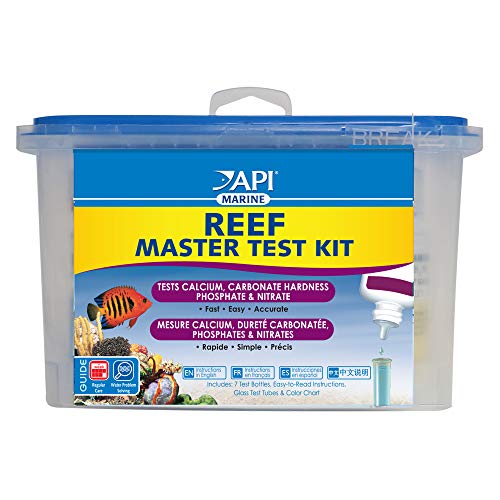
- Tests calcium, carbonate hardness, phosphate, and nitrate
- Includes seven solutions, two color cards, and four tubes
- Designed specifically for reef aquariums
Best For: Routine reef-focused chemistry checks
Quick-Check Versatility

- Measures eight key aquarium parameters
- Includes 100 sealed test strips
- Suitable for saltwater and freshwater use
Best For: Frequent, broad water checks without liquid reagents
Liquid-Reagent Precision

- Uses liquid reagents for five core tests
- Includes up to 265 total measurements
- Works with freshwater and marine tanks
Best For: Repeated, focused testing of nitrogen-cycle and phosphate levels
Simple Multi-Tank Monitoring

- Checks eight aquarium water metrics
- Fits marine, freshwater, shrimp, and planted tanks
- Offers 50 strips for at-home screening
Best For: Convenient routine checks across multiple aquatic habitats
Best Everyday Coverage

- Tests 10 key water parameters
- Includes 100 strips and an eBook
- Suitable for freshwater and saltwater tanks
Best For: Routine, broad aquarium water checks
Best App-Guided Option
Digital 10-in-1 Aquarium Test Kit

- Scans strips with a mobile app
- Includes ammonia, nitrate, nitrite, pH, GH, and KH testing
- Works with freshwater, saltwater, and reef tanks
Best For: Digital, app-supported aquarium monitoring
Best High-Volume Choice

- Tests 11 parameters, including ammonia
- Includes 150 strips and testing tubes
- Designed for freshwater and saltwater aquariums
Best For: Frequent testing and larger household aquarium setups
Reliable Saltwater Baseline – API Saltwater Master Test Kit
For aquarists comparing aquarium test kits for saltwater tanks, the API Saltwater Master Test Kit offers a liquid-testing setup focused on four core water parameters: high-range pH, ammonia, nitrite, and nitrate. It includes six testing-solution bottles, four capped test tubes, a color card, and an instructional booklet for weekly monitoring.
Best For: Saltwater aquarium owners who want to track the primary indicators associated with water-quality problems.
Pros:
- Measures high-range pH, ammonia, nitrite, and nitrate.
- Includes six solution bottles, four capped test tubes, and a color card.
- Designed for weekly saltwater aquarium monitoring and troubleshooting.
Cons:
- Does not include calcium, alkalinity, phosphate, or magnesium tests.
- Liquid tests require following separate instructions for each parameter.
This is a practical general-purpose choice for routine saltwater monitoring, especially when ammonia, nitrite, nitrate, and high-range pH are the main priorities.
Reef Parameter Coverage – Salifert Master Reef Testing Combo Kit
Among aquarium test kits for saltwater tanks, the Salifert Master Reef Testing Combo Kit is aimed at reef keepers who need broader core-parameter coverage. The six-test combination includes calcium, nitrate, phosphate, pH, alkalinity, and magnesium in liquid and powder test formats.
Best For: Reef aquarium owners who want one combo kit covering several core marine and reef-water parameters.
Pros:
- Includes six professional test kits in one package.
- Covers calcium, nitrate, phosphate, pH, alkalinity, and magnesium.
- Addresses a broad set of core parameters for saltwater and marine reef tanks.
Cons:
- The supplied details do not specify test counts, included containers, or color cards.
- It does not list ammonia or nitrite testing among the included parameters.
Its main advantage is breadth across reef-focused chemistry. Choose it when calcium, alkalinity, magnesium, phosphate, and the other listed parameters matter more than ammonia and nitrite coverage.
High-Count Strip Convenience – 11-in-1 Aquarium Water Test Strips
For shoppers seeking aquarium test kits for saltwater tanks with a quick strip format, this 11-in-1 kit provides 125 test strips and measures a wide range of readings. It tests pH, alkalinity, carbonate hardness, general hardness, chlorine, sodium chlorine, iron, copper, nitrate, nitrite, and ammonia nitrogen, with a color chart for comparison.
Best For: Aquarists who value a large supply of multi-parameter strips for quick screening across aquariums or ponds.
Pros:
- Provides 125 strips, with each strip measuring 11 listed parameters.
- Includes pH, hardness, nitrate, nitrite, and ammonia nitrogen testing.
- Upgraded pad design is intended to reduce color bleeding and support easier reading.
- Can be used for aquariums, new-tank cycling, betta habitats, and koi ponds.
Cons:
- Ammonia nitrogen requires a separate fresh sample and a two-minute reading process.
- Strip readings require timed dipping and color-chart comparison.
- The listed panel includes parameters that may be less targeted to reef-specific testing.
This kit stands out for quantity and convenience. Its broad panel can help with quick screening, but the separate ammonia procedure is important to follow for the intended result.
Targeted Reef Chemistry – API Reef Master Test Kit
When comparing aquarium test kits for saltwater tanks specifically for reef use, the API Reef Master Test Kit focuses on four important reef parameters: calcium, carbonate water hardness, phosphate, and nitrate. The package includes seven testing-solution bottles, two color cards, and four capped test tubes.
Best For: Reef aquarium owners who want a dedicated liquid kit for calcium, carbonate hardness, phosphate, and nitrate.
Pros:
- Tests calcium, carbonate water hardness, phosphate, and nitrate.
- Includes seven testing-solution bottles, two color cards, and four capped tubes.
- Designed specifically for reef aquariums.
- Suitable for weekly monitoring and checking water or fish problems.
Cons:
- Does not include ammonia, nitrite, pH, or magnesium tests.
- The supplied directions call for separate testing procedures for each parameter.
This is a focused option rather than an all-purpose saltwater kit. It makes the most sense when reef-oriented calcium, carbonate hardness, phosphate, and nitrate tracking are the priority.
Quick-Check Versatility – AAwipes 8-in-1 Test Strips
For shoppers comparing aquarium test kits for saltwater tanks, the AAwipes 8-in-1 strips offer a broad snapshot of water conditions without liquid reagents or extra equipment. They test ammonia nitrogen, pH, sodium chloride, alkalinity, hardness, chlorine, nitrate, and nitrite, with separate timing for the ammonia pad.
Best For: Aquarists who want convenient, frequent checks across saltwater, freshwater, ponds, or shrimp tanks.
Pros:
- Tests eight water parameters, including ammonia nitrogen and sodium chloride.
- Includes 100 strips for regular at-home monitoring.
- Sealed packaging is designed to help protect the strips from moisture.
Cons:
- Ammonia requires a separate five-second dip and a longer 180-second reading time.
- Color-chart interpretation may be less precise than liquid-reagent testing.
The AAwipes kit is a practical choice when testing breadth, quantity, and simple storage matter most. Its multi-step ammonia timing is worth noting, but the large strip count supports the twice-weekly testing routine recommended in the product notes.
Liquid-Reagent Precision – Pawfly 5-in-1 Master Kit
Among aquarium test kits for saltwater tanks, the Pawfly 5-in-1 Master Test Kit stands out for using liquid reagents rather than strips. It covers pH, nitrite, nitrate, ammonia, and phosphate, with color-matching charts for evaluating results in marine or freshwater aquariums.
Best For: Fishkeepers who prioritize liquid-reagent testing and need repeated monitoring of core nutrient and nitrogen-cycle parameters.
Pros:
- Tests five important parameters, including phosphate and ammonia.
- Designed for both freshwater and saltwater aquariums.
- Provides up to 265 measurements across the included tests.
- Liquid reagents are presented as more accurate than traditional test strips.
Cons:
- Color matching and liquid reagents require more hands-on work than dip strips.
- The kit does not cover parameters such as hardness, alkalinity, or chlorine.
Pawfly is the stronger fit for aquarists who want a focused, repeat-use kit centered on ammonia, nitrite, nitrate, phosphate, and pH. It offers substantial testing capacity, though shoppers seeking wider parameter coverage may need another method for supplementary checks.
Simple Multi-Tank Monitoring – EASYTEST 8-Way Strips
The EASYTEST 8-Way strips are a convenient option for shoppers seeking aquarium test kits for saltwater tanks that also work across other aquatic setups. The 50-strip kit checks pH, hardness, alkalinity, chlorine, nitrate, nitrite, carbonate, and ammonia nitrogen, with results developed through timed color comparison.
Best For: Aquarists managing marine, freshwater, shrimp, planted, or pond environments who want one strip format for multiple tanks.
Pros:
- Covers eight parameters, including ammonia, nitrate, nitrite, alkalinity, and carbonate.
- Suitable for saltwater, freshwater, shrimp, planted, and pond setups.
- Uses a graded chart intended to distinguish safer and riskier levels.
- Requires no pricey extra gear for at-home testing.
Cons:
- The 50-strip quantity is smaller than the 100-strip AAwipes option.
- Ammonia testing requires cutting off the ammonia pad for accurate testing.
- Different parameters use different reading times, requiring careful timing.
EASYTEST makes sense for convenience-focused keepers who test several types of aquatic habitats. Its broad coverage is useful for routine screening, but accurate results depend on following the separate development times and ammonia-pad instructions.
Best Everyday Coverage – 10-in-1 Aquarium Test Strips
For routine aquarium care, these 10-in-1 strips provide broad coverage in a simple format. They are suitable for freshwater and saltwater setups and test pH, iron, chlorine, hardness, carbonate, nitrate, nitrite, alkalinity, copper, and temperature.
Best For: Aquarists who want an affordable, easy-to-use screening kit for regular freshwater or saltwater tank checks.
Pros:
- Tests 10 water-quality parameters with one strip.
- Includes 100 strips, split between a bottle and a separate bag for freshness.
- Color chart, testing tube, instruction manual, and aquarium-water eBook are included.
- Works across saltwater aquariums, freshwater tanks, betta tanks, and ponds.
Cons:
- Results require visual comparison with the included color chart.
- The notes recommend using opened strips within three months for maximum accuracy.
- The listed parameters do not include ammonia.
This is a practical choice when you want broad, at-home monitoring without a more involved testing process. Its large strip count makes frequent checks convenient, though aquarists needing ammonia monitoring may want a different or supplemental kit.
Best App-Guided Option – Digital 10-in-1 Aquarium Test Kit
This app-enabled kit is designed for aquarists who prefer digital results over printed color matching. The strips cover ammonia, nitrate, nitrite, pH, GH, KH, chlorine, and other listed measures for freshwater, saltwater, reef, shrimp, and other aquarium setups.
Best For: Beginners and experienced hobbyists who want app-supported readings and a versatile kit for routine tank maintenance.
Pros:
- Uses the DROPLYTIX app to scan strips and provide digital results.
- Measures important cycling and water-quality indicators, including ammonia, nitrate, nitrite, pH, GH, and KH.
- Designed for freshwater, saltwater, reef, planted, shrimp, betta, turtle, and axolotl aquariums.
- Helps reduce reliance on manually comparing strip colors with a printed chart.
Cons:
- The kit includes test strips and a mobile app, so app use is part of the testing process.
- The supplied details list 10 test strips, providing less stated capacity than the larger strip-count options here.
- The notes do not specify an included thermometer, testing tube, or eBook.
The app-based workflow is the main reason to choose this model. It is especially appealing for aquarium cycling and routine maintenance when tracking ammonia and other core parameters digitally is more convenient than interpreting a color chart.
Best High-Volume Choice – 11-in-1 Aquarium Test Strips
If you test often, this 11-in-1 strip kit offers a high stated test supply and adds ammonia testing to its broad parameter coverage. It is made for freshwater and saltwater aquariums and also checks pH, iron, chlorine, hardness, carbonate, nitrate, nitrite, alkalinity, copper, and temperature.
Best For: Aquarists who want a large supply of strips for frequent testing across multiple aquarium types.
Pros:
- Tests 11 parameters, including ammonia.
- Provides 150 strips, with strips divided between a bottle and separate bags for freshness.
- Includes color chart, testing tubes, and an aquarium-water eBook.
- Suitable for saltwater aquariums, freshwater tanks, betta tanks, and fish ponds.
Cons:
- Results depend on visual color-chart comparison.
- The notes recommend using opened strips within three months for maximum accuracy.
- The product description uses both “150 strips” and “950 tests,” so buyers should verify the package’s effective test count.
Among these aquarium test kits for saltwater tanks, this is the stronger strip-based option for frequent testing and ammonia awareness. Its larger stated supply suits regular maintenance, while the included materials make it a self-contained choice for home use.
How We Picked the Best Aquarium Test Kits for Saltwater Tanks
We focused on the measurements saltwater aquarists commonly need, including ammonia, nitrite, nitrate, pH, alkalinity, calcium, and phosphate. Reef-oriented liquid kits generally offer more useful precision for coral systems, while strips can be faster for routine screening. We also considered test count, readable results, stated freshwater and saltwater compatibility, ease of use, and overall value.
Because product formats vary, a higher test count does not automatically mean better accuracy. A kit is most useful when it measures the parameters your aquarium requires and is simple enough to use on a consistent schedule.
Quick Comparison
| Kit Type | Best For | Main Advantage | Potential Limitation |
|---|---|---|---|
| Reef liquid test kit | Coral and invertebrate tanks | More targeted chemistry testing | Requires more time and careful technique |
| Saltwater master liquid kit | New tanks and fish-only systems | Useful core parameter coverage | May not include every reef parameter |
| Test strips | Fast routine checks | Simple, compact, and quick | Color matching can be less precise |
| Digital or app-enabled kit | Record keeping and convenience | Guided readings and tracking | Depends on batteries, calibration, or app support |
Key Buying Factors for Aquarium Test Kits for Saltwater Tanks
Parameters and Precision
Choose coverage based on livestock. Fish-only aquariums usually benefit most from ammonia, nitrite, nitrate, and pH testing. Reef tanks often also need alkalinity, calcium, and phosphate measurements. For sensitive corals, liquid tests or digital instruments may provide more actionable results than basic strips.
Testing Method
Liquid tests typically require adding measured reagents, waiting for a reaction, and comparing a color chart. Follow the timing and sample instructions closely. Strips are quicker but should be read within the specified window, since colors can continue changing as they dry.
Test Count and Shelf Life
Estimate how often you will test before choosing a package size. Large strip packs can be economical for frequent checks, while liquid reagents may have a finite shelf life after opening. Store all tests as directed and replace questionable or expired reagents.
Usability and Records
Clear instructions, readable charts, consistent sample volumes, and included accessories can make a major difference. App-enabled systems may help track trends, but a simple notebook or spreadsheet is also effective.
Who Should Buy Which Aquarium Test Kits for Saltwater Tanks?
New saltwater keepers: Start with a straightforward master kit covering ammonia, nitrite, nitrate, and pH. Reef aquarists: Choose a reef-specific kit that includes alkalinity, calcium, and phosphate, then add specialty tests as needed. Busy owners: Multiparameter strips offer convenient routine screening. High-volume testers: Large-count packs can reduce replacement costs. Data-focused hobbyists: A digital or app-enabled kit may simplify logging and trend analysis.
No test kit replaces regular maintenance or proper calibration. Test new systems frequently, confirm unusual readings with a second method when possible, and use trends—not a single result—to guide gradual adjustments.