Choosing the right aquarium pump affects water movement, filtration, oxygen exchange, and maintenance. The best option depends on your tank size, required flow, lift height, and whether you need circulation, return, or transfer performance.
We compare 10 freshwater-compatible pumps across quiet operation, controllability, output, installation flexibility, and everyday value to help you match the pump to your setup.
Best 10 Aquarium Water Pumps for Freshwater Tanks Picks for 2026
Best High-Lift Pick
VIVOSUN 800GPH Submersible Pump

- 800 GPH flow with up to 10-foot lift
- Adjustable output and three nozzles
- Tool-free cleaning and flexible placement
Best For: Freshwater tanks and higher-lift water features
Best for Targeted Circulation

- 530 GPH for 15- to 40-gallon tanks
- 360-degree adjustable flow direction
- Magnetic 4-10mm glass mount
Best For: Directional circulation and surface agitation
Best Budget Circulation Pump
PULACO 400GPH Submersible Pump

- Adjustable flow up to 400 GPH
- 6.5-foot maximum lift
- Includes 5 feet of silicone tubing
Best For: Simple circulation in medium freshwater tanks
Best Adjustable Return Pump

- 1050 GPH flow and 11.5-foot lift
- 20 speeds and three operating modes
- 24V DC design with external controller
Best For: Controlled return and circulation systems
Adjustable Flow Pick
GROWNEER 550GPH Submersible Pump

- Adjustable flow control knob
- 7.2-foot maximum lift
- Three nozzle sizes included
Best For: Freshwater tanks needing flexible circulation and easy installation
Smart Return Pump

- 20-speed LCD controller
- 10-foot maximum lift
- Dry-run and blockage shutoff
Best For: Sump and return systems needing quiet, adjustable flow
Water Change Specialist
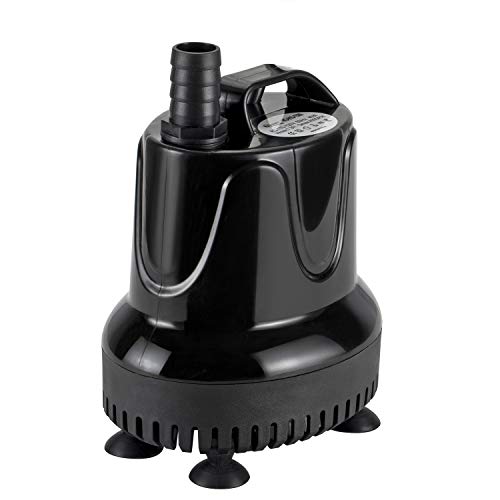
- Drains to about 1/4 inch
- Handles small debris and waste
- Three barb fittings included
Best For: Aquarium water changes and low-level draining
Best Quiet Wave Maker

- 360-degree adjustable water direction
- Quiet 3W design with suction-cup mounting
- Supports circulation, oxygenation, and filtration
Best For: Freshwater tanks needing adjustable, low-noise circulation
Best Budget Nano-Tank Pump

- Adjustable output up to 80GPH
- Compact size for small tanks and fountains
- Supports two common tubing sizes
Best For: Freshwater aquariums under five gallons with minimal lift
Best High-Flow Return Pump
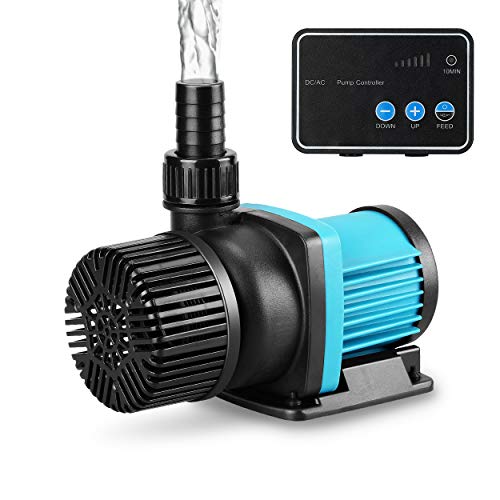
- Six adjustable speeds from 30% to 100%
- 14.8-foot maximum lift for return applications
- Dry-run protection plus feeding and wave modes
Best For: Large freshwater tanks, sumps, and high-flow installations
Best High-Lift Pick – VIVOSUN 800GPH Submersible Pump
For aquarium water pumps for freshwater tanks that need strong circulation or a higher vertical lift, the VIVOSUN 800GPH offers adjustable flow, three nozzle options, and lift capacity up to 10 feet. Its compact, detachable design also makes routine cleaning easier.
Best For: Freshwater tanks, fountains, hydroponic systems, and setups requiring higher lift.
Pros:
- Up to 800 GPH (3000L/H) flow and 10-foot maximum lift.
- Adjustable flow control and three included nozzles.
- Tool-free disassembly and compact, flexible placement options.
Cons:
- Flow decreases as lift height increases.
- At 50W, it uses more power than the smaller circulation-focused options here.
The VIVOSUN is a versatile choice when a freshwater aquarium pump must also handle elevated returns, fountains, or other water features. Its adjustable output helps tailor the current to the tank.
Best for Targeted Circulation – hygger Mini Wave Maker
Among aquarium water pumps for freshwater tanks, the hygger Mini Wave Maker is designed more for circulation and surface agitation than for lifting water. Its 360-degree adjustable head and magnetic mount make it easy to direct current in 15- to 40-gallon aquariums.
Best For: Freshwater aquariums needing gentle, directional circulation, oxygenation, or help moving debris toward a filter.
Pros:
- 530 GPH flow for 15- to 40-gallon tanks.
- 360-degree rotating head helps target water movement.
- Magnetic mount fits 4-10mm glass and supports easy repositioning.
- Removable guard and ceramic shaft simplify maintenance and support quiet operation.
Cons:
- It is a wave maker rather than a general-purpose high-lift return pump.
- Its 5.9-foot cord may limit placement in some setups.
This compact 3W powerhead is a practical option when the priority is reducing dead spots, agitating the surface, and improving circulation without adding a large pump to the tank.
Best Budget Circulation Pump – PULACO 400GPH Submersible Pump
The PULACO 400GPH is a straightforward option for aquarium water pumps for freshwater tanks, offering adjustable flow and a maximum lift of 6.5 feet. It also includes 5 feet of silicone tubing for aquarium, fountain, hydroponic, and similar applications.
Best For: Medium fish tanks and compact freshwater setups that need simple, adjustable water circulation.
Pros:
- Adjustable flow valve with up to 400 GPH output.
- 6.5-foot maximum lift supports varied placement.
- Tool-free disassembly makes cleaning convenient.
- Includes 5 feet of silicone tubing.
Cons:
- The supplied tubing may arrive with kinks that need time to straighten.
- Its 400 GPH capacity is lower than the higher-output pumps in this roundup.
The PULACO keeps the feature set practical: adjustable flow, moderate lift, quiet operation, and easy maintenance. It is well suited to everyday circulation when advanced controls are unnecessary.
Best Adjustable Return Pump – Orlushy DC-4000 Silent Swirl
For aquarium water pumps for freshwater tanks that benefit from precise control, the Orlushy DC-4000 combines 1050 GPH flow with 20 speed settings and three operating modes. Its 24V DC design, external controller, and sine-wave technology are suited to return, circulation, and wave applications.
Best For: Freshwater tanks, sumps, and mixed setups requiring adjustable flow, feed mode, or wave operation.
Pros:
- 1050 GPH maximum flow with an 11.5-foot maximum lift.
- 20 adjustable speeds plus constant-flow, wave, and feed modes.
- 24V low-voltage DC operation with a brushless motor.
- Includes three nozzle sizes for different applications.
Cons:
- The controller adds complexity compared with basic pumps.
- Its high output may require careful adjustment for smaller tanks.
The Orlushy stands out for controllability and lift capacity. Its external controller lets you fine-tune water movement rather than relying on a single fixed output, making it particularly useful for return-pump installations.
Adjustable Flow Pick – GROWNEER 550GPH Submersible Pump
For aquarium water pumps for freshwater tanks, the GROWNEER 550GPH is a flexible submersible option with adjustable flow, multiple nozzle sizes, and a 7.2-foot maximum lift. Its compact design and suction cups make it practical for fish tanks, fountains, and other water features.
Best For: Freshwater aquarium owners who want adjustable circulation or a pump that can also support fountains and hydroponic setups.
Pros:
- Control knob adjusts the water flow to suit different setups.
- Includes three nozzle sizes: 0.51, 0.62, and 0.75 inches.
- 7.2-foot maximum lift and four independent suction cups.
- 30W motor with a 5.9-foot power cord.
Cons:
- Maximum flow is lower than the 660GPH return pump in this roundup.
- Designed for 110V AC power, so it may be less suitable for systems requiring DC control.
The GROWNEER stands out when simple installation and manual flow adjustment matter more than advanced controls. Check that hose connections are tightly sealed to achieve the stated lift.
Smart Return Pump – JEREPOND 660GPH Aquarium Pump
Among aquarium water pumps for freshwater tanks, the JEREPOND 660GPH model is geared toward controlled filtration and return applications. Its LCD controller offers 20 speed settings, while the DC design supports submersible or inline installation.
Best For: Freshwater aquarium systems with sumps or return plumbing where adjustable flow, quiet operation, and safety features are priorities.
Pros:
- 20 adjustable speeds regulate flow from 30% to 100%.
- LCD controller displays speed and working status.
- 10-foot maximum lift with a 660GPH maximum flow rate.
- Under-25 dBA operation and automatic shutoff for dry running or blockage.
Cons:
- Its controller and power adapter add components compared with simpler pumps.
- The 5.4-inch pump body may require more installation space than compact models.
This is the most feature-rich choice here for freshwater tanks that need precise return-flow tuning. The included intake covers also help accommodate lower water-level suction.
Water Change Specialist – hygger 400GPH Transfer Pump
The hygger 400GPH is a practical choice among aquarium water pumps for freshwater tanks when draining and transferring water are major tasks. Its bottom intake can lower water to about 1/4 inch and handle debris and fish waste, making maintenance quicker.
Best For: Freshwater aquarium owners who want one pump for water changes, low-level draining, and occasional fountain or pond use.
Pros:
- Bottom intake drains water down to approximately 1/4 inch.
- Can suck up debris and fish waste as small as 1/5 inch.
- 7.3-foot maximum lift with a 400GPH maximum flow rate.
- Includes three barb fittings and a 6-foot power cord.
Cons:
- 40W power consumption is higher than the GROWNEER’s 30W motor.
- Its 400GPH flow is lower than the other two pumps in this roundup.
- The larger 5-by-4-by-5.7-inch body may be less convenient for small tanks.
The hygger is especially useful as a maintenance pump rather than a dedicated high-flow return pump. Its low-level intake and included fittings make it well suited to routine aquarium water changes.
Best Quiet Wave Maker – DaToo 800GPH Circulation Pump
For aquarists comparing aquarium water pumps for freshwater tanks, the DaToo 800GPH is a compact circulation pump designed to create directional flow rather than serve as a traditional high-lift return pump. Its 360-degree adjustment, suction-cup mounting, and quiet operation make it practical for improving circulation and surface movement.
Best For: Freshwater tanks needing adjustable circulation, added oxygenation, and a compact, quiet power head.
Pros:
- 360-degree rotation helps direct flow around the aquarium.
- 800GPH output supports strong circulation and surface agitation.
- Ceramic shaft and waterproof motor are designed for continuous operation.
- Suction-cup base helps reduce vibration and keeps the pump positioned.
Cons:
- It must remain fully submerged during operation.
- Its strong flow may be excessive for very small or low-flow setups.
The DaToo is a useful choice when circulation and oxygen exchange are the priority. The adjustable head and protective water filter cover add flexibility, while the included one-year warranty provides extra reassurance.
Best Budget Nano-Tank Pump – AQUANEAT 80GPH Fountain Pump
Among aquarium water pumps for freshwater tanks, the AQUANEAT 80GPH is aimed at small aquariums and compact water features. Its adjustable control knob, miniature footprint, and two outlet options make it easy to fit into a basic setup, provided the tank is under five gallons and the lift height is limited.
Best For: Small freshwater aquariums under five gallons, tabletop fountains, and low-head applications.
Pros:
- Adjustable flow control lets you fine-tune the output.
- Compact 2-inch design is easy to hide or disguise.
- Includes outlets for 5/16-inch or 1/2-inch tubing.
- Six-foot power cord provides useful placement flexibility.
Cons:
- Recommended only for small fish tanks under five gallons.
- Flow drops substantially as lifting height and tubing resistance increase.
- It requires full submersion and inlet clearance below the water surface.
This pump is best viewed as a simple, low-cost solution for nano tanks rather than a powerful filtration or return pump. Check the required lift height before buying, since its stated 80GPH rating is measured with no lift.
Best High-Flow Return Pump – 1850GPH DC Aquarium Pump
For larger freshwater systems and sump setups, this controllable DC pump offers substantially more capacity than small aquarium water pumps for freshwater tanks. It provides six speed settings, a 14.8-foot maximum lift, and flexible submersible or inline installation, making it suitable when flow control and return-pump versatility matter.
Best For: Larger freshwater aquariums, sumps, ponds, hydroponic systems, and installations requiring adjustable high flow.
Pros:
- 1850GPH maximum flow and up to 14.8 feet of lift support demanding setups.
- Six speed levels adjust output from 30% to 100%.
- Controller includes a 10-minute feeding mode and wave-maker function.
- Dry-run and blockage protection automatically shut the pump off.
Cons:
- The 7.5-inch pump body is much larger than nano-tank models.
- Its 55W power rating may be more than small freshwater tanks require.
- Actual flow will vary with plumbing, lift height, and installation configuration.
This is the strongest and most configurable option in the group. Its controller and safety shutoff suit return-pump duties, while the submersible or inline design gives you more installation choices than a basic internal circulation pump.
How We Picked the Best Aquarium Water Pumps for Freshwater Tanks
We evaluated these pumps by their stated flow rates, power requirements, lift capability, control features, mounting options, included fittings, and intended use. Because advertised gallons per hour are usually measured with little or no resistance, we also considered how tubing, filter media, elbows, and vertical lift can reduce real-world output.
The selection includes small pumps for nano and modest community aquariums, circulation powerheads for eliminating stagnant areas, return pumps for sumps, and transfer pumps for water changes. Quiet operation and easy cleaning were treated as especially important for indoor freshwater setups.
Quick Comparison
- Small tanks and gentle flow: The 80 GPH AQUANEAT is suited to compact systems where excessive current could stress fish.
- General-purpose pumping: The 400–800 GPH models offer useful flexibility for medium aquariums, fountains, filtration, and transfers.
- Circulation: The hygger Mini Wave Maker and DaToo powerhead are designed primarily to move water inside the display rather than lift it through plumbing.
- Return and larger systems: The controllable DC pumps and 1850 GPH model provide more output for sumps, long tubing runs, and higher-flow applications.
Key Buying Factors for Aquarium Water Pumps for Freshwater Tanks
Flow Rate and Tank Size
Use tank volume as a starting point, but do not choose solely by the largest GPH number. Fish species, plants, aquascaping, filtration, and desired turnover all matter. Bettas, fry, and delicate plants typically need gentler circulation, while heavily stocked or high-filtration systems may benefit from stronger movement.
Lift Height and Head Pressure
If water must travel from a sump, reservoir, or bucket, check the pump’s maximum lift and expect reduced flow at that height. A pump rated for a high GPH at zero lift may perform much more slowly once connected to narrow tubing or raised several feet.
Control, Noise, and Efficiency
Adjustable DC pumps make it easier to tune flow and can reduce splashing, stress, and energy use. Look for quiet motors, sine-wave or speed controls, and low-wattage operation when the aquarium is in a bedroom or living area.
Installation and Maintenance
Confirm that the pump includes suitable nozzles, tubing adapters, suction cups, or magnetic mounts. Keep intake screens clear, remove debris regularly, and never run a submersible pump dry. For planted or livestock-heavy tanks, use an intake guard to protect small fish and shrimp.
Who Should Buy Which Aquarium Water Pumps for Freshwater Tanks?
Choose a compact low-flow pump for nano tanks or gentle circulation. Pick a wave maker when your primary goal is eliminating dead spots rather than moving water through a filter. For routine water changes, prioritize a transfer pump with convenient tubing and manageable output. Sump users should choose a return pump with enough head capacity and preferably adjustable DC control. Larger aquariums or long plumbing runs need a higher-output model with a meaningful lift rating, while anyone sensitive to noise should prioritize quiet motor design over maximum advertised flow.