The best diving fins should match how you move through the water, where you use them, and how much luggage space you have. This roundup compares 10 options for scuba diving, snorkeling, freediving, swim training, and travel.
From lightweight full-foot designs to adjustable open-heel and long-blade fins, these picks cover different comfort, propulsion, and portability needs.
Best 10 Diving Fins Picks for 2026
Balanced Scuba Performance
Cressi Pro Light Open-Heel Fins

- Dual-material blade balances lightness and strength
- Side rails help direct waterflow for thrust
- Comfortable open-heel design for scuba use
Best For: Scuba divers seeking efficient, well-balanced propulsion
Training and Body Position

- Buoyancy lifts legs toward the surface
- Supports alignment and forward propulsion
- Provides feedback for kick training
Best For: Swim training and improving body position
Lightweight Recreational Choice

- Soft full-foot pocket slips on easily
- Responsive EVA blade supports varied kicks
- Lightweight design is travel-friendly
Best For: Snorkeling, swimming, and recreational water use
Travel-Friendly Adjustable Fit

- Adjustable open-heel straps fit varied foot sizes
- Short profile is convenient for travel
- Mesh bag and quick-release buckle included
Best For: Traveling snorkelers and recreational swimmers
Easygoing Travel Pick

- Self-adjusting full-foot pocket
- Lightweight, responsive blade
- Two-year limited warranty
Best For: Travelers and recreational snorkelers
Compact Adjustable Choice
Travel-Size Short Snorkel Fins

- Portable short-blade design
- Adjustable open-heel straps
- Mesh bag and inserts included
Best For: Travel, snorkeling, swimming, and casual diving
Performance Freediving Pick

- Reactive polypropylene long blade
- Anatomical elastomer foot area
- Suitable for freediving and spearfishing
Best For: Freedivers and experienced deep skin-divers
Travel-Ready Adjustable Fins

- Lightweight short-blade design
- Adjustable open-heel strap
- Comfortable, flexible finning
Best For: Travelers needing compact, adjustable fins
Easy Full-Foot Fins
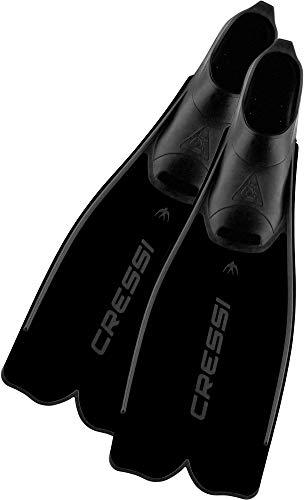
- Soft flexible polypropylene blade
- Comfortable full-foot pocket
- Heel pull-tab for easier entry
Best For: Casual snorkeling and swimming
Balanced Scuba Performance – Cressi Pro Light Open-Heel Fins
For divers looking for dependable diving fins, the Cressi Pro Light combines a full-length rail design with a dual-material blade to produce directed thrust without requiring excessive physical effort. Its open-heel construction and elastomer foot pocket make it suitable for both newer divers and experienced users.
Best For: Scuba divers, instructors, and technical divers who want lightweight, well-balanced fins.
Pros:
- Dual-material polypropylene and elastomer construction balances strength and lightness.
- Full-length side rails help direct waterflow for improved thrust.
- Elastomer foot pocket is designed for comfort.
- Blade extends over the top of the foot to increase surface area.
Cons:
- Open-heel fins may be less convenient than full-foot models for casual, barefoot use.
- The listed item weight is 5 pounds, so these are not the lightest travel option.
The Pro Light is a practical choice when efficient propulsion and a supportive open-heel fit matter more than compact packing size. A two-year limited warranty adds useful ownership coverage.
Training and Body Position – FINIS Long Floating Swim Fins
These FINIS diving fins are designed primarily for swim training, using buoyancy to lift the legs toward the surface. That can reduce drag, improve body alignment, and provide feedback as swimmers work on a longer, more effective kick.
Best For: Adult swimmers who want buoyant fins for training, alignment, and kick feedback.
Pros:
- Buoyant design helps lift the legs toward the water’s surface.
- Provides forward propulsion and feedback during kick practice.
- Designed for swimmers of different ages and abilities.
- Rubber construction and pull-on fit keep the design straightforward.
Cons:
- These are training fins rather than dedicated open-heel scuba fins.
- The long 14-inch dimensions may be less convenient for travel than short fins.
- The warranty is limited to 30 days.
If your goal is improving body position and kick technique in the pool, the Long Floating Fins offer a focused training aid. Their buoyancy is the defining feature, rather than compactness or scuba-specific support.
Lightweight Recreational Choice – Cressi Clio Full-Foot Fins
The Cressi Clio is a practical option for snorkeling, recreational diving, and swimming. These full-foot diving fins use a soft rubber pocket for easy slip-on comfort, while the EVA blade is intended to deliver responsive power without adding unnecessary bulk for travel.
Best For: Recreational snorkelers, swimmers, and travelers who prefer lightweight full-foot fins.
Pros:
- Full-foot pocket slips on and off easily.
- Soft rubber construction is designed for comfort.
- EVA blade offers responsiveness with different kicking styles.
- Lightweight design is convenient for travel.
Cons:
- Full-foot sizing is less adjustable than an open-heel design.
- Designed for snorkeling, swimming, and recreational use rather than specialized diving.
- Full-foot fins may be less suitable with dive booties.
The Clio suits casual water activities where simple fit, comfort, and portability are priorities. Its established design and two-year limited warranty further support it as an easygoing recreational pick.
Travel-Friendly Adjustable Fit – Greatever Short Snorkel Fins
For compact diving fins that are easy to carry, the Greatever short snorkel fins pair an open heel with an adjustable quick-release strap. Their flexible construction, included mesh bag, and short profile make them useful for travel, family outings, and recreational snorkeling.
Best For: Travelers and recreational swimmers who need adjustable, lightweight fins for snorkeling.
Pros:
- Adjustable straps accommodate different foot types and sizes.
- Quick-release buckles make putting on and removing the fins easier.
- Short design and included mesh bag support travel and storage.
- Flexible TPR foot pocket is designed to help prevent chafing and blisters.
Cons:
- Short fins may provide less propulsion than longer scuba-oriented models.
- Users wearing dive booties or water shoes are advised to order one size up.
- The supplied notes describe them for swimming and snorkeling rather than technical diving.
The Greatever model emphasizes portability and fit flexibility over maximum thrust. It is a sensible recreational choice when adjustable straps, quick drying, and easy transport are high on the list.
Easygoing Travel Pick – Cressi Agua Full-Foot Fins
For casual snorkeling and recreational diving, the Cressi Agua is a lightweight choice among diving fins. Its self-adjusting full-foot pocket is designed to accommodate different foot shapes, while the durable blade provides responsive kicks without placing undue strain on your feet.
Best For: Travelers and recreational snorkelers who want simple, lightweight full-foot fins.
Pros:
- Self-adjusting foot pocket supports a comfortable, adaptable fit.
- Lightweight design helps reduce foot fatigue.
- Durable blade delivers powerful, responsive kicks.
- Made in Italy by Cressi and backed by a two-year limited warranty.
Cons:
- Full-foot pockets offer less adjustability than open-heel designs.
- Designed primarily for snorkeling rather than specialized freediving.
The Agua is a practical option when comfort, ease of use, and packability matter more than maximum technical performance. Its straightforward full-foot design suits relaxed water activities and travel.
Compact Adjustable Choice – Travel-Size Short Snorkel Fins
These short diving fins are built for convenience, with an open-heel design, adjustable quick-release straps, and compact blades that are easy to pack. Ventilation holes, a flexible split-fin structure, and reinforced sole support are intended to make kicking more efficient and comfortable for recreational users.
Best For: Adults and teens seeking portable, adjustable fins for travel, snorkeling, swimming, or casual diving.
Pros:
- Short, lightweight blades are convenient for travel and storage.
- Adjustable straps and buckles make on-and-off use straightforward.
- Split-fin design and flexible midsection support efficient stroking.
- Includes a quick-dry mesh bag and hard plastic inserts.
Cons:
- Short blades may provide less thrust than long freediving fins.
- Users pairing them with diving boots are advised to choose one size larger.
- The notes do not specify a complete size range.
This model emphasizes portability and versatility rather than maximum propulsion. Its adjustable open heel and included storage accessories make it a useful shared or travel-friendly option for recreational water activities.
Performance Freediving Pick – Cressi Gara 2000 HF Long Fins
The Cressi Gara 2000 HF is a specialized long-fin option for divers who need strong control and reactivity. Its polypropylene blade combines lightness with responsive performance, while the anatomically shaped elastomer foot area is designed to transfer leg power efficiently.
Best For: Freedivers, spearfishers, and experienced divers seeking long fins for deep skin-diving.
Pros:
- Long blade is designed for high-performance freediving and deep skin-diving.
- Polypropylene construction balances reactivity and lightness.
- Elastomer foot section supports efficient transmission of leg thrust.
- Can be worn with or without neoprene socks.
Cons:
- Long fins are less convenient for casual snorkeling and travel.
- Full-foot design provides less adjustment than open-heel fins.
- At 3.8 pounds, it is heavier than the supplied Cressi Agua model.
The Gara 2000 HF is the most performance-focused choice in this group. Its long, reactive blade is better suited to dedicated freediving or spearfishing than everyday recreational use.
Travel-Ready Adjustable Fins – Cressi Tonga
The Cressi Tonga is a practical choice for travelers seeking compact diving fins for snorkeling, swimming, or light scuba use. Its short blade, lightweight construction, and open-heel adjustable strap make it easy to pack, share, and fit across different foot shapes.
Best For: Travelers and households that want lightweight, adjustable fins for flexible use.
Pros:
- Short, lightweight design is convenient for travel.
- Adjustable open-heel strap accommodates different foot shapes and similar-size users.
- Large thumb loop simplifies putting on and removing the fins.
- Composite blade supports comfortable finning and may help reduce leg cramping.
Cons:
- Short blades may provide less propulsion than longer diving fins.
- Open-heel straps require adjustment before use.
The Tonga stands out when portability and fit flexibility matter most. It is a sensible option for casual water activities and travel rather than a specialized long-blade performance fin.
Easy Full-Foot Fins – Cressi Rondinella
The Cressi Rondinella is a straightforward option for shoppers comparing diving fins for snorkeling and swimming. Its soft, flexible polypropylene blade and pull-on full-foot pocket are designed to provide comfortable, low-effort use for adults and youth.
Best For: Snorkeling and swimming users who prefer a simple full-foot fin.
Pros:
- Soft, flexible blade is lightweight and easy to use.
- Full-foot pocket combines comfort with a secure pull-on fit.
- Heel pull-tab helps with putting on and removing the fins.
- Designed for adults and youth.
Cons:
- Full-foot construction offers less adjustability than open-heel diving fins.
- Pull-on design may be less convenient for sharing between differently sized users.
With its uncomplicated pull-on fit and forgiving blade, the Rondinella is well suited to recreational use. Choose it if you value simplicity and comfort over adjustable straps.
Compact Training Fins – Cressi Agua Short
The Cressi Agua Short is a compact choice for travelers, swimmers, and snorkelers looking for responsive diving fins without a long blade. Its lightweight technical-polymer construction and self-adjusting full-foot pocket aim to provide a comfortable fit without demanding advanced water-sport ability.
Best For: Travelers, swimmers, and snorkelers who want lightweight short fins for training and recreation.
Pros:
- Short, lightweight format is convenient for travel.
- Designed to provide good reactivity without tiring the feet.
- Self-adjusting foot pocket adapts to different foot shapes.
- Suitable for snorkeling, swimming, and training.
Cons:
- Full-foot pull-on design provides less fit adjustment than an open-heel model.
- Short blade may not deliver the same thrust as a long-blade fin.
The Agua Short balances portability, ease of use, and responsive movement. It is a strong fit for everyday training and travel when a compact full-foot fin is more useful than maximum propulsion.
How We Picked These Diving Fins
We selected fins across several common use cases rather than treating every pair as interchangeable. The lineup includes open-heel scuba fins, full-foot snorkeling fins, compact travel models, short swim-training fins, and long freediving blades. We considered the intended activity, fin length, foot-pocket style, adjustability, portability, and the balance between propulsion and ease of use.
Because fit and technique vary significantly, the “best” choice depends on your priorities. A fin designed for powerful open-water propulsion may be tiring for casual snorkeling, while a compact travel fin may not provide enough thrust for deeper diving or strong currents.
Quick Comparison
| Best For | Look For | Typical Advantage |
|---|---|---|
| Scuba diving | Open heel, adjustable strap, durable blade | Works with dive boots and offers secure fit |
| Snorkeling | Comfortable full-foot pocket or compact open heel | Simple setup and efficient surface movement |
| Travel | Short, lightweight construction | Easier packing and lower luggage weight |
| Swim training | Short or long training blade | Supports kick technique and leg conditioning |
| Freediving | Long, responsive blade | Greater propulsion per kick when technique is sound |
Key Buying Factors for Diving Fins
Foot-Pocket Fit
A secure foot pocket should hold your heel without painful pressure or excessive movement. Full-foot fins are generally worn barefoot or with thin socks, while open-heel fins use an adjustable strap and are often paired with neoprene dive boots. Check sizing carefully because a loose pocket can cause blisters and waste energy.
Blade Length and Stiffness
Short blades are convenient for pools, travel, and casual snorkeling, but they usually produce less thrust. Longer blades can improve efficiency for freediving and open-water use, although they require better technique and may feel tiring for beginners. Flexible blades are often easier to kick, while stiffer models can deliver more power when used correctly.
Adjustability and Portability
Open-heel straps make it easier to fine-tune fit and share gear, but they add bulk. Full-foot fins are lighter and simpler, making them attractive for warm-water snorkeling. For frequent travel, prioritize compact dimensions, low weight, and a design that fits easily inside your gear bag.
Where You Will Use Them
Match the fin to the environment. Scuba divers need secure retention and compatibility with boots. Snorkelers may prefer comfort and moderate thrust. Pool swimmers typically benefit from shorter training fins, while freedivers generally need long, responsive blades.
Who Should Buy Which Diving Fins?
- Choose open-heel fins if you scuba dive, wear dive boots, or want adjustable straps.
- Choose full-foot fins for warm-water snorkeling, swimming, and straightforward setup.
- Choose short fins if compact storage, travel, or swim training matters most.
- Choose long fins if you freedive or need efficient propulsion in open water.
- Choose lightweight flexible fins if you are new to finning or want less leg fatigue.
Before buying, confirm the size chart, intended footwear, and return policy. A comfortable, secure fit is more important than maximum blade length or stiffness.