Growing vegetables indoors gives you more control over light, temperature, humidity, and the growing season. The right tent can turn a spare corner, closet, or dedicated room into a cleaner, more consistent growing environment.
We selected 10 grow tents and bundled setups for different spaces and budgets, including compact 2×2 models, taller 2×4 designs, shelving systems, and large-format tents. Use the guide below to match tent size, ventilation, lighting, and access features to the vegetables you plan to grow.
Best 10 Grow Tents for Vegetables Picks for 2026
Premium Heavy-Duty Pick

- 2000D canvas with 1-inch steel poles
- Highly reflective Mylar and light-blocking zipper flaps
- Multiple duct ports plus controller mounting
Best For: Large indoor vegetable gardens with demanding equipment
Small-Space Starter
Spider Farmer 4 Tier Mini Greenhouse

- Four adjustable plant tiers with 110-pound capacity each
- Six 10-watt full-spectrum LED light bars included
- Blackout and viewing curtains plus movable wheels
Best For: Seedlings, microgreens, and compact vegetable growing
Efficient Mid-Size Choice
VIVOSUN Upgraded 2x4 Grow Tent

- 1680D fabric with reflective hexagon-pattern Mylar
- Tall 72-inch design fits narrow growing areas
- Duct ports, vents, viewing window, and cable openings
Best For: Space-efficient vegetable growing with separate equipment
Stable Tall-Tent Option
Spider Farmer 4.6x2.3 Grow Tent

- Tall 80-inch profile with narrow footprint
- Reinforced steel poles support up to 150 pounds
- 1680D canvas, diamond Mylar, and dual zipper protection
Best For: Vertical vegetable setups with heavier equipment
Best Lightproof Value

- Reflective, light-blocking Mylar interior
- Sturdy metal frame with high load capacity
- Viewing window and removable floor tray
Best For: Vegetable growers wanting a practical, lightproof 2x4-foot tent
Best Heavy-Duty 2x2

- Durable 1680D Oxford fabric construction
- Diffusive hexagon-pattern reflective Mylar
- Multiple ports for climate-control equipment
Best For: Compact, equipment-rich vegetable growing setups
Best Complete Starter Kit
2x2 Grow Tent Bundle with LED and Ventilation
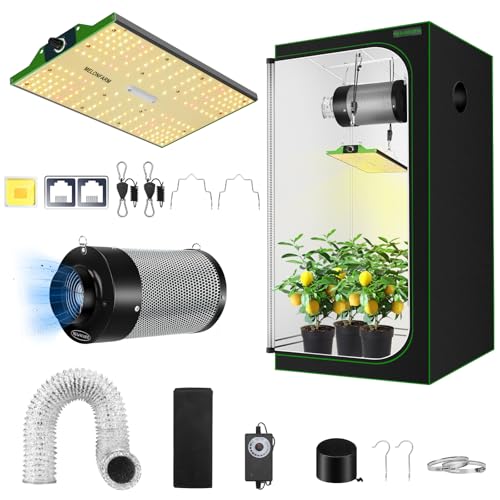
- Includes tent, 70W LED, fan, filter, and ducting
- 190 CFM ventilation system supports airflow
- Compact 24x24x48-inch all-in-one setup
Best For: Beginners wanting a ready-to-assemble compact vegetable garden
Compact Choice
VIVOSUN 30"x18"x36" Small Grow Tent

- Compact footprint for small indoor growing areas
- Reflective mylar and light-blocking zipper design
- Observation window and removable floor tray
Best For: Small vegetable plants and space-limited indoor setups
Large-Capacity Pick

- Large 208-cubic-foot interior for multiple plants
- 98%-reflective mylar with 600D double-stitched canvas
- Multiple mesh vents for fans and filters
Best For: Large indoor vegetable gardens with dedicated space
Balanced Small-Space Option

- Manageable 24" x 24" footprint for home use
- 600D canvas with reflective waterproof lining
- Two observation windows and removable floor tray
Best For: A few small vegetable plants and entry-level indoor gardens
Premium Heavy-Duty Pick – AC Infinity CLOUDLAB 844
If you want a spacious, highly reinforced option among grow tents for vegetables, the AC Infinity CLOUDLAB 844 emphasizes strength, light control, and climate-management flexibility. Its 4-by-4-foot footprint and 80-inch height provide room for up to four plants in 5-gallon pots.
Best For: Indoor gardeners who need a durable, tall tent for several vegetable plants and substantial grow equipment.
Pros:
- Thick 2000D waterproof Oxford canvas and strong 1-inch steel poles support demanding setups.
- Lab-tested reflective Mylar, zipper flaps, and SBS zippers help improve light control.
- Multiple 4-inch and 8-inch duct ports, a controller mount, and cable passthrough support climate-control equipment.
- Includes a catch tray, extra hanging bar, side doors, and tool bag.
Cons:
- Its 48-by-48-by-80-inch size requires considerable floor and ceiling space.
- The heavy-duty construction weighs nearly 20 kg.
The CLOUDLAB 844 is an especially substantial choice when durability and equipment compatibility matter more than portability. Its generous height and reinforced frame make it well suited to a larger, organized vegetable-growing setup.
Small-Space Starter – Spider Farmer 4 Tier Mini Greenhouse
For compact growing areas, this four-tier Spider Farmer setup combines a covered plant shelf, full-spectrum lighting, and mobility. It is a practical choice among grow tents for vegetables when you are starting seedlings, microgreens, or smaller plants indoors.
Best For: Apartment growers, seed starters, and gardeners who want a movable multi-level setup for compact vegetables.
Pros:
- Four adjustable tiers provide flexible placement, with each tier rated for up to 110 pounds.
- Includes six 10-watt full-spectrum LED light bars for a ready-to-use growing setup.
- Clear and blackout curtains allow plant monitoring while helping limit light leakage.
- Lockable wheels and waterproof drainage mats make repositioning and cleanup easier.
Cons:
- The 12-by-12-by-47-inch footprint and tiered design are better suited to small plants than large mature vegetables.
- Its compact enclosure offers less room for climate-control equipment than a full-size tent.
This mini greenhouse is more of a complete illuminated plant shelf than a conventional walk-in tent. Its built-in lights, trays, and wheels make it convenient for early-stage vegetables and space-limited indoor gardening.
Efficient Mid-Size Choice – VIVOSUN Upgraded 2×4 Grow Tent
The VIVOSUN 2-by-4-foot tent offers a taller, narrow layout for indoor gardeners balancing plant space with efficient use of floor area. Its reflective interior, viewing window, ventilation openings, and duct ports make it a capable option for grow tents for vegetables.
Best For: Growers who want a tall, space-efficient enclosure for vegetables and integrated airflow or humidity equipment.
Pros:
- 1680D tear-resistant Oxford fabric, reinforced PE, and a dense inner layer provide durable light blocking.
- Hexagon-pattern Mylar is designed to diffuse light across the growing area and reduce hotspots.
- Multiple duct ports and cable openings support fans, humidifiers, heaters, and AC units.
- Viewing window, bottom vents, removable mesh covers, and tool bag simplify routine use.
Cons:
- The 48-by-24-inch footprint limits side-to-side growing space.
- The supplied notes do not specify a plant-capacity rating or included lighting.
This VIVOSUN model makes sense when you need vertical room and a relatively narrow footprint. It provides the enclosure and climate-control access, while lighting and other growing hardware must be selected separately.
Stable Tall-Tent Option – Spider Farmer 4.6×2.3 Grow Tent
This Spider Farmer tent combines a narrow 55-by-28-inch footprint with an 80-inch height, making it useful when vertical clearance is available but floor space is limited. For grow tents for vegetables, its reinforced frame and practical access features support a controlled indoor setup.
Best For: Indoor gardeners seeking a tall, sturdy tent for vegetable plants and heavier lights or filters.
Pros:
- Three-times-thicker hardened steel poles and reinforced adapters support up to 150 pounds.
- 1680D waterproof, tear-resistant canvas and diamond Mylar help block leaks and reflect light.
- Premium SBS zippers, zipper flaps, and dual stitching improve enclosure and light control.
- Includes an enlarged viewing window, controller hook, cable pass-through, floor tray, and tool bag.
Cons:
- The 55-by-28-inch footprint may restrict the number or width of mature vegetable plants.
- The supplied notes do not mention included grow lights or ventilation equipment.
With its tall profile and strong frame, this tent is a good fit for growers prioritizing stability and vertical space. The included organization and monitoring features also make routine access less disruptive.
Best Lightproof Value – VIVOSUN S425 2×4 Grow Tent
For gardeners comparing grow tents for vegetables, the VIVOSUN S425 offers a practical 2×4-foot layout with a 60-inch height, reflective Mylar walls, and a sturdy metal frame. Its light-blocking construction, viewing window, floor tray, and multiple ports support a manageable indoor setup.
Best For: Vegetable growers who want a lightproof tent with useful viewing and maintenance features.
Pros:
- 100% reflective Mylar interior and black-lined zipper help contain light.
- Metal frame and hanging bars support equipment up to 100 pounds each.
- Viewing window, bottom ventilation window, removable tray, and tool organizer simplify maintenance.
- Tool-free assembly and included hanging straps make setup more convenient.
Cons:
- The 48-by-24-inch footprint may require dedicated floor space.
- The 60-inch height can limit room for taller plants and equipment.
This is a well-rounded option for vegetable growers who prioritize light containment and straightforward maintenance. The supplied two-year warranty is an added convenience.
Best Heavy-Duty 2×2 – VIVOSUN 28x28x63 Grow Tent
Among grow tents for vegetables, this VIVOSUN model stands out for its reinforced 1680D Oxford fabric, hexagon-pattern Mylar, and climate-control ports. The roughly 28-by-28-inch footprint and 63-inch height provide a compact but durable enclosure for indoor vegetable growing.
Best For: Growers who need a durable compact tent compatible with more advanced airflow and climate-control equipment.
Pros:
- Hexagon-pattern Mylar is designed to diffuse light across the growing area.
- 1680D fabric, PE reinforcement, and a 400g inner layer provide heavy-duty construction.
- Multiple duct ports and cable openings accommodate fans, humidifiers, heaters, and AC units.
- Viewing window, bottom vents, removable mesh covers, and tool bag support routine maintenance.
Cons:
- The compact footprint may limit the number or size of vegetable plants.
- Its heavier-duty construction may be more than needed for a simple starter setup.
This tent is a strong fit when durability and environmental control matter more than maximum floor area. Its stable metal frame and tool-free setup add practicality for equipment-rich installations.
Best Complete Starter Kit – 2×2 Grow Tent Bundle with LED and Ventilation
For shoppers seeking grow tents for vegetables without assembling a parts list, this 24-by-24-by-48-inch bundle includes the tent, a 70W full-spectrum LED light, and a 4-inch ventilation system. The included fan, carbon filter, ducting, clamps, and sound-reducing coupling create a convenient starting package.
Best For: Beginners who want a compact vegetable-growing setup with lighting and ventilation included.
Pros:
- Bundle includes the tent, 70W LED light, 190 CFM inline fan, carbon filter, ducting, clamps, and coupling.
- Samsung LM301 diodes deliver an advertised efficiency of 2.75 µmol/J.
- Ventilation system is designed to move heat, circulate fresh air, and reduce humidity.
- Rubber coupling and stainless steel clamps help reduce leaks and vibration noise.
Cons:
- The 24-by-24-by-48-inch tent offers less growing room and height than the other options.
- The included 70W light is intended for this compact setup, so expansion may require additional equipment.
This bundle minimizes compatibility guesswork and is the most convenient choice for starting small. Its compact dimensions make it especially suitable where space is limited, though larger vegetable plants may outgrow it sooner.
Compact Choice – VIVOSUN 30"x18"x36" Small Grow Tent
For gardeners seeking grow tents for vegetables in a tight indoor space, this compact VIVOSUN model offers a practical setup for smaller plants or starter growing. Its reflective mylar interior, light-blocking construction, observation window, and removable floor tray support everyday indoor growing and maintenance.
Best For: Small vegetable plants, Aerogarden setups, closets, balconies, and other space-limited areas.
Pros:
- Compact 30″ x 18″ x 36″ footprint suits small growing areas.
- 100%-reflective mylar walls and a black-lined zipper help create a lightproof environment.
- Metal frame, tool-free connectors, hanging straps, and a removable floor tray simplify setup and upkeep.
- Observation window and multiple openings support monitoring and equipment installation.
Cons:
- The compact height and footprint limit the size and number of vegetable plants you can grow.
- The supplied notes do not indicate that lighting or ventilation equipment is included.
This is a sensible pick when footprint matters more than capacity. Its sturdy frame and convenient access features make it easier to manage a small vegetable-growing station indoors.
Large-Capacity Pick – 8×4 High-Reflective Grow Tent
For gardeners planning a larger indoor vegetable operation, this 8×4 grow tent provides substantial room for plants, lights, and ventilation equipment. The 98%-reflective mylar lining, 600D canvas, multiple vents, and reinforced frame are designed to help create a controlled growing environment.
Best For: Larger collections of vegetables, flowers, fruits, and year-round indoor growing projects with dedicated floor space.
Pros:
- Generous 96″ x 48″ x 78″ dimensions provide 208 cubic feet of growing volume.
- 98%-reflective mylar lining and heavy-duty, double-stitched construction help retain light.
- Multiple mesh vents accommodate fans and filters while helping keep dust and insects out.
- Strong metal poles, reinforced PA connectors, and a removable floor tray support practical use.
Cons:
- Its large footprint and 19.35 kg weight require a dedicated, spacious location.
- The supplied notes state that it has no observation window.
- Lighting and ventilation equipment are not listed as included.
This model makes the most sense for growers who need capacity and plan to equip a full indoor garden. Its ventilation openings and large interior are useful for managing several vegetable plants, but the size is excessive for casual or space-constrained growing.
Balanced Small-Space Option – 2×2 Reflective Grow Tent
This 2×2 grow tent is a practical middle ground for shoppers comparing grow tents for vegetables in a home, closet, basement, or balcony. Its 600D double-stitched canvas, reflective waterproof lining, observation windows, and floor tray provide useful features without the footprint of a full-size tent.
Best For: A few small vegetable plants or an entry-level indoor garden in a closet, basement, or balcony.
Pros:
- 24″ x 24″ dimensions provide a manageable footprint for small indoor gardens.
- Reflective waterproof lining and 600D canvas help block light and support temperature control.
- Double transparent observation windows make it easy to check plants without opening the tent.
- Tool-free assembly, a storage bag, and removable floor tray add convenience.
Cons:
- The smaller interior is not suited to large plants or high-capacity vegetable growing.
- The supplied notes do not list included lighting, fans, or filters.
Choose this tent if you want more room than a very compact enclosure while keeping the setup suitable for typical home spaces. The viewing windows and straightforward assembly make it especially approachable for first-time indoor growers.
How We Picked the Best Grow Tents for Vegetables
We focused on the practical features that matter most for indoor vegetable growing: usable floor area, interior height, reflective coverage, light-blocking construction, frame strength, ventilation access, viewing windows, and ease of assembly. We also included options for different growing styles, from a small herb or lettuce setup to a multi-plant garden with larger containers or hydroponic equipment.
Because a tent is only one part of an indoor garden, complete kits and shelving-style designs were considered alongside tent-only options. These can simplify setup for beginners, although dedicated growers may prefer choosing their own light, fan, filter, and monitoring equipment.
Quick Comparison
- Smallest spaces: Compact 2×2 and 30×18-inch tents suit herbs, seedlings, leafy greens, and a few compact plants.
- Best balance of capacity and footprint: A 2×4 tent provides a useful rectangular growing area while fitting against a wall.
- More vertical room: Taller models help accommodate hanging lights, ventilation equipment, and larger vegetable plants.
- Maximum capacity: An 8×4 tent is better for dedicated indoor gardens, multiple lights, and several plant groups.
- Simple starter setup: A bundle with a light and ventilation components can reduce the number of separate purchases.
Key Buying Factors for Grow Tents for Vegetables
Size and Plant Layout
Measure the available area before choosing a tent, and leave room around it for zippers, ducting, electrical connections, and maintenance. Consider the mature size of your vegetables rather than the size of seedlings. Bush tomatoes, peppers, cucumbers, and trellised plants need more height and clearance than lettuce or microgreens.
Lightproof, Reflective Fabric
Thick, light-blocking fabric helps contain artificial light and maintain a stable environment. Highly reflective interiors can direct more light toward the canopy, but they do not replace a properly sized grow light. Check stitching, zipper coverage, and the presence of a durable floor tray for spill protection.
Ventilation and Access
Vegetables need fresh air movement and manageable humidity, particularly in enclosed spaces. Look for appropriately sized duct ports, intake openings, cable access, and enough headroom for a fan or filter. Multiple access panels make pruning, watering, and harvesting easier.
Frame and Setup
Stronger poles and reliable connectors are valuable when the tent supports lights, fans, filters, and hanging accessories. Confirm the assembled dimensions and expected load before installation, especially with larger tents or heavy ventilation equipment.
Who Should Buy Which Grow Tents for Vegetables?
Beginners and apartment growers should start with a compact 2×2, small-format tent, or complete kit. These options use less space and can make lighting and ventilation easier to manage.
Vegetable gardeners growing several plants will generally get better flexibility from a 2×4 tent. It offers room for separate containers, a propagation area, or a row of leafy greens and compact fruiting plants.
Growers with tall plants or more equipment should prioritize a taller tent with sturdy poles and generous ducting access. Extra height helps keep lights at a safe distance and leaves room for airflow equipment.
Dedicated indoor gardeners should consider a larger 8×4 design if the room, lighting, and electrical capacity support it. Before buying, plan the number of fixtures, ventilation route, watering method, and access space so the tent does not become overcrowded.