Keeping reservoir levels stable is one of the simplest ways to protect plant health and reduce daily maintenance in a hydroponic setup.
These hydroponic water level controllers cover everything from basic float-based auto-fill solutions to smarter sensor-driven systems, helping you choose the right level of automation for your grow.
Best 10 Hydroponic Water Level Controllers Picks for 2026
Automated ebb-and-flow control

- Controls up to 24 five-gallon modules
- Emergency shut-off valve helps prevent overflow
- Includes 2 pumps, timer, fittings, and tubing
Best For: Large hydroponic grows needing automated fill-and-drain control
Smart monitoring for automation
Hydro Sensor for AI Controllers
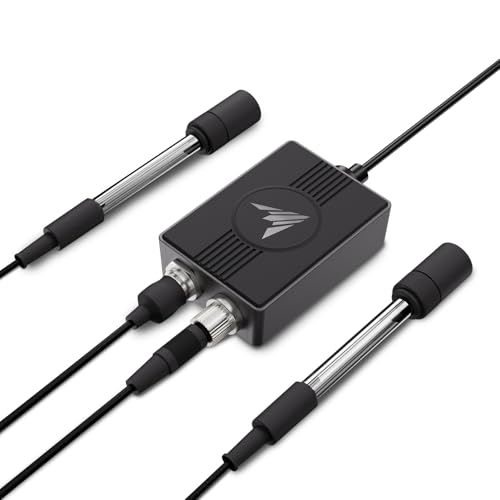
- Tracks pH, EC, TDS, and water temp
- Works with AC Infinity AI controllers
- Interchangeable probes help reduce downtime
Best For: Users building app-connected hydroponic automation
Simple automatic refill valves

- Float control maintains tank water level
- Includes 3 valves and mounting hardware
- Durable plastic and galvanized bracket build
Best For: Tanks and reservoirs that need basic automatic top-off
Wired level relay control
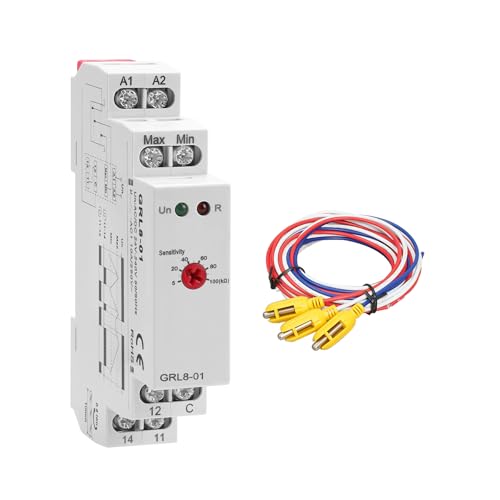
- Automatically controls inlet and drain cycles
- Wide AC/DC 24V-240V operating range
- Mounts neatly on a 35mm DIN rail
Best For: Wired automation systems using pumps or electric valves
Simple Float Switch Pick
Ximimark 3 pc Horizontal Side Mount Float Switch

- 3-pack horizontal side-mount float switches
- Works with hydroponics, tanks, and aquariums
- Can trigger pumps, alarms, or indicators
Best For: Basic level sensing in hydroponics and tanks
Full Auto Watering Controller
Automatic Water Level Controller with Wireless Display

- Automatically refills low water and shuts off when full
- Dry-run protection helps protect the pump
- Solar-powered wireless sensor with digital display
Best For: Hands-off pump control and remote water management
Valve-Based Level Control
Uenede 3/4" Float Ball Valve 2-Pack

- Automatic valve opens and closes with water level
- ABS and PE build offers corrosion resistance
- 2-pack suits multiple tanks or reservoirs
Best For: Automatic inlet shutoff for simple reservoirs
Compact Multi-Mode Water Control
Automatic Water Level Controller AC 110V

- 4 modes for supply, drain, and low-water stop
- Auto/manual switching for flexible operation
- Supports pumps, ball valves, and solenoid valves
Best For: Hydroponic growers needing versatile 110V water control
Simple Passive Fill Valve
- Mechanical float valve for automatic inlet shutoff
- ABS and PE construction resists corrosion
- Includes two 1/2" male-thread valves
Best For: Basic automatic water level filling in tanks and reservoirs
Stainless-Sensor Pump Control
Automatic Water Level Controller NC01

- 4 modes for supply, drain, and low-water stop
- Stainless steel detector with 6.5 ft wires
- Supports 110V-120V pumps and valves
Best For: Hydroponic systems needing corrosion-resistant automatic control
Automated ebb-and-flow control – 7-Gallon Grow Flow Controller
If you’re comparing hydroponic water level controllers for a larger ebb-and-flow setup, this Active Aqua unit is built to automate fill-and-drain cycles across multiple grow modules. It uses float switches and submersible pumps to manage water flow, while the adjustable ladder level helps you set fill heights more precisely.
Best For: Growers running multi-site ebb systems who want automated hydration and overflow protection.
Pros:
- Controls up to 24 five-gallon modules or 48 two-gallon modules
- Emergency shut-off valve adds fail-safe overflow protection
- Adjustable ladder level control helps set container fill height
- Includes 2 x 250 GPH pumps, timer, fittings, and tubing
Cons:
- Designed for larger electric grow-flow setups, not simple single-tank use
- Requires multiple included components and proper setup to use effectively
This is a strong fit when you need a controller bucket that does more than basic water sensing and can coordinate flow across an entire system. The safety features and included hardware make it practical for growers who want a more complete automated solution.
Smart monitoring for automation – Hydro Sensor for AI Controllers
Among hydroponic water level controllers and monitoring accessories, this AC Infinity Hydro Sensor focuses on water quality data rather than physical filling. It tracks pH, EC, TDS, and water temperature, giving compatible AI controllers the input needed to automate connected equipment and reduce manual checks.
Best For: Growers who want sensor-based automation and continuous water-quality monitoring with AC Infinity AI controllers.
Pros:
- Monitors pH, EC, TDS, and water temperature
- Designed for AC Infinity AI Controllers and UIS AI controllers
- Supports WiFi app connectivity, alerts, data tracking, and grow guides
- Interchangeable probes help reduce downtime from worn sensors
Cons:
- Requires compatible AC Infinity AI controller hardware
- Does not directly control water level on its own
This is a good choice if your priority is smarter automation based on nutrient and water readings. It won’t replace a float valve or level relay, but it can strengthen a hydro setup that depends on accurate monitoring and app-based control.
Simple automatic refill valves – 3-Pack Auto-Fill Float Valves
If you want straightforward hydroponic water level controllers for tanks or reservoirs, this Threlaco float valve set offers a simple automatic refill approach. The float control helps maintain water level without constant checking, and the design is also positioned for livestock tanks, ponds, aquariums, and other water containers.
Best For: Basic automatic fill control in tanks, reservoirs, and water troughs.
Pros:
- Float valve automatically controls water level
- Includes 3 valves and 3 mounting screw sets
- Works with 3/4-inch hose connections
- Built with thick plastic, ABS shell, and galvanized metal bracket
Cons:
- Installation requires the valves to be level
- Primarily a refill valve, not a full electronic controller
This set makes sense for buyers who want a durable mechanical solution instead of a powered control system. It is especially practical where automatic top-off matters more than detailed programming or sensor data.
Wired level relay control – GRL8-01 DIN Rail Level Relay
For buyers looking at hydroponic water level controllers with a more electrical, relay-based approach, this GRL8-01 unit handles automatic inlet and drain control through connected pumps or valves. It monitors maximum and minimum water levels using the included detector sensor, making it suitable for systems that need compact, wired level automation.
Best For: DIN-rail installations that need automatic water supply and drainage control.
Pros:
- Works with pumps and electric ball valves for inlet/drain automation
- Wide AC/DC 24V-240V operating range with 10A rated current
- Compact DIN rail mount makes installation straightforward
- LED indicators show power and level-trigger status
Cons:
- Requires wiring and compatible external equipment
- More technical than a simple float valve setup
This relay is a good match for users who want a compact controller rather than a standalone tank accessory. It fits best in setups where precise electrical switching and a neat DIN-rail layout matter.
Simple Float Switch Pick – Ximimark 3 pc Horizontal Side Mount Float Switch
Ximimark 3 pc Water Level Sensor Horizontal PP Side Mount Float Switch for Tank Pool Arduino
Check Price On AmazonIf you need a basic option for hydroponic water level controllers, this 3-pack of horizontal side-mount float switches is a straightforward way to sense liquid levels and trigger simple control actions. It can be used with tanks, aquariums, gardening setups, and hydroponics where a reliable level signal matters more than advanced automation.
Best For: Basic level sensing in hydroponics, tanks, and aquarium setups
Pros:
- Simple float-switch design for sensing liquid level changes
- Suitable for hydroponics, aquariums, freshwater, and saltwater tanks
- Can be used to actuate pumps, alarms, indicators, or other devices
- Includes 3 pieces for multiple installations or backups
Cons:
- It is a sensing switch, not a full automatic fill controller
- Best suited to straightforward level control tasks
This is a practical choice if you want a simple sensor-based solution and already have a controller or relay setup in place. For users who only need dependable level detection, it covers the essentials without added complexity.
Full Auto Watering Controller – Automatic Water Level Controller with Wireless Display
For hydroponic water level controllers that do more than monitor, this automatic system actively manages filling and pump protection. It is built for users who want remote level sensing, auto refilling, and dry-run protection in one setup for tanks, wells, cisterns, and similar water systems.
Best For: Hands-off pump control and remote water level management
Pros:
- Actively refills when water is low and shuts off when full
- Includes dry-run protection to help prevent pump burnouts
- Wireless sensor offers up to 3 km range in open areas
- Solar-powered sensor reduces battery maintenance
Cons:
- Designed for more complex systems than a simple float switch
- Works with single-phase pumps up to 5 kW, so compatibility still needs checking
This is the most complete option here if you want a controller that fills automatically and protects your pump at the same time. The digital display and extra functions make it a strong fit for users who want a more managed water system.
Valve-Based Level Control – Uenede 3/4" Float Ball Valve 2-Pack
If you prefer a mechanical solution for hydroponic water level controllers, this float ball valve automatically opens and closes the inlet based on water height. It is a simple fit for tanks, troughs, aquariums, and other setups where maintaining a steady water volume is the main goal.
Best For: Automatic inlet shutoff in simple water tanks and hydroponic reservoirs
Pros:
- Automatically cuts off water when the level rises
- Refills again when the level drops
- ABS valve and PE floating ball are built for corrosion resistance
- 2-pack gives you extra value for multiple systems
Cons:
- Requires a 3/4-inch male threaded connection
- Mechanical valve setup may not suit every installation
This is a solid no-frills pick if your goal is to keep a reservoir topped up without daily manual attention. Its strength is simple automatic water maintenance rather than electronic controls or remote monitoring.
Compact Multi-Mode Water Control – Automatic Water Level Controller AC 110V
If you want a hydroponic water level controller that can automate filling, draining, and low-water protection, this GL-1 unit is built for exactly that kind of hands-off management. Its four modes and auto/manual switching make it practical for setups that need flexible control over pumps, valves, and overflow prevention.
Best For: Growers who want a compact controller for automatic water supply, drainage, and low-water shutoff across pumps or valves.
Pros:
- 4 operating modes: Water Supply, Drain, Lack Water Stop, and Joint Mode
- Auto/manual switch adds flexibility during setup or troubleshooting
- Works with pumps, electric ball valves, and solenoid valves
- Includes 6.5 ft detector leads for installation convenience
Cons:
- Requires electrical know-how for installation
- 110V AC only, so compatibility is limited to that power setup
This is a strong pick if you want a simple controller that automates water management without constant attention. The combination of multiple modes and broad device support makes it useful for hydroponic reservoirs and similar watering systems.
Simple Passive Fill Valve – Uenede 1/2" Float Ball Valve
For a low-tech hydroponic water level controller, this float ball valve offers automatic shutoff without wiring or electronics. It uses a floating ball to stop or allow inlet flow based on water level, which makes it a practical option for reservoirs, tanks, and other gravity-fed or pressure-fed water setups.
Best For: Users who want a basic automatic fill valve for tanks, troughs, aquariums, or hydroponic reservoirs.
Pros:
- Automatic fill shutoff and restart based on water level
- ABS valve and PE floating ball for corrosion resistance
- Threaded 1/2″ male connection for standard installations
- Two-piece set included
Cons:
- Only handles inlet control, not pumping or drainage functions
- Fit depends on using proper gaskets to prevent leakage
This is the right choice if you need a straightforward mechanical solution rather than an electronic controller. It works well where maintaining a set water level matters more than programmable features.
Stainless-Sensor Pump Control – Automatic Water Level Controller NC01
This hydroponic water level controller is aimed at users who want an automatic pump-control solution with multiple operating modes. The NC01 combines a stainless steel detector, 6.5-foot wires, and support for 110V-120V devices, making it a solid fit for reservoir and drainage automation.
Best For: Growers needing a multi-mode controller for automatic water supply or drainage with a corrosion-resistant detector.
Pros:
- 4 modes: Water Supply, Drain, Lack Water Stop, and Joint Mode
- Supports 110V-120V pumps, solenoid valves, and electric ball valves
- Stainless steel detector is designed for corrosion resistance
- 6.5 ft detector wires help with placement flexibility
Cons:
- Load current is limited to 10A
- Installation requires electrical knowledge
- No manual/auto switch is listed in the notes
If you want a controller that can automate multiple water-management tasks in a hydroponic system, this one covers the basics well. Its mode selection and stainless detector make it especially appealing for long-term use around water.
How We Picked the Best Hydroponic Water Level Controllers
We focused on Hydroponic Water Level Controllers that offer dependable liquid-level management, practical installation, and the right control method for real-world grow environments. Priority went to systems with clear sensing or float action, solid pump or valve compatibility, and features that help prevent overflow, dry running, or inconsistent nutrient delivery.
Quick Comparison
The lineup spans simple mechanical float valves, relay-based controller switches, and more advanced sensor platforms. If you want low-cost, low-maintenance replenishment, float valves are the simplest route. If you need automation for pumps or alarms, electronic controllers and sensor relays provide more flexibility. For larger or more demanding systems, integrated sensor platforms and multi-zone controls can reduce manual oversight.
Key Buying Factors for Hydroponic Water Level Controllers
Control Method
Choose between mechanical float valves and electronic sensor controllers. Float valves are straightforward and dependable, while electronic options offer better customization, remote monitoring potential, and pump automation.
Compatibility with Your Reservoir
Match the controller to your tank size, plumbing style, and power requirements. Some products are better suited to small reservoirs, while others are designed for larger systems or multi-module setups.
Fail-Safe Behavior
Look for features that reduce overflow risk or protect pumps from dry operation. Emergency cutoffs, relay logic, and dual-sensor designs can improve reliability in unattended grows.
Installation and Maintenance
The best Hydroponic Water Level Controllers are easy to mount, clean, and inspect. Simpler systems usually need less upkeep, but electronic units may provide more precision if you are willing to calibrate them.
Who Should Buy Which Hydroponic Water Level Controllers?
Choose a float valve if you want a basic automatic top-off solution for a small or medium reservoir. Choose a relay or sensor controller if you need pump control, alarms, or tighter automation. Choose a more advanced environmental or wireless system if you manage larger grow rooms, want broader monitoring, or prefer fewer manual checks.
For most growers, the best option is the one that matches your reservoir size, automation goals, and tolerance for maintenance. A simple, reliable controller often beats a complicated system that is hard to service.