Choosing the right autopilot can make long runs, trolling passes, and rough-water steering far less tiring. The best systems blend accurate heading control with reliable integration for your boat and existing electronics.
This roundup of marine autopilot systems focuses on practical fit, ease of installation, and the kind of performance most boaters actually need on the water.
Best 10 Marine Autopilot Systems Picks for 2026
Phone-Controlled Auto Pilot
Captain Autopilot Marine Autopilot
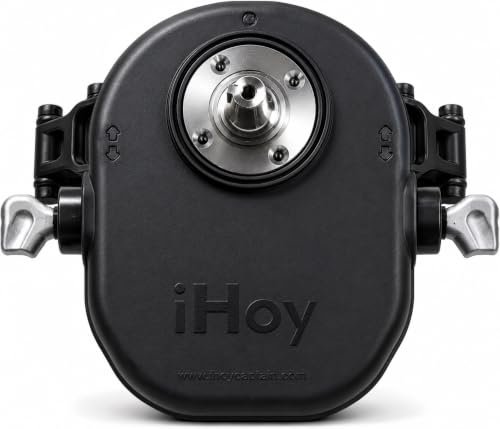
- Bluetooth 5 phone control up to 30 meters
- Easy self-installation with automatic calibration
- Instant mechanical override for manual control
Best For: Boaters who want a phone-based autopilot with simple setup
Hydraulic Outboard Pilot Pack

- Complete pack with hoses, connectors, and network parts
- Precision-9 compass adds heading, pitch, roll, and turn data
- Quiet reversible PUMP-1 MkII pump
Best For: Outboard boats with hydraulic steering needing a complete pack
Precision Sail and Power Autopilot
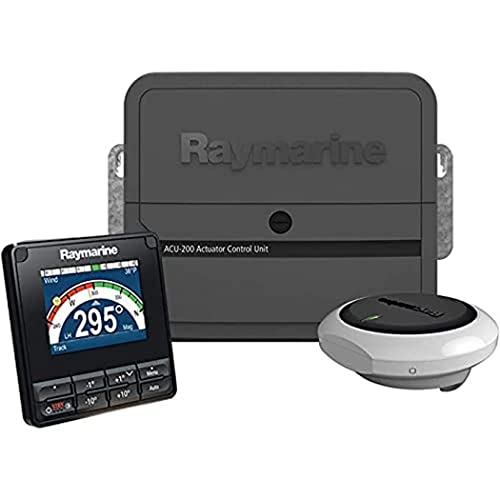
- Solid-state sensors track heading, pitch, roll, and yaw
- Dynamic accuracy within 2 degrees
- Flexible above- or below-deck installation
Best For: Boaters who want high-accuracy sensor-based autopilot control
Cable-Steer Outboard Pilot
Lowrance Outboard Autopilot System
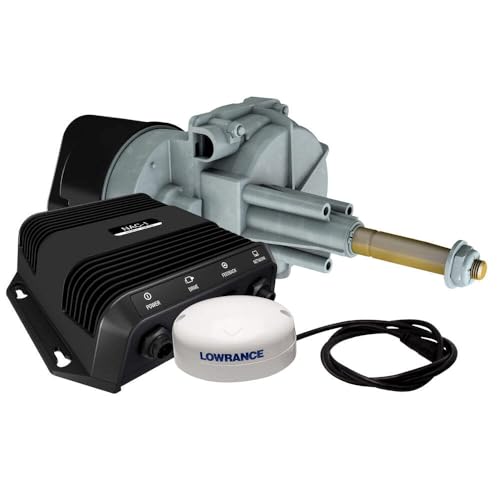
- Made for single outboard cable-steered vessels
- Includes NAC-1 computer, helm drive, and GPS/compass
- NMEA 2000 interface with Auto/Standby switch
Best For: Single outboard cable-steered boats needing a practical package
Autopilot Power Pack

- Motion sensor and GPS support
- Bluetooth plus SeaTalk connectivity
- Compact 0.8 kg panel-mount unit
Best For: Boat owners wanting a compact Raymarine autopilot package
Hydraulic Corepack

- Solid-state 9-axis AHRS
- Shadow Drive and NMEA 2000
- Includes GHC 50 helm control
Best For: Single-engine outboard boats under 25 feet with hydraulic steering
Autopilot Navigation Pack

- NavPilot 300 package with pump
- Includes Octopus 1.0L pump
- 12V bundled setup
Best For: Buyers wanting a Furuno autopilot kit with included pump hardware
Steady Course Marine Autopilot
Simrad AP44 Medium Capacity Pack
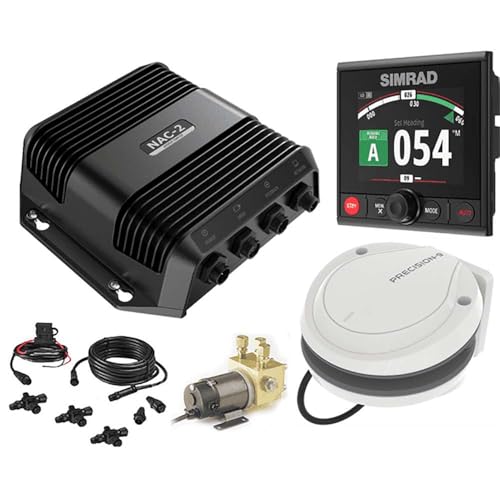
- Boat-oriented autopilot pack
- Supports steady course maintenance
- Includes listed components
Best For: Boat owners wanting a Simrad autopilot pack for steady course maintenance
Hydraulic Pilot Marine Autopilot
EV-150 Power Pilot Kit with Pump

- Includes control head, ACU, sensor core, and cabling
- Comes with a 1.0L hydraulic pump
- Packaged as a full autopilot kit
Best For: Boats needing a hydraulic autopilot package with the main hardware included
Throttle-Control Kicker Autopilot
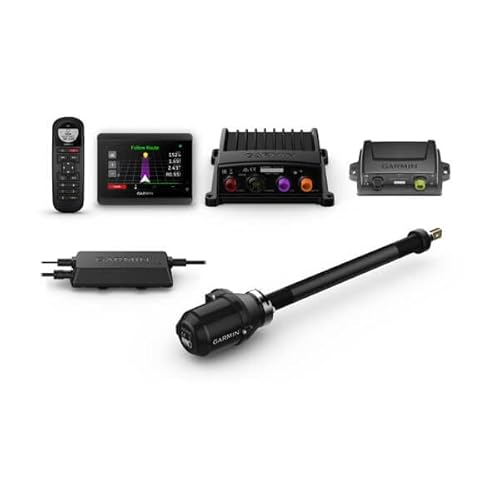
- Designed for small gasoline-powered boats
- Fine-tunes throttle settings by button
- Works with compatible Garmin chartplotters
Best For: Small gasoline-powered boats needing kicker autopilot and throttle control
Phone-Controlled Auto Pilot – Captain Autopilot Marine Autopilot
If you want marine autopilot systems that feel modern and easy to live with, the Captain Autopilot is built around smartphone control, quick setup, and practical convenience. It offers Bluetooth 5 remote operation, automatic calibration, and instant manual override, making it a straightforward option for boats under 15 metres with a 3/4 inch helm shaft and 12V DC power.
Best For: Boaters who want a phone-based autopilot with simple self-installation and fast manual override.
Pros:
- Works with a mobile phone and Bluetooth 5 for control up to 30 meters
- Easy self-installation with no installation service required
- Automatic calibration and added convenience features
- Instant mechanical override for immediate manual control
Cons:
- Limited to boats under 15 metres with a 3/4 inch helm shaft
- Requires 12V DC power
- Weather data access depends on third-party approval
This is a good fit if you value app control and quick setup more than a traditional helm-first autopilot interface. The CE, FCC, and RoHS compliance plus multi-user access make it a practical tech-forward choice.
Hydraulic Outboard Pilot Pack – Simrad NAC-1 Hydraulic Pack
Among marine autopilot systems for hydraulic outboard boats, this Simrad pack is geared toward a complete, lower-friction install. It bundles the NAC-1 computer, PUMP-1 MkII pump, Precision-9 compass, hydraulic connectors, hoses, and Micro-C network components, so you get the core pieces needed for a straightforward setup.
Best For: Outboard boats with hydraulic steering that need a complete autopilot package with precise heading data.
Pros:
- Complete system pack with hydraulic connectors, hoses, and network components
- Includes Precision-9 solid-state compass for heading, pitch, roll, and turn data
- PUMP-1 MkII is super-quiet and reversible
- Quick-connect NAC-1 plugs help reduce install time
Cons:
- Designed specifically for outboard boats with hydraulic steering
- Not a simple standalone component purchase
- May be more system than needed for basic autopilot needs
The main appeal here is completeness: it’s a well-matched pack for boaters who want compatible parts in one box. If your vessel fits the steering setup, this is a strong, navigation-focused option.
Precision Sail and Power Autopilot – Raymarine EV-200 A/P with p70
If you’re comparing marine autopilot systems for accuracy and adaptable performance, the Raymarine EV-200 stands out for its solid-state sensor technology and dynamic heading monitoring. It tracks heading, pitch, roll, and yaw, and is designed to evolve with changing sea conditions and vessel dynamics through SeaTalk-ng connectivity.
Best For: Boaters who want high-accuracy autopilot control with flexible installation and sensor-based correction.
Pros:
- Solid-state sensor technology delivers dynamic accuracy within 2 degrees
- Monitors heading, pitch, roll, and yaw as conditions change
- Auto-compensation for onboard magnetic fields
- Flexible installation above or below deck
Cons:
- No drive included
- Requires SeaTalk-ng connectivity to the control head and ACU
- May be more advanced than casual users need
This is a strong choice when accuracy matters more than simplicity. The sensor package and installation flexibility make it a serious option for boaters who want dependable course control in varied conditions.
Cable-Steer Outboard Pilot – Lowrance Outboard Autopilot System
For cable-steered boats, this Lowrance option is one of the more focused marine autopilot systems in the lineup. It includes the NAC-1 computer, helm drive, Point-1 GPS/Compass, and an Auto/Standby switch, giving single-outboard owners the main components needed for outboard pilot control over NMEA 2000.
Best For: Single outboard vessels with cable steering that need a practical autopilot package.
Pros:
- Built for single outboard cable-steered vessels
- Includes NAC-1 computer, helm drive, GPS/compass, and Auto/Standby switch
- NMEA 2000 interface supports onboard connectivity
- Waterproof design
Cons:
- Made specifically for cable-steered outboard boats
- Not as broadly compatible as universal systems
- Requires the right boat setup to be a fit
This package is best treated as a targeted solution rather than a general-purpose autopilot. If your boat matches the intended steering style, it provides the essentials for straightforward autopilot operation.
Autopilot Power Pack – Raymarine EV-100 P70R
If you want a practical option in marine autopilot systems for a boat with SeaTalk compatibility, the Raymarine EV-100 Power Pack is built around simple remote control and a panel-mount setup. It includes a motion sensor and GPS support, and the compact 0.8 kg unit is designed for boating use with an LCD display and button-based input.
Best For: Boat owners looking for a compact Raymarine autopilot package with motion sensing and remote control.
Pros:
- Motion sensor support helps the system respond to movement.
- Bluetooth and SeaTalk connectivity add flexibility.
- Panel-mount design suits a tidy helm installation.
- Compact, lightweight package for boat use.
Cons:
- Details are limited to the supplied product specs.
- Buttons and remote control may not suit users wanting touchscreen-first operation.
Overall, this is a straightforward autopilot package for buyers who want Raymarine compatibility, simple controls, and a compact footprint. Its feature set is focused on core boating navigation needs rather than extra display complexity.
Hydraulic Corepack – Garmin Reactor 40 with GHC 50
Among marine autopilot systems for hydraulically steered boats, this Garmin Reactor 40 corepack stands out for its solid-state 9-axis AHRS and easy mounting flexibility. It is described as a strong fit for single-engine outboard boats under 25 feet, with fast calibration, NMEA 2000 connectivity, and control through a compatible Garmin chartplotter or the included GHC 50 helm control display.
Best For: Single-engine outboard boats under 25 feet with hydraulic steering.
Pros:
- Solid-state 9-axis AHRS allows flexible mounting.
- Fast and easy calibration simplifies setup.
- Works with compatible Garmin chartplotters and GHC 50 control.
- Includes Shadow Drive Technology and NMEA 2000 connectivity.
Cons:
- Designed specifically for hydraulically steered systems.
- Best fit is clearly stated for single-engine outboard boats under 25 feet.
This is a feature-rich autopilot corepack for buyers who want a modern Garmin setup with flexible mounting and straightforward commissioning. The included components make it a complete starting point for the right boat type.
Autopilot Navigation Pack – Furuno NavPilot 300
For shoppers comparing marine autopilot systems, the Furuno NavPilot 300 package is a navigation-and-instruments option bundled with an Octopus 1.0L pump and 12V support. The supplied notes are brief, but the kit format suggests a practical all-in-one autopilot solution for buyers who want Furuno hardware with the pump included.
Best For: Buyers who want a Furuno autopilot package bundled with pump hardware.
Pros:
- Includes the NavPilot 300 unit.
- Bundled with an Octopus 1.0L pump.
- 12V package format is clearly specified.
Cons:
- Supplied notes provide limited feature detail.
- No connectivity, display, or control specifics are listed.
Because the available information is minimal, this package is best judged as a bundled Furuno autopilot kit rather than a feature-by-feature comparison pick. It may appeal most to buyers who already know they want the NavPilot 300 platform and matched pump.
Steady Course Marine Autopilot – Simrad AP44 Medium Capacity Pack
If you’re comparing marine autopilot systems for a boat that needs steady course maintenance, this Simrad AP44 medium capacity pack is built around that core job. The package is aimed at boat use, includes the components noted in the listing, and keeps the focus on reliable autopilot control rather than extra frills.
Best For: Boat owners who want a Simrad autopilot package centered on steady course maintenance.
Pros:
- Designed for boat use with steady course maintenance support
- Medium capacity pack format may suit a wider range of setups
- Includes the components referenced in the listing
- From Simrad, a brand commonly associated with marine electronics
Cons:
- Limited detail is provided about exact included components
- No information is given on chartplotter compatibility or control layout
- Weight and pack size may be more than needed for smaller simple installs
Overall, this is a straightforward option if your priority is a Simrad marine autopilot system focused on holding course. The listing supports it as a boat-oriented pack, but buyers should verify the full component list against their vessel and installation needs.
Hydraulic Pilot Marine Autopilot – EV-150 Power Pilot Kit with Pump
For marine autopilot systems that rely on hydraulic steering, this EV-150 Power Pilot kit bundles the control head, ACU, sensor core, cabling kit, and 1.0L hydraulic pump. The listing makes it clear this is a full package rather than a single component, which is useful if you want a more complete install path.
Best For: Boats needing a hydraulic autopilot package with the main hardware included.
Pros:
- Includes p70Rs control head, ACU-150, EV1 sensor core, and cabling kit
- Comes with a 1.0L hydraulic pump
- Packaged as a complete autopilot kit
- Product dimensions are provided for planning the install
Cons:
- The notes do not specify vessel type or steering system compatibility details
- No performance claims are listed beyond the bundled components
- Country of origin and package dimensions are the main additional details provided
This kit stands out for buyers who want the major pieces of a hydraulic autopilot system in one bundle. Since the available information is component-focused, it’s best to confirm fitment and installation requirements before buying.
Throttle-Control Kicker Autopilot – Garmin Reactor 40 with GHC 50
MAGNETOE Reactor 40 Kicker Autopilot with GHC 50 Autopilot Instrument, 010-02794-09, for Garmin
Check Price On AmazonThis Garmin option is aimed at small gasoline-powered boats and focuses on kicker autopilot control with throttle adjustment. If you’re narrowing down marine autopilot systems for a smaller setup, the listing emphasizes easy throttle fine-tuning and use with a compatible Garmin chartplotter.
Best For: Small gasoline-powered boats that want kicker autopilot and throttle control.
Pros:
- Specifically described as ideal for small gasoline-powered boats
- Allows fine-tuning of autopilot throttle settings with the touch of a button
- Can be combined with a compatible Garmin chartplotter for control
- Includes GHC 50 Autopilot Instrument and limited 1-year warranty
Cons:
- Requires a compatible Garmin chartplotter for full control integration
- Focused on kicker/autopilot use rather than larger boat applications
- Only the limited warranty term is stated in the notes
For a small-boat autopilot setup, this bundle is appealing because it centers on simple throttle control and Garmin integration. Buyers should still confirm their chartplotter compatibility and verify it matches their boat size and use case.
How We Picked These Marine Autopilot Systems
We prioritized compatibility, control quality, and real-world usability across a range of boat types. That means looking at drive type support, sensor quality, pump or actuator sizing, display/control options, and how well each system fits common outboard, inboard, hydraulic, and cable-steer setups.
We also considered installation complexity and whether a system is better suited to repowers, upgrades, or first-time autopilot buyers.
Quick Comparison: What Matters Most
Some Marine Autopilot Systems are built for compact outboards and light fishing boats, while others are designed for heavier offshore platforms with hydraulic steering. A few packages include advanced heading sensors or control heads, while others are more modular and rely on matching the right drive components to the vessel.
If you want simpler installation, look for a bundle that closely matches your steering system. If you want stronger long-term flexibility, choose a platform with broad expansion options and good compatibility with your chartplotter ecosystem.
Key Buying Factors for Marine Autopilot Systems
Steering Type and Vessel Size
The first filter is whether your boat uses cable steering, hydraulic steering, or a mechanical/outboard setup. A system that is too small may struggle to hold course in wind and seas, while one that is oversized can be more expensive and harder to install.
Sensor and Heading Performance
Modern autopilots rely on solid heading sensors for smoother corrections and better course keeping. Better sensors usually translate into less wandering, especially at low speeds, trolling speeds, or in following seas.
Controls and Integration
Consider whether you want a dedicated control head, multifunction display integration, or both. Easy access to modes, route following, and manual course changes makes a big difference in daily use.
Installation and Support
Some Marine Autopilot Systems are essentially turnkey packages, while others require you to choose pumps, cores, or control components separately. If you are not comfortable matching parts, a more complete kit can save time and reduce mistakes.
Who Should Buy Which Marine Autopilot Systems?
Buyers with smaller outboards or cable-steer boats should focus on compact, purpose-built kits. Offshore anglers and cruisers with hydraulic steering should look at stronger packs with better sensing and pump capacity. If you already use a major marine electronics brand, choosing a compatible autopilot in that ecosystem often makes setup simpler and everyday use more intuitive.
In short, the best choice depends on your boat’s steering system, the waters you run, and how much control you want at the helm.