The right battery can make a small boat easier to start, more dependable on the water, and better suited to long trolling sessions. The options in this roundup include sealed AGM and lightweight LiFePO4 batteries for different power needs and budgets.
Before choosing, match the battery to your boat’s starting requirements, motor voltage, available charging system, physical space, and expected runtime.
Best 10 Marine Batteries for Small Boats Picks for 2026
Reliable AGM Value
Newport 12V 50Ah Deep Cycle AGM

- 50Ah deep-cycle power for trolling motors
- Sealed AGM design with marine terminals
- Compact fit for kayaks and small boats
Best For: Small-boat anglers seeking simple, dependable AGM power
Dual-Purpose Lithium Power
LiTime 12V 100Ah Cranking Battery

- Combines cranking and deep-cycle functions
- 900 CCA with a lightweight Group 24 form factor
- Bluetooth monitoring and low-temperature protection
Best For: Boaters needing lightweight starting and accessory power
Proven AGM Versatility

- 750 CCA for reliable engine starting
- 70Ah dual-purpose AGM capacity
- Two-year free-replacement warranty
Best For: Owners wanting conventional AGM starting and accessory power
Long-Life Lithium Runtime

- 22-pound, 1.28kWh lithium design
- Bluetooth monitoring with temperature protection
- Supports series and parallel expansion
Best For: Deep-cycle marine setups needing light weight and long life
Best Starting Power

- 800 CCA and 1,000 MCA
- Maintenance-free sealed AGM design
- Dual-purpose starting and deep-cycle capability
Best For: Small boats prioritizing dependable engine starts
Best Lightweight Trolling Battery
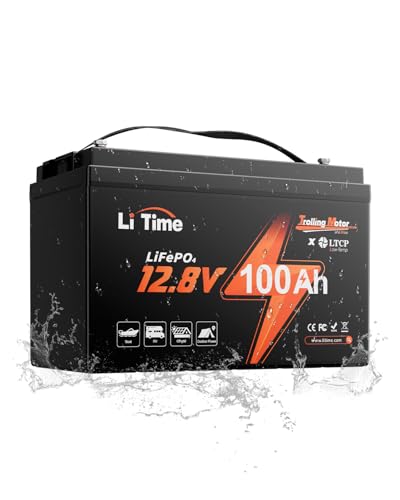
- 22.1-pound 100Ah battery
- Built-in marine and temperature protection
- Rated for 4,000-plus full-depth cycles
Best For: 12V trolling motors and weight-conscious boat setups
Best Dual-Purpose AGM

- 750 CCA and 55Ah capacity
- Starting and deep-cycle functionality
- Sealed, vibration-resistant AGM construction
Best For: Small boats using one battery for mixed duties
Best Lithium House Battery
SUPER EMPOWER Group 24 LiFePO4

- 100Ah deep-cycle capacity for marine auxiliary power
- 100A BMS with multiple protection features
- Lightweight Group 24 drop-in format
Best For: Trolling motors, electronics, and auxiliary loads
Best Heavy-Duty Pick
UPLUS Group 24M Marine Battery

- 550 CCA for specified marine engine starting
- 79Ah capacity with 150-minute reserve
- Sealed AGM design resists vibration
Best For: Starting and accessory power from one battery
Best Long-Life Lithium Value

- 21-pound lithium design reduces battery weight
- 100Ah capacity with 100A BMS
- Manufacturer-listed long cycle-life ratings
Best For: Trolling motors and lead-acid upgrades
Reliable AGM Value – Newport 12V 50Ah Deep Cycle AGM
For shoppers comparing marine batteries for small boats, the Newport 12V 50Ah AGM battery offers a straightforward deep-cycle setup for trolling motors and compatible 12V electronics. Its sealed lead-acid design is compact enough for kayaks, inflatable boats, jon boats, and similar watercraft.
Best For: Small-boat anglers who need dependable trolling-motor power without moving to lithium.
Pros:
- 50Ah deep-cycle capacity for steady trolling-motor power
- Sealed AGM construction requires relatively little maintenance
- Compact, portable format with marine terminals
- Backed by a one-year limited warranty and USA-based support
Cons:
- At 32 pounds, it is heavier than comparable lithium batteries
- Its 50Ah capacity is lower than the 100Ah options in this roundup
This is a practical choice when affordability, simple operation, and portability matter more than maximum runtime or minimum weight. Confirm that your trolling motor and electronics require a 12V battery before buying.
Dual-Purpose Lithium Power – LiTime 12V 100Ah Cranking Battery
Among marine batteries for small boats, the LiTime 12V 100Ah LiFePO4 model stands out for combining engine starting and deep-cycle power. It is designed to run marine equipment while also supplying substantial cranking output, with Bluetooth monitoring and built-in protection features.
Best For: Small-boat owners who want one lightweight battery for outboard starting and onboard equipment.
Pros:
- Dual-purpose design can replace separate starting and deep-cycle batteries
- 900 CCA and up to 100A continuous discharge provide strong starting capability
- 22.71-pound Group 24 form factor is notably lighter than lead-acid alternatives
- Bluetooth monitoring, self-heating, and extensive BMS protections add control
Cons:
- Not compatible with Yamaha outboards or specified systems without voltage regulators
- Requires compatibility checks before installation
This is the most feature-rich option here for boaters prioritizing weight savings and dual-purpose performance. Carefully verify your outboard, charger, and electronics compatibility, especially if using Yamaha equipment or a LiveScope fish-finder system.
Proven AGM Versatility – Interstate 12V 70Ah Group 24
The Interstate 12V 70Ah Group 24M is a strong all-around pick among marine batteries for small boats when you need both starting power and accessory support. Its dual-purpose AGM construction provides 750 CCA for cranking while also supporting trolling motors and onboard equipment.
Best For: Boat owners who prefer a familiar AGM battery for starting, trolling, and general marine accessories.
Pros:
- Dual-purpose design supports engine starting and deep-cycle use
- 750 CCA provides substantial cranking power
- 70Ah capacity helps run motors, lights, pumps, and other accessories
- Two-year free-replacement warranty
Cons:
- At 44.6 pounds, it is the heaviest battery in this selection
- AGM provides less weight savings than lithium alternatives
Choose this model if you value established AGM construction, broad dual-purpose use, and a longer replacement warranty. Its Group 24M dimensions should still be checked against your boat’s battery compartment and mounting setup.
Long-Life Lithium Runtime – BUKNUWO 12.8V 100Ah LiFePO4
For marine batteries for small boats that prioritize usable energy and long service life, the BUKNUWO 12.8V 100Ah LiFePO4 battery offers a lightweight alternative to lead-acid. It provides 1.28kWh of energy, Bluetooth status monitoring, low-temperature protection, and support for series or parallel expansion.
Best For: Small-boat users seeking long runtime, low weight, and app-based battery monitoring.
Pros:
- 22-pound design is significantly lighter than comparable lead-acid batteries
- Up to 95% capacity utilization and up to 15,000 cycles at 60% depth of discharge
- Bluetooth 5.0 app tracks charge, voltage, current, temperature, and protection status
- Supports up to 4S4P expansion for larger systems
Cons:
- Requires charging within the specified temperature range and compatible lithium equipment
- It is a general-purpose LiFePO4 battery, so starting compatibility should be confirmed separately
This battery makes the most sense for a boat setup built around deep-cycle loads such as fish finders and other electronics. Its long cycle rating and monitoring features are attractive, but verify your charger and installation requirements before replacing a starting battery.
Best Starting Power – OPTIMA BLUETOP 34M AGM
For boaters comparing marine batteries for small boats, the OPTIMA 34M BLUETOP is a maintenance-free AGM option focused on dependable engine starting. Its 800 CCA rating, dual terminals, and vibration resistance make it practical for compact marine setups that need strong starting performance.
Best For: Small boats needing a maintenance-free starting battery with dual-purpose capability.
Pros:
- 800 CCA and 1,000 MCA provide strong starting output.
- Sealed AGM design requires no routine maintenance.
- SpiralCell technology and vibration resistance support durability.
- Dual SAE and 5/16-inch stainless steel stud posts offer installation flexibility.
Cons:
- At 38.4 pounds, it is heavier than the comparable LiFePO4 option.
- Its 50Ah C20 capacity is more limited for extended deep-cycle use.
This is a well-rounded choice when starting reliability matters most, while its dual-purpose design adds flexibility for moderate onboard electrical demands.
Best Lightweight Trolling Battery – LiTime 12V 100Ah LiFePO4
For marine batteries for small boats used with trolling motors, the LiTime 12V 100Ah LiFePO4 battery offers substantial capacity at a low stated weight. Its built-in protection features and low-temperature charging safeguards are useful for boaters who want long service life with less weight aboard.
Best For: 12V trolling motors and boats where reduced battery weight and deep-cycle runtime are priorities.
Pros:
- 100Ah capacity and 22.1-pound weight help maximize usable onboard energy without the bulk of lead-acid batteries.
- Built-in protection covers overcharge, overheating, short circuits, and voltage spikes.
- Low-temperature protection helps prevent charging below 32°F and discharging below -4°F.
- Rated for 4,000-plus cycles at 100% depth of discharge and backed by a five-year warranty.
Cons:
- It is designed for energy storage and trolling motors, not engine starting.
- No Bluetooth monitoring is included.
- Its 13-inch length may require checking the available battery compartment space.
The LiTime is the most weight-conscious option here for deep-cycle use, but buyers should pair it with a separate starting battery when their boat requires engine-starting power.
Best Dual-Purpose AGM – OPTIMA BLUETOP D34M
The OPTIMA D34M BLUETOP is a versatile choice among marine batteries for small boats, combining engine-starting ability with deep-cycle support. Its 750 CCA rating, 55Ah C20 capacity, and sealed AGM construction suit boaters who want one maintenance-free battery for mixed marine duties.
Best For: Small boats needing one sealed battery for starting and moderate deep-cycle applications.
Pros:
- Dual-purpose design supports both starting and deep-cycle use.
- 750 CCA and 870 MCA provide capable starting performance.
- 120-minute reserve capacity supports consistent operation.
- Vibration-resistant AGM construction and dual terminals improve installation flexibility.
Cons:
- At 43.5 pounds, it is the heaviest product in this comparison.
- Its starting output is lower than the OPTIMA 34M’s 800 CCA.
- Lead-acid AGM offers fewer stated cycle-life benefits than the LiFePO4 alternative.
Choose the D34M when versatility is more important than minimum weight or maximum starting output. It is a practical all-around AGM battery for compact boats with mixed power needs.
Best Lithium House Battery – SUPER EMPOWER Group 24 LiFePO4
For boaters comparing marine batteries for small boats, this SUPER EMPOWER 12.8V 100Ah LiFePO4 model is designed for deep-cycle energy storage rather than engine starting. Its Group 24 format, 21.6-pound weight, integrated 100A BMS, and M8 terminals make it a practical option for house loads, trolling motors, and auxiliary marine power.
Best For: Small boats needing lightweight deep-cycle power for trolling motors, electronics, or auxiliary loads—not engine cranking.
Pros:
- 100Ah capacity with Grade A LiFePO4 cells for deep-cycle use.
- Built-in 100A BMS helps protect against overcharge, over-discharge, overcurrent, short circuits, and temperature issues.
- Group 24 dimensions support drop-in replacement in many standard battery boxes.
- Supports series and parallel expansion up to a stated 4S4P configuration.
Cons:
- Not suitable for engine starting or cranking.
- Charging pauses below 32°F, so cold-weather charging requires attention.
- Requires a LiFePO4-compatible charger or properly configured solar/DC-DC charging system.
This is a strong fit when your small-boat setup prioritizes usable house or trolling-motor energy over starting power. Verify your charger settings and available battery-box space before installation.
Best Heavy-Duty Pick – UPLUS Group 24M Marine Battery
Among marine batteries for small boats, the UPLUS Group 24M AGM stands out for combining starting and deep-cycle duties in one sealed battery. With 550 CCA, 79Ah capacity, and a 150-minute reserve capacity, it is aimed at boats that need engine-starting ability alongside power for lights, navigation equipment, and other onboard loads.
Best For: Small boats that need one battery for engine starting and moderate deep-cycle marine accessories.
Pros:
- Dual-purpose design combines starting and deep-cycle functions.
- 550 CCA is specified for engines from 70 to 350 horsepower.
- AGM construction is sealed and designed for improved vibration resistance.
- Group 24M marine format helps conserve space compared with carrying separate starting and house batteries.
Cons:
- At 39 pounds, it is heavier than the listed lithium alternatives.
- Its 79Ah capacity is lower than the 100Ah capacity of the featured LiFePO4 batteries.
- Confirm that the Group 24M dimensions and terminal arrangement fit your boat’s battery compartment.
This AGM is the most versatile choice here for boaters who want cranking capability without installing two batteries. It makes the most sense when simplicity and starting performance matter more than minimizing weight.
Best Long-Life Lithium Value – MARSENERGY 100Ah Group 24
For small-boat owners seeking marine batteries for small boats with lower weight and long cycle life, the MARSENERGY 12V 100Ah LiFePO4 battery offers a Group 24-compatible upgrade path from lead-acid. It weighs 21 pounds, includes a 100A BMS, and is listed for marine, kayak, trolling-motor, and other 12V applications.
Best For: Boat and trolling-motor owners upgrading from lead-acid to a lightweight, deep-cycle lithium battery.
Pros:
- 21-pound design is substantially lighter than traditional lead-acid batteries.
- Manufacturer lists up to 4,500 cycles at 100% depth of discharge and 8,000 cycles at 80% depth of discharge.
- 100Ah capacity and Group 24-compatible dimensions support common marine deep-cycle setups.
- Built-in BMS provides protection against short circuit, over-voltage, and abnormal temperatures.
Cons:
- BMS charging cutoff below 32°F requires a suitable cold-weather charging plan.
- The battery may enter sleep mode after an abnormal condition and require activation before reuse.
- It is a deep-cycle battery, so verify that your boat’s starting system does not require a dedicated cranking battery.
The MARSENERGY is a compelling option for reducing battery weight while retaining 100Ah of deep-cycle capacity. Its stated cycle-life figures are attractive, but installation should account for lithium charging requirements and low-temperature protection.
How We Picked the Best Marine Batteries for Small Boats
We compared these batteries by chemistry, intended use, capacity, starting performance, durability, maintenance requirements, weight, and fit. The selection includes dedicated deep-cycle batteries for trolling motors, starting and dual-purpose AGM models, and LiFePO4 batteries designed for higher usable capacity and longer cycle life.
Specifications such as amp-hours, cold-cranking amps, battery-management protection, terminal layout, dimensions, and charging compatibility matter more than headline capacity alone. Always confirm current manufacturer specifications before ordering.
Quick Comparison
| Battery type | Best for | Main advantage | Trade-off |
|---|---|---|---|
| AGM starting | Outboard starting | Strong starting current and sealed construction | Heavier than lithium |
| AGM dual-purpose | Starting plus accessories | Versatile, low-maintenance performance | Less usable energy per pound |
| LiFePO4 deep cycle | Trolling motors and electronics | Light weight, long cycle life, and consistent output | Higher upfront cost and charger requirements |
| LiFePO4 dual purpose | Starting and house loads | Combines lithium efficiency with broader use | Must be approved for the engine’s starting demands |
Key Buying Factors for Marine Batteries for Small Boats
Battery Role
Starting batteries deliver short bursts of high current, while deep-cycle batteries are built for sustained loads such as trolling motors, fish finders, lights, and pumps. A dual-purpose battery can serve both roles, but it may not match a dedicated battery at either extreme.
Capacity and Voltage
Match voltage to the trolling motor system—typically 12V, 24V, or 36V—and choose amp-hours based on expected runtime. A 100Ah battery generally offers more reserve than a 50Ah model, but actual runtime depends on motor speed, load, temperature, and battery condition.
AGM Versus LiFePO4
AGM batteries are sealed, familiar, and often easier to integrate with existing marine charging equipment. LiFePO4 batteries are substantially lighter and usually provide more usable energy and many more cycles, but they require compatible charging and may need low-temperature safeguards.
Fit, Charging, and Safety
Check group size, dimensions, terminal placement, hold-down requirements, and cable reach. Confirm that the charger supports the selected chemistry and that the battery-management system provides appropriate protection. Secure every battery against movement and follow the manufacturer’s installation instructions.
Who Should Buy Which Marine Batteries for Small Boats?
- Choose AGM starting power if your main priority is reliable outboard ignition and simple replacement.
- Choose AGM dual-purpose if you want one conventional battery for starting, electronics, and moderate accessory use.
- Choose LiFePO4 deep cycle if reducing weight and maximizing trolling-motor runtime are your priorities.
- Choose LiFePO4 dual purpose if you need lithium efficiency for both starting and onboard loads, provided the battery is explicitly rated for engine starting.
For many small boats, the best setup is not one universal battery but separate starting and house or trolling batteries selected around the boat’s electrical system.