A dependable charger keeps your trolling motor batteries ready for the next trip while helping protect them from overcharging, sulfation, and premature wear. The right model depends on your battery chemistry, voltage, bank count, and how much space you have onboard.
We’ve gathered 10 marine battery chargers for trolling motors, ranging from compact single-bank maintainers to higher-output multi-bank chargers and dedicated LiFePO4 options.
Best 10 Marine Battery Chargers for Trolling Motors Picks for 2026
Best High-Capacity Pick
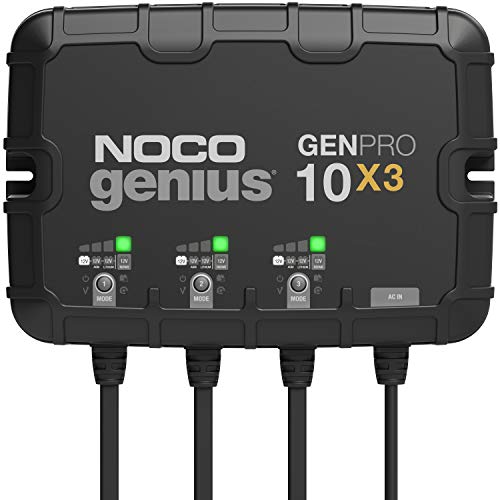
- 30 amps total across three independent 12V banks
- Supports lead-acid, AGM, lithium, and repair modes
- IP68 waterproof design with temperature compensation
Best For: Three-battery 12V boat systems needing higher charging output
Best 24V Lithium Pick
Waterproof 24V LiFePO4 Charger

- 20-amp charging with 29.2V output for 24V LiFePO4
- 0V activation can wake over-discharged batteries
- IP67 housing with fan cooling and safety protections
Best For: Single 24V LiFePO4 trolling motor battery systems
Best Compact Multi-Bank Value
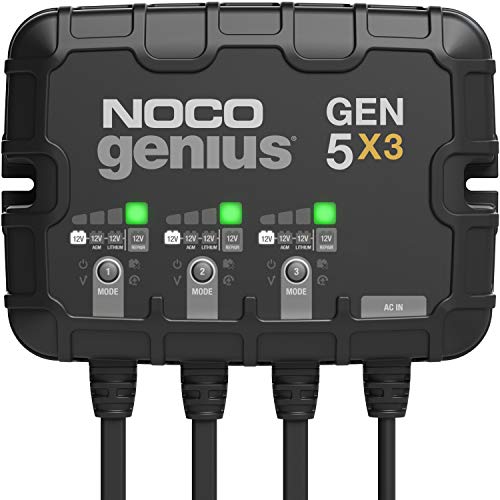
- Three independent 12V banks at 5 amps each
- Selectable modes for lead-acid, AGM, lithium, and repair
- IP68 waterproof housing with temperature compensation
Best For: Compact onboard charging and maintenance for three 12V batteries
Best Single-Bank Lithium Pick

- 20-amp, 14.6V charging for 12V LiFePO4 batteries
- 0V activation and CC/CV/float charging control
- M8 terminals plus a 50A Anderson connector
Best For: Single 12V lithium trolling motor batteries needing faster charging
Best All-Around Value

- 15A output with 6V/12V automatic detection
- Supports AGM, gel, standard, and deep-cycle batteries
- Charges, maintains, tests, and restores batteries
Best For: Versatile garage and seasonal battery maintenance
Best for Two Batteries
LiTime 2-Bank 10A LiFePO4 Charger

- Two 10A banks charge batteries simultaneously
- IP65 waterproof design for marine use
- Supports LiFePO4 and compatible lead-acid batteries
Best For: Two-battery trolling-motor and boat systems
Best Onboard Marine Design
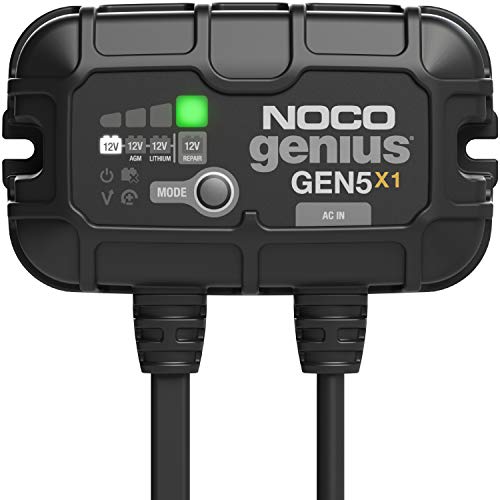
- IP68 waterproof single-bank construction
- Selectable lead-acid, AGM, lithium, and repair modes
- Temperature compensation and deep-discharge recovery
Best For: Permanent charging of one 12V boat battery
Best Lithium Upgrade
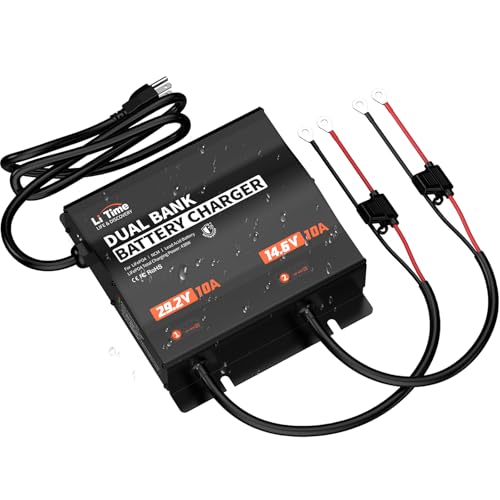
- 10A per bank for simultaneous charging
- Supports 12V/24V LiFePO4 systems
- IP65 protection with multiple safety features
Best For: Two-battery lithium trolling-motor setups
Best Sealed Lead-Acid Option

- Two 5A charging banks
- IP68 waterproof and fully sealed
- Three independent 12V charging modes
Best For: Two 12V onboard batteries needing continual maintenance
Best Battery-Maintenance Features

- Two 5A banks for 12V batteries
- IP68 waterproof onboard design
- Nine-stage charging with repair mode
Best For: Owners prioritizing diagnostics and long-term battery maintenance
Best High-Capacity Pick – Compact 3-Bank Marine Charger
For boat owners comparing marine battery chargers for trolling motors, the NOCO GENPRO10X3 is a strong choice when you need to charge three 12V batteries independently. Its 30-amp total output, selectable battery modes, and IP68 waterproof design suit demanding onboard installations.
Best For: Multi-battery boats using 12V lead-acid or LiFePO4 batteries and needing faster 10-amp-per-bank charging.
Pros:
- Charges three 12V batteries independently at 10 amps per bank.
- Supports lead-acid, AGM, lithium, and repair modes.
- IP68 waterproof construction with temperature compensation.
- Can begin charging batteries as low as 1 volt, with Force Mode for zero-volt batteries.
Cons:
- Designed for 12V battery banks rather than a single 24V system.
- Heavier and larger than the single-bank options in this roundup.
The GENPRO10X3 is the most capable option here for a three-battery 12V setup. Its robust sealing, flexible charging modes, and three-year limited warranty make it well suited to permanent marine use.
Best 24V Lithium Pick – Waterproof 24V LiFePO4 Charger
If your trolling motor uses a 24V LiFePO4 battery system, the LiTime 24V 20A is one of the more targeted marine battery chargers for trolling motors in this lineup. It delivers 29.2V output, 20-amp charging, 0V activation, and IP67 protection for wet environments.
Best For: 24V LiFePO4 trolling motor batteries requiring a single-bank AC-to-DC charger.
Pros:
- Purpose-built for 24V lithium batteries with 29.2V output.
- 20-amp three-stage charging includes 0V activation.
- IP67 aluminum housing and built-in cooling fan support outdoor use.
- Includes a mounting bracket, carrying handle, and multiple protection systems.
Cons:
- Compatible with LiFePO4 batteries rather than lead-acid systems.
- Has one charging port and is not intended to charge multiple banks simultaneously.
The LiTime is a practical match for a 24V lithium trolling motor setup. Its waterproof housing and installation flexibility are useful on boats, while the single-bank design keeps the focus on one battery system.
Best Compact Multi-Bank Value – 3-Bank 12V Marine Charger
The NOCO GEN5X3 is a compact option for shoppers seeking marine battery chargers for trolling motors with three separate 12V batteries. It provides 5 amps per bank, supports several battery chemistries, and uses a sealed IP68 enclosure for onboard marine installation.
Best For: Multi-battery 12V boats that need dependable maintenance charging in a smaller, lower-output package.
Pros:
- Independently charges three 12V batteries at 5 amps per bank.
- Selectable 12V, AGM, lithium, and repair modes for each bank.
- IP68 waterproof housing and temperature-compensated charging.
- Supports recovery charging from 1 volt, plus Force Mode down to zero volts.
Cons:
- Its 15-amp total output is slower than the GENPRO10X3.
- Designed for 12V banks, not a single 24V battery system.
The GEN5X3 makes sense when compact three-bank charging matters more than maximum speed. It offers broad battery compatibility and marine protection, along with a three-year limited warranty.
Best Single-Bank Lithium Pick – 12V 20A LiFePO4 Charger
For a single 12V lithium trolling motor battery, the E-FAST 20A charger offers fast charging in a relatively lightweight design. It combines 14.6V output, 0V activation, cooling-fan support, and both M8 terminal and Anderson connections.
Best For: 12V LiFePO4 batteries from 40Ah to 300Ah used in boats, trolling motors, RVs, or similar applications.
Pros:
- 20-amp charging can theoretically charge a 100Ah battery in about five hours.
- 0V activation helps reactivate depleted 12V lithium batteries.
- Aluminum housing, cooling fan, and multiple electrical protections support continuous use.
- Includes M8 terminals and a 50A Anderson connector for flexible hookups.
Cons:
- Designed specifically for 12V LiFePO4 batteries, not lead-acid batteries.
- Single-bank charging does not support simultaneous charging of multiple batteries.
- Has a one-year warranty, shorter than the NOCO options listed here.
The E-FAST is a straightforward choice for a 12V lithium setup when charging speed and connection flexibility are priorities. Its compact, two-pound design also makes it easier to move or install than larger multi-bank chargers.
Best All-Around Value – Schumacher SC1280 15A Charger
For shoppers comparing marine battery chargers for trolling motors, the Schumacher SC1280 is a versatile 6V/12V option for home or garage use. Its 15A output, automatic voltage detection, and support for standard, AGM, gel, and deep-cycle batteries make it useful for boats as well as other recreational vehicles.
Best For: Buyers who want one multifunction charger for marine, automotive, power-sport, and seasonal batteries.
Pros:
- 15A charging output can recharge standard and deep-cycle batteries efficiently.
- Supports 6V and 12V batteries, including AGM, gel, and deep-cycle types.
- Combines charging, maintenance, testing, and battery-restoration functions.
- Automatic voltage detection and microprocessor-controlled multi-stage charging simplify operation.
Cons:
- Uses alligator clips rather than dedicated onboard eyelet connections.
- Not described as waterproof or specifically designed for permanent onboard installation.
The SC1280 is a practical choice when flexibility matters more than marine-specific construction. It is particularly appealing for occasional charging and battery maintenance, but users seeking a sealed onboard trolling-motor charger may prefer a purpose-built marine model.
Best for Two Batteries – LiTime 2-Bank 10A LiFePO4 Charger
The LiTime 2-bank charger is a strong option for anglers comparing marine battery chargers for trolling motors with lithium or lead-acid setups. It provides 10A to each of two banks, supports simultaneous charging, and adds IP65 waterproof protection for boat and marine applications.
Best For: Trolling-motor owners who need to charge two 12V batteries at the same time, especially LiFePO4 batteries.
Pros:
- Two independent 10A banks can charge both batteries simultaneously.
- 14.6V output is designed for LiFePO4 batteries and also supports compatible lead-acid types.
- IP65 waterproof construction suits boats, trolling motors, and other marine environments.
- Includes protections against overheating, over-current, reverse polarity, short circuits, and over-voltage.
Cons:
- Uses M8 battery terminals, so installation may require compatible connections.
- At 7.7 pounds, it is heavier than the single-bank NOCO option.
- Its 14.6V charging profile should be matched carefully to the battery manufacturer’s requirements.
With two charging banks and lithium-focused specifications, the LiTime is well suited to multi-battery trolling-motor systems. Its waterproof design adds practical marine protection, while the terminal-based installation favors a more permanent setup.
Best Onboard Marine Design – NOCO GEN5X1 5A Charger
For a dedicated onboard choice among marine battery chargers for trolling motors, the NOCO GEN5X1 offers a compact single-bank design with 5A charging. Its IP68 waterproof housing, selectable battery modes, temperature compensation, and mounting hardware are tailored to demanding marine conditions.
Best For: Boat owners who need a permanently mounted charger for one 12V lead-acid or LiFePO4 battery.
Pros:
- IP68 waterproof construction is designed for harsh marine environments.
- Selectable 12V, AGM, lithium, and repair modes accommodate several battery types.
- Temperature compensation helps prevent overcharging in heat and undercharging in cold.
- Can charge batteries from 1V and includes Force Mode for batteries down to 0V.
Cons:
- One bank charges only one battery at a time.
- Its 5A output is lower than the Schumacher and LiTime chargers.
- Designed for onboard installation rather than flexible alligator-clip use.
The GEN5X1 is the most marine-specific option in this group. It makes sense for a single-battery boat installation where waterproofing, secure mounting, and careful battery maintenance are more important than maximum charging speed or multiple banks.
Best Lithium Upgrade – Dual-Bank LiFePO4 Charger
For anglers comparing marine battery chargers for trolling motors, the LiTime 2-Bank model stands out when you need to charge two batteries simultaneously. It supplies 10A per bank and supports 12V and 24V LiFePO4 setups, with additional compatibility for NCM and lead-acid batteries.
Best For: Boat owners using two lithium batteries or a 24V trolling-motor system who want faster, simultaneous charging.
Pros:
- Two independent 10A charging channels can charge both batteries at once.
- Supports LiFePO4, NCM, and lead-acid batteries with dedicated voltage outputs.
- IP65 waterproof construction and a waterproof connector suit moist marine environments.
- Includes protections for over-temperature, over-current, reverse polarity, short circuits, and over-voltage.
Cons:
- At 8.8 pounds, it is heavier than the smaller 5A-per-bank alternatives.
- Its 10A-per-bank output is designed for compatible battery systems rather than every small battery setup.
The dual-bank design is the main advantage here: it can reduce charging time while supporting higher-voltage lithium configurations. Verify your battery chemistry, voltage, and M8 terminal requirements before installation.
Best Sealed Lead-Acid Option – 5A-Per-Bank Marine Charger
This FirstPower Pro charger is a practical choice among marine battery chargers for trolling motors when you need a compact onboard unit for two 12V batteries. Each bank provides 5A, and the charger supports SLA/AGM, lithium, calcium, deep-cycle, marine, boat, and starter batteries.
Best For: Boat owners who want a sealed, 24/7-capable charger with independent charging modes for two 12V batteries.
Pros:
- Charges two batteries simultaneously at 5A per bank.
- IP68 waterproof, fully sealed construction is suited to onboard installation.
- Each bank independently supports SLA/AGM, lithium, or calcium charging modes.
- Temperature sensing, diagnostics, repair mode, and a three-year warranty add convenience.
Cons:
- Its 5A-per-bank output is slower than the 10A-per-bank LiTime model.
- The supplied warning calls for use in a well-ventilated area.
With IP68 sealing and automatic temperature adjustment, this model emphasizes dependable onboard maintenance rather than maximum charging speed. Its independent modes are useful when the two connected batteries have different requirements.
Best Battery-Maintenance Features – Smart 2-Bank Charger
The Zrfmib smart charger combines two 5A charging banks with maintenance-focused features, making it a versatile option among marine battery chargers for trolling motors. It supports 12V batteries, automatically transitions to float charging, and includes temperature compensation, repair mode, and fault diagnostics.
Best For: Trolling-motor owners who want a waterproof two-bank charger with battery recovery and ongoing maintenance features.
Pros:
- Charges two 12V batteries simultaneously at 5A per bank.
- IP68 waterproof design is intended for onboard marine use.
- Nine-stage charging and automatic temperature compensation help tailor charging to conditions.
- Manual low-voltage activation, auto repair mode, and diagnostics can help address battery issues.
Cons:
- It is limited to 12V batteries, so it is not intended for a direct 24V battery output.
- The 5A-per-bank rate favors maintenance and steady charging over the fastest recharge times.
This is the feature-rich pick for owners who value monitoring and battery upkeep. The 5-grid display, repair function, and temperature compensation make it especially practical for batteries that remain installed between outings.
How We Picked the Best Marine Battery Chargers for Trolling Motors
We focused on the specifications that matter most on a fishing boat: battery compatibility, charging output, bank configuration, waterproofing, installation style, and maintenance features. The lineup includes chargers for 12V and 24V systems, single and multiple batteries, lead-acid and LiFePO4 chemistry, and both permanent onboard installation and occasional use.
Because product specifications and compatibility can vary by seller or revision, confirm the manufacturer’s voltage, chemistry, connector, and installation requirements before ordering.
Quick Comparison
| Best For | What to Look For |
|---|---|
| One 12V battery | 5A to 10A single-bank charger |
| Two 12V batteries | Two-bank charger with independent outputs |
| Three-bank trolling setup | Three-bank onboard charger with balanced output |
| LiFePO4 batteries | Dedicated lithium charging profile and correct voltage |
| Wet or exposed storage | Water-resistant or waterproof housing with sealed connections |
Key Buying Factors for Marine Battery Chargers for Trolling Motors
Voltage and Bank Count
Match the charger to the battery arrangement, not just the trolling motor’s advertised voltage. A 24V motor may use two 12V batteries, requiring a two-bank charger, while a three-battery setup generally benefits from three independent banks. Independent outputs let each battery charge and maintain properly.
Battery Chemistry
Lead-acid, AGM, gel, and LiFePO4 batteries use different charging profiles. Choose a charger explicitly rated for your chemistry. A lithium-compatible model is not automatically suitable for every lithium battery, so verify the required absorption voltage and whether the charger supports battery-management-system activation.
Charging Current
Higher amperage reduces recharge time, but the battery manufacturer’s recommended charge rate should come first. A 5A charger can be suitable for maintenance or smaller batteries, while 10A to 15A per bank is more practical for frequently used larger packs.
Marine Durability and Installation
For permanent installation, prioritize sealed construction, corrosion resistance, thermal protection, and clear status indicators. Waterproof ratings describe controlled test conditions, so mount the charger in a ventilated location away from standing water and route cables securely.
Safety and Maintenance Features
Look for reverse-polarity protection, short-circuit and over-temperature protection, automatic float or maintenance modes, and independent bank monitoring. Desulfation can benefit compatible lead-acid batteries but should not be treated as a substitute for proper storage or battery replacement.
Who Should Buy Which Marine Battery Chargers for Trolling Motors?
Choose a single-bank charger if your boat uses one 12V battery or you need a compact maintainer. Choose a two-bank model for a typical 24V trolling-motor system built from two 12V batteries. Choose a three-bank onboard charger when your setup includes separate trolling, starting, and accessory batteries.
LiFePO4 owners should select a charger specifically designed for lithium batteries and verify its output voltage. Frequent anglers may benefit from higher amperage and permanent onboard wiring, while occasional users can save money with a smaller portable or lightly rated maintainer. Before purchase, confirm battery capacity, terminal access, cable length, outlet availability, and the charger’s environmental rating.