Choosing among today’s marine navigation systems can feel overwhelming, especially when chartplotters, handheld GPS units, and marine radios all promise different strengths.
This guide helps you narrow the field by focusing on the features that matter most on the water: chart quality, screen visibility, networking, sonar compatibility, and durability.
Best 10 Marine Navigation Systems Picks for 2026
All-in-one chartplotter package
Simrad GO9 Chartplotter & Fish Finder

- Includes C-MAP DISCOVER chart card
- HDI transducer adds CHIRP/DownScan sonar
- Wi-Fi, GPS, and NMEA 2000 connectivity
Best For: Boats that want navigation, sonar, and upgrade-ready radar support in one unit
Premium large-format navigator
Garmin GPSMAP 8610 10-inch Chartplotter

- 10-inch HD IPS touchscreen
- Supports traditional, scanning, and live sonar
- Garmin Navionics+ mapping with Wi-Fi
Best For: Serious helm installs that need a premium display and advanced sonar support
Expandable radar-ready plotter
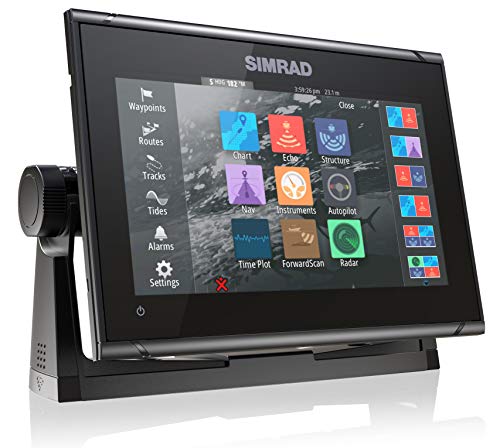
- C-MAP DISCOVER chart card included
- Radar-ready and sonar expandable
- Wi-Fi and NMEA 2000 connectivity
Best For: Boaters who want a compact, upgradeable chartplotter without buying sonar hardware up front
Rugged handheld marine GPS
Garmin GPSMAP 79sc Handheld GPS
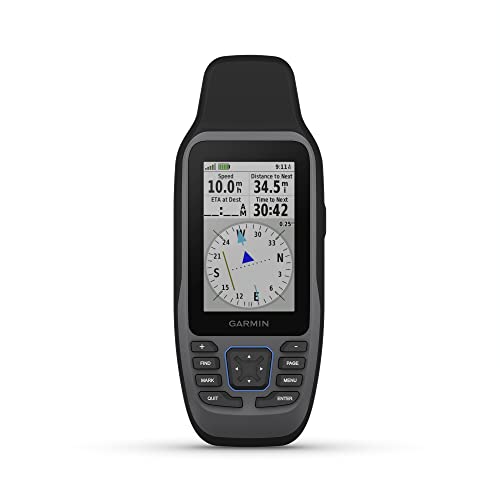
- Floats and is water-resistant
- Preloaded BlueChart g3 coastal charts
- Multi-constellation tracking with built-in compass
Best For: Boaters who want a portable coastal GPS that can handle wet conditions
Compact Chartplotter Upgrade
Raymarine Axiom+ 7 with North America Chart

- 7-inch touchscreen MFD with LightHouse 3 OS
- Included North America charts for US and Canada
- IPS display and 10 Hz GPS/GNSS for clear, accurate use
Best For: Boaters wanting a compact chartplotter with included chart coverage
VHF Safety Radio Pick
Retevis RA27 Fixed Mount Marine Radio

- Built-in GPS and DSC distress calling
- IP67 waterproof design with NOAA weather alerts
- Compact fixed-mount unit with NMEA0183 support
Best For: Boaters needing a compact VHF radio with GPS and emergency features
Feature-Packed Fishing Display
Simrad GO9 Chartplotter and Fish Finder

- 9-inch multifunction display with GPS and sonar support
- Includes Active Imaging 3-in-1 transducer and C-MAP chart card
- Radar-ready with Wi-Fi and NMEA 2000 connectivity
Best For: Sportboats and fishing boats that want navigation plus sonar
Compact Sonar Starter

- CHIRP sonar for better target separation
- ClearVü scanning sonar shows more underwater detail
- Waypoint map and flasher mode add simple navigation tools
Best For: Anglers who want a simple, compact fishfinder
Chartplotter Upgrade Pick
Simrad GO9 XSE with Transducer
- 9-inch multifunction display with GPS navigation
- C-MAP DISCOVER charts included with depth and tide data
- Radar-ready with Wi-Fi mirroring and NMEA 2000 connectivity
Best For: Boaters wanting a larger chartplotter with expansion options
Radar-Ready Navigation Hub

- Bundled HALO20 radar adds situational awareness
- 9-inch MFD includes CHIRP sonar and DownScan support
- Preloaded C-MAP DISCOVER charts with broad US/Canada coverage
Best For: Coastal boaters who want chartplotter, sonar, and radar together
All-in-one chartplotter package – Simrad GO9 Chartplotter & Fish Finder
For marine navigation systems that do more than basic plotting, the Simrad GO9 combines GPS navigation, sonar support, radar capability, and built-in connectivity in a 9-inch multifunction display. It ships with a C-MAP DISCOVER chart card and an 83/200 kHz HDI transducer, making it a practical choice for boaters who want charting and fish-finding in one package.
Best For: Sportboats, center-consoles, and smaller cruisers that need an all-in-one display with included charts and sonar.
Pros:
- Includes C-MAP DISCOVER card with vector charts, depth shading, tides, currents, and bathymetric contours.
- HDI transducer supports CHIRP sonar and DownScan Imaging for identifying bottom structure and fish targets.
- Built-in GPS, Wi-Fi, and NMEA 2000 support improve integration and onboard flexibility.
- Can mirror the display to a smartphone or tablet for access from anywhere on board.
Cons:
- Designed around a 9-inch screen, so it may feel compact for larger helms.
- Radar capability is supported, but radar hardware is not included in the base package.
Overall, the GO9 is a strong fit if you want a feature-rich chartplotter that arrives ready for serious navigation and sonar use. It offers a good balance of included value and expandability for growing marine electronics setups.
Premium large-format navigator – Garmin GPSMAP 8610 10-inch Chartplotter
If you are comparing marine navigation systems for a high-end helm setup, the Garmin GPSMAP 8610 stands out with a 10-inch HD IPS touchscreen and support for Garmin Navionics+ mapping. It is built for boat use with traditional and scanning sonar support, live sonar support, Wi-Fi connectivity, and a practical panel-mount design.
Best For: Captains who want a premium 10-inch touchscreen chartplotter with advanced sonar compatibility.
Pros:
- 10-inch HD IPS touchscreen offers a large, attractive display.
- Supports traditional sonar, scanning sonar, and live sonar.
- Includes Garmin Navionics+ mapping support for coastal and inland navigation.
- Grid 20 remote control adds another control option at the helm.
Cons:
- Does not include a transducer in the supplied details.
- Panel-mount setup may be less convenient for portable or smaller-boat installs.
The GPSMAP 8610 is a strong pick when display size, sonar compatibility, and mapping quality matter most. It is best suited to serious helm installations where a polished, integrated system is the goal.
Expandable radar-ready plotter – Simrad GO9 XSE Chartplotter
Simrad GO9 XSE - 9-inch Chartplotter (No Transducer) with C-MAP Discover Chart Card
Check Price On AmazonThe Simrad GO9 XSE is a compact option in marine navigation systems for boaters who want GPS charting, sonar expandability, and radar-ready connectivity without stepping up to a larger console footprint. It includes a C-MAP DISCOVER chart card and built-in connectivity, while leaving sonar to a separately sold transducer.
Best For: Boat owners who want a radar-ready 9-inch chartplotter they can expand over time.
Pros:
- Includes C-MAP DISCOVER card with vector charts, depth shading, tides, currents, and bathymetric contours.
- Radar-ready with plug-and-play compatibility for Simrad radar solutions.
- Built-in Wi-Fi lets you mirror the display to a smartphone or tablet.
- NMEA 2000 connectivity supports more system integration options.
Cons:
- No transducer is included, so sonar use requires a separate purchase.
- Single 9-inch display may be limited for users who prefer larger screens.
This model makes sense if you want a capable chartplotter now and the flexibility to add sonar or radar later. It is especially appealing for smaller boats where expandability matters as much as screen size.
Rugged handheld marine GPS – Garmin GPSMAP 79sc Handheld GPS
For boaters looking for portable marine navigation systems, the Garmin GPSMAP 79sc offers a rugged handheld design with preloaded BlueChart g3 coastal charts. It is water-resistant, floats in water, and includes a high-resolution color display along with a built-in compass for dependable use on the water.
Best For: Anglers and boaters who want a floating handheld GPS with coastal chart coverage.
Pros:
- Floats and is water-resistant, which adds confidence on deck or near the water.
- Preloaded BlueChart g3 coastal charts support marine route planning.
- Supports multiple satellite constellations for more reliable tracking worldwide.
- Includes a 3-axis tilt-compensated electronic compass and barometric altimeter.
Cons:
- Smaller 6-inch handheld format is less suited to full helm chart viewing.
- Screen resolution and display size are modest compared with fixed-mount chartplotters.
The GPSMAP 79sc is a smart backup or primary handheld for users who prioritize portability and durability. It is not a full dashboard system, but it delivers useful marine charting in a very rugged package.
Compact Chartplotter Upgrade – Raymarine Axiom+ 7 with North America Chart
If you want a compact option in marine navigation systems, the Raymarine Axiom+ 7 brings a responsive 7-inch multi-function display with built-in LightHouse charts for coastal and inland waters in the US and Canada. It combines a quad-core processor, higher onboard storage, and a high-contrast IPS screen, so it is aimed at boaters who want fast chart access and clear viewing at the helm.
Best For: Boat owners who want a compact touchscreen chartplotter with included North America charts and solid everyday performance.
Pros:
- Quad-core processor and increased onboard storage support smoother multitasking and personal data use.
- IPS display offers wider viewing angles and sharp contrast at twice the resolution of traditional displays.
- Nano-coated, impact-resistant glass helps repel water, oil, and smudges for easier touch use.
- Internal 10 Hz GPS/GNSS receiver is designed for accurate positioning.
Cons:
- 7-inch screen may feel small if you want a larger helm display.
- Included chart coverage is limited to North America coastal and inland waters.
This is a practical pick if you want a focused navigation display that prioritizes clarity, touch control, and chart coverage over oversized screen real estate. It fits well on boats that need a capable everyday plotter without adding unnecessary complexity.
VHF Safety Radio Pick – Retevis RA27 Fixed Mount Marine Radio
For marine navigation systems that need reliable voice and distress communication, the Retevis RA27 is a fixed-mount VHF marine radio with built-in GPS, DSC, and NOAA weather alert support. Its compact IP67-rated design is made for harsh marine use, and the GPS integration can send coordinates during distress calls while also working with compatible chartplotters through NMEA0183.
Best For: Boaters who want a compact fixed-mount marine radio with GPS, DSC distress calling, and weather alerts.
Pros:
- Built-in GPS supports safer navigation and DSC communication with location sharing.
- IP67 waterproof design and floating construction are built for tough marine conditions.
- NOAA weather alerts help you monitor changing conditions on the water.
- Compact layout and included mounting options save helm space.
Cons:
- 25W fixed-mount radio is focused on communication, not chart or sonar features.
- Compatibility depends on NMEA0183 devices or matching marine radio systems.
This radio makes sense if your priority is dependable ship-to-shore communication and emergency readiness rather than a full display system. It is a space-saving choice for offshore fishing, sailing, and general boating setups.
Feature-Packed Fishing Display – Simrad GO9 Chartplotter and Fish Finder
The Simrad GO9 is a strong choice for marine navigation systems when you want chartplotting, sonar, and radar-ready expansion in one 9-inch multifunction display. It comes with a preloaded C-MAP Discover card, Active Imaging 3-in-1 transducer, and built-in connectivity, making it well suited to boaters who split time between navigation and fishing.
Best For: Sportboat and fishing boat owners who want chartplotting, sonar, and easy upgrade paths in one display.
Pros:
- Includes GPS navigation, sonar support, radar capability, and C-MAP Discover charts.
- Active Imaging 3-in-1 transducer adds CHIRP, SideScan, DownScan, and FishReveal.
- Radar-ready design supports plug-and-play expansion for safer cruising.
- Built-in Wi-Fi and NMEA 2000 connectivity improve onboard integration and screen mirroring.
Cons:
- Resolution is 480 x 800, which is modest for a 9-inch display.
- Some advanced capability depends on adding compatible accessories like radar.
If you want one display that can handle navigation, sonar, and future expansion, the GO9 is built for that workflow. It is especially appealing for smaller cruisers and fishing boats that need more than basic chartplotting.
Compact Sonar Starter – Garmin STRIKER 4 Fishfinder
If you want an approachable entry into marine navigation systems without a steep learning curve, the Garmin STRIKER 4 keeps things simple while still delivering useful sonar and waypoint tools. Its CHIRP sonar and ClearVü scanning sonar help you see structure and fish more clearly, while the keyed interface makes on-water operation straightforward.
Best For: Boat owners, anglers, and ice-fishing users who want a compact, easy-to-use fishfinder with basic navigation support.
Pros:
- CHIRP sonar improves target separation and fish arches.
- ClearVü scanning sonar provides detailed views of what’s below and around the boat.
- Waypoint map lets you mark and return to spots like docks, stumps, and brush piles.
- Built-in flasher mode is useful for ice fishing and vertical jigging.
Cons:
- 3.5-inch display is small compared with larger chartplotters.
- Lacks the multi-function navigation and networking features of higher-end systems.
Overall, this is a practical pick if you want dependable sonar and simple waypoint navigation in a compact package. It focuses on the essentials rather than advanced charting, which keeps it easy to install and use.
Chartplotter Upgrade Pick – Simrad GO9 XSE with Transducer
Simrad GO9 XSE - 9-inch Chartplotter with HDI Transducer, C-MAP Discover Chart Card
Check Price On AmazonFor buyers comparing marine navigation systems that can do more than basic fishfinding, the Simrad GO9 XSE stands out as a flexible multifunction display. It adds GPS navigation, sonar support, radar capability, and built-in connectivity, making it a strong fit for smaller cruisers and sportboats that need charting and expansion options.
Best For: Boaters who want a feature-rich 9-inch chartplotter with sonar and radar readiness.
Pros:
- 9-inch touchscreen offers a larger, easier-to-read display.
- Includes C-MAP DISCOVER charts with depth shading, tides, currents, and bathymetric contours.
- HDI transducer supports Medium and High CHIRP plus DownScan Imaging.
- Radar-ready design and Wi-Fi mirroring add useful expansion and onboard viewing options.
Cons:
- More advanced than a basic fishfinder, so it may be more system than some casual users need.
- Best value depends on whether you plan to use its radar and networking features.
This model is a good fit if you want a central navigation screen that can grow with your boat. It blends charting, sonar, and connectivity in a package aimed at practical day-to-day boating.
Radar-Ready Navigation Hub – Simrad GO9 XSE with HALO20
If your marine navigation systems shortlist includes radar from the start, this Simrad GO9 XSE bundle is built for that job. It pairs a 9-inch multifunction display with C-MAP DISCOVER charts, an HDI transducer, and bundled HALO20 radar, giving you charting, sonar, and enhanced situational awareness in one package.
Best For: Coastal boaters and anglers who want an integrated chartplotter, sonar setup, and included radar.
Pros:
- Includes HALO20 solid-state radar for added target detection.
- HDI transducer supports CHIRP sonar and DownScan Imaging for bottom detail.
- Preloaded C-MAP DISCOVER charts cover the US and Canada with depth shading and bathymetry.
- Wireless mirroring and NMEA 2000 support improve onboard integration.
Cons:
- More complex and expensive than a basic fishfinder-only setup.
- Built for users who will actually take advantage of radar and system integration.
As a bundled navigation center, this package makes sense when you want radar included rather than added later. It offers a more complete on-water electronics stack for boats that cruise or fish in changing conditions.
How We Picked These Marine Navigation Systems
We focused on practical features that matter to boaters, anglers, and coastal cruisers: reliable GPS performance, chart support, display quality, sonar and radar expandability, and build quality for marine conditions. We also favored systems that fit different boat sizes and use cases, from compact handheld backup units to larger multifunction displays.
Quick Comparison: Which Type Fits Your Boat?
Not every boater needs the same setup. A compact chartplotter or fish finder works well for smaller boats and day trips, while a larger multifunction display is better for frequent navigation, advanced mapping, and add-on sensors. Handheld GPS units are a smart backup or primary choice for dinghies and smaller craft. A fixed-mount marine radio adds an important layer of safety and communication.
Key Buying Factors for Marine Navigation Systems
Screen Size and Readability
Choose a display you can read in bright sun and rough conditions. Bigger screens are easier to interpret at a glance, but compact units can be a better fit on smaller helm stations.
Chart and Mapping Support
Look for preloaded charts or support for trusted chart ecosystems such as Navionics or C-MAP. Good mapping can improve route planning, coastal awareness, and confidence in unfamiliar waters.
Sonar, Radar, and Networking
If you fish or run in changing conditions, expandability matters. Some Marine Navigation Systems can connect to transducers, radar, and other onboard electronics, giving you a more complete picture of the water around you.
Durability and Weather Resistance
Salt spray, vibration, and moisture are constant challenges. Rugged construction, waterproof ratings, and quality mounting options all help protect your investment.
Communication and Safety Features
For offshore travel or longer runs, consider units with DSC radio support, GPS integration, and weather access. These features improve situational awareness and can be valuable in emergencies.
Who Should Buy Which Marine Navigation Systems?
If you want an all-around helm upgrade, a multifunction chartplotter is often the best choice. If your priority is fishing, a chartplotter with sonar capability makes sense. If you need a simple, rugged backup or portable navigation solution, a handheld GPS is a practical pick. And if safety communication is a priority, a fixed-mount marine radio should be part of the setup.
The best Marine Navigation Systems are the ones that match your boat, your waters, and the way you actually run the vessel. Start with your core needs, then choose the platform that leaves room to grow.