Stable temperature matters in a saltwater tank, especially when corals, invertebrates, and sensitive marine fish are involved. The right heater helps prevent stress, disease, and sudden swings that can throw off your aquarium’s balance.
Below, you’ll find 10 of the best options for 2026, chosen for safety features, wattage range, temperature control, and overall value so you can match a heater to your tank with confidence.
Best 10 Saltwater Aquarium Heaters Picks for 2026
Safety-Focused Digital Option
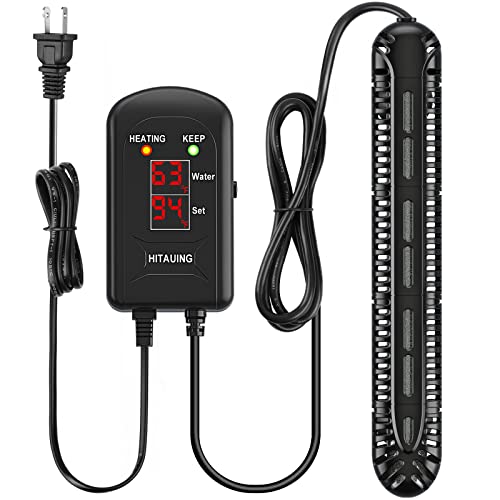
- LED display for real-time temperature monitoring
- Over-temp and off-water protection built in
- Rated for 40 to 75 gallon marine or freshwater tanks
Best For: Owners who want digital control and added safety protections
High-Power Manual Control Choice
Orlushy 500W Adjustable Heater
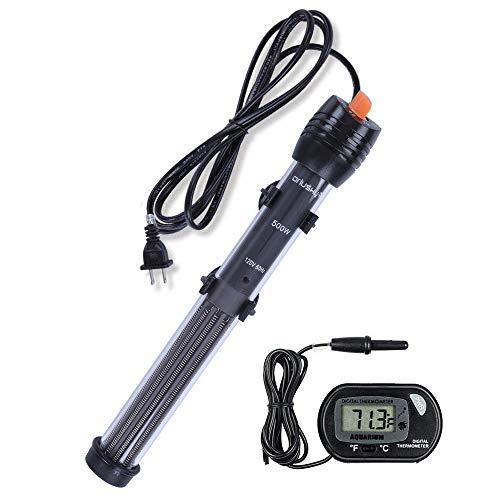
- 500W heater for 40 to 75 gallon aquariums
- Manual knob adjusts from 68 to 89°F
- Includes two suction cups and a free thermometer
Best For: Larger tanks needing simple high-power manual control
Premium Titanium Controller
hygger 200W Titanium Aquarium Heater

- Titanium tube is seawater resistant
- Digital controller shows water and set temps
- Automatic restart with 1°F precision
Best For: Medium tanks needing durable construction and precise digital control
High-Capacity Safety Pick
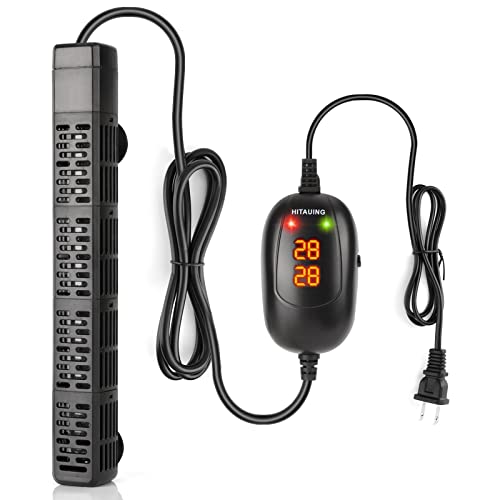
- 500W unit for 75–120 gallon tanks
- Auto shutoff for dry-run and overheating
- External display with °F/°C control
Best For: Large saltwater or freshwater aquariums needing strong heating and safety shutdowns
Precision Control Pick
hygger ECO 500W Dual-Probe Heater

- Dual-probe system for real-time monitoring
- 0.1°F accuracy with 0.5°F adjustments
- PRECISE and ECO modes with alarms
Best For: Large saltwater tanks that need very accurate temperature control
Compact Digital Pick

- Ceramic build with automatic constant temperature
- Out-of-water and overheating protection
- External controller with LED display
Best For: Small saltwater or freshwater aquariums up to 20 gallons
Entry-Level Adjustable Pick – Orlushy 300W Submersible Heater
If you want a straightforward saltwater aquarium heater with adjustable output, this Orlushy 300W model covers the basics well. It is built for marine saltwater and freshwater tanks, includes a separate thermometer, and uses an intermittent heating cycle to help maintain the set temperature.
Best For: Hobbyists who want an adjustable heater with a thermometer for medium tanks and simple temperature control.
Pros:
- Adjustable 300W design with six size options to match different tank needs.
- Includes a separate thermometer for real-time temperature monitoring.
- Heating indicator changes between red and green to show when it is heating or maintaining temp.
- Heat-resistant ABS shell and quartz glass construction for durability.
Cons:
- You need to make sure the heater is fully submerged before plugging it in.
- No digital display or fine-grained temperature readout on the heater itself.
For buyers who want a basic, durable heater with useful temperature feedback, this Orlushy unit is a practical option. Its main appeal is simple operation rather than advanced controls.
Safety-Focused Digital Option – HiTauing 300W Digital Heater
This HiTauing model is a strong fit if you want a saltwater aquarium heater with digital readout and built-in safety protection. It is rated at 300W for 40 to 75 gallon tanks, includes a 63-94°F temperature range, and gives you real-time monitoring through its LED display.
Best For: Fish keepers who want a digital heater with visible temperature control and automatic protection features.
Pros:
- LED digital display lets you monitor and set temperature in real time.
- Includes safety protections for over-temperature and off-water conditions.
- Designed for marine saltwater and freshwater tanks from 40 to 75 gallons.
- Comes with two suction cups and an 8.2 ft cord for easier placement.
Cons:
- The controller should not be placed in the water.
- Temperature control may take a little time to learn if you want to reset to a lower setting.
Overall, this heater stands out for users who prioritize monitoring and protection. It is more feature-rich than a basic submersible heater, while still staying focused on dependable heating.
Compact Premium Pick – Fluval M 100W Submersible Heater
The Fluval M 100W is a compact saltwater aquarium heater for smaller tanks up to 30 gallons. It focuses on stable, precise heating with a slim profile and reflective finish that helps it blend into the aquarium without drawing attention.
Best For: Small aquarium setups where a discreet, reliable heater matters more than high wattage.
Pros:
- Provides consistent and precise temperature control for tanks up to 30 gallons.
- Compact, slim design makes it easy to place discreetly in the tank.
- Mirror finish helps the heater blend into the aquarium background.
- Suitable for both freshwater and saltwater tanks.
Cons:
- 100W output is better suited to smaller aquariums than larger setups.
- Glass construction may not appeal to buyers looking for a heavy-duty, fully enclosed design.
If you want a low-profile heater from a well-known aquarium brand, this Fluval model is a strong candidate. It is especially appealing when you need dependable heating without adding visual clutter.
High-Power Manual Control Choice – Orlushy 500W Adjustable Heater
If your saltwater aquarium heater needs more power, this Orlushy 500W model is built for 40 to 75 gallon tanks and uses a simple adjust-knob thermostat. It is a practical fit when you want manual control, quick response, and a heater that can be used in both freshwater and saltwater aquariums.
Best For: Larger tanks that need a straightforward high-wattage heater with manual temperature adjustment.
Pros:
- 500W output is suited to 40 to 75 gallon aquariums.
- Adjust knob thermostat offers simple manual temperature control from 68 to 89°F.
- Thickened quartz glass is described as explosion proof and suitable for saltwater use.
- Includes two suction cups and a free thermometer.
Cons:
- Manual dial control is less precise than a digital display.
- Temperature range is narrower than some digital heaters.
For aquarists who prefer a rugged, high-power heater without digital settings, this is a sensible pick. It keeps the operation simple while still offering the wattage needed for medium-to-larger tanks.
Auto-Shutoff Safety Pick – 100W Aquarium Heater for 10-20 Gallon Tanks
If you want saltwater aquarium heaters that prioritize safety during maintenance, this 100W model stands out for its auto shut-off sensor and multi-layer protection. It is designed to cut power when it leaves the water, then resume heating automatically once submerged again, which is especially useful for water changes and evaporation-prone tanks.
Best For: Small saltwater, freshwater, or brackish tanks where dry-burn protection and simple temperature control matter most.
Pros:
- Auto-shuts off when removed from water and restarts when submerged
- Triple safety system includes dry-burn prevention, overheat protection, and max-temp auto stop
- External digital controller shows current and target temperature clearly
- Seashell guard and quartz glass design are built for freshwater and saltwater use
Cons:
- Best suited to 10-20 gallon tanks, so larger aquariums need a higher wattage model
- Uses an external controller, which adds a little more setup than a basic heater
For aquarists who care more about protection than bells and whistles, this heater brings practical safeguards that can reduce risk during routine tank care. The ±1°F precision and color-changing display make it easy to monitor without overcomplicating things.
Budget Basic with Thermometer – Orlushy Submersible Aquarium Heater
Among saltwater aquarium heaters, this Orlushy option is a straightforward choice for hobbyists who want adjustable heat control and a separate thermometer. It uses stair-step heating with indicator lights, so you can see when it is actively heating and when it has reached the set temperature.
Best For: Everyday saltwater or freshwater tanks where you want a simple adjustable heater with included temperature monitoring.
Pros:
- Suitable for marine saltwater and freshwater tanks
- Includes a separate thermometer for real-time water monitoring
- Heat-resistant ABS shell and quartz glass are built for durability
- Comes in multiple wattages to match different tank sizes
Cons:
- Requires the heater to be fully submerged before plugging in
- Basic design is less feature-rich than digital external-controller heaters
This is a practical pick if you want a dependable heater without moving into more advanced controller systems. The temperature display setup is simple, and the one-year warranty adds reassurance for routine use.
Premium Titanium Controller – hygger 200W Titanium Aquarium Heater
If you’re comparing saltwater aquarium heaters for reliability and long-term durability, this hygger model brings a titanium heating tube and an external digital thermostat controller. It is built for 20-45 gallon tanks and automatically cycles on and off to hold your set temperature with 1°F precision.
Best For: Medium saltwater or freshwater tanks where a durable titanium heater and digital control are worth the upgrade.
Pros:
- Seawater-resistant titanium tube designed for salt water and fresh water
- External IC thermostat shows current and set temperature at the same time
- Automatic restart when water drops 1°F below the set point
- Temperature setting memory function adds convenience after setup
Cons:
- Not recommended for use in a sump
- Requires matching suction cups if you need replacements for the 19mm tube
This heater is a strong fit if you want a more durable build than standard glass models and prefer a controller that keeps the temperature easy to read. The separate thermometer and wide 32°F to 104°F range make it flexible for a range of aquarium setups.
High-Capacity Safety Pick – HiTauing 500W Smart Heater
If you need one of the larger saltwater aquarium heaters for a big tank, this 500W HiTauing model is built for steady heating and simple temperature control. It includes an external digital controller, selectable Fahrenheit or Celsius display, and safety features that shut the unit down if it leaves the water or overheats.
Best For: 75–120 gallon saltwater or freshwater aquariums that need strong, stable heating with built-in safety shutoffs.
Pros:
- 500W output is rated for 75–120 gallon tanks and uses nickel-chromium heating wire for rapid, stable heat transfer.
- Intelligent water sensor and over-temperature protection automatically stop heating when conditions become unsafe.
- External digital controller shows temperature clearly in Fahrenheit or Celsius.
- Explosion-proof quartz glass and a high-temperature ABS shell add durability and protection.
Cons:
- Requires full submersion before plugging in, so setup needs a little care.
- Best suited to larger tanks, making it more heater than many small aquarium owners need.
This is a practical choice for aquarists who want a powerful heater with straightforward controls and multiple fail-safes. If your priority is heating capacity plus automatic protection, it fits that brief well.
Precision Control Pick – hygger ECO 500W Dual-Probe Heater
Among saltwater aquarium heaters, this hygger ECO model is aimed at owners who want tighter temperature control and a more advanced safety system. It uses dual probes for real-time monitoring, offers PRECISE and ECO modes, and can adjust in very fine 0.5°F steps for sensitive setups.
Best For: Large 55–100 gallon freshwater or saltwater tanks where accurate temperature control matters.
Pros:
- Dual-probe controller monitors temperature in real time for more consistent heating.
- Temperature accuracy goes to 0.1°F with 0.5°F adjustment increments.
- PRECISE and ECO modes let you prioritize tighter control or energy savings.
- Automatic shutoff, audible alarms, memory function, and child lock add convenience and safety.
Cons:
- Shell-free quartz design may feel less protected than heaters with a full guard.
- Designed for larger aquariums, so it may be overkill for smaller tanks.
This heater stands out if you value fine-tuned temperature management over basic functionality. It combines precision, alarms, and memory features in a package that suits larger marine or freshwater systems.
Compact Digital Pick – hygger 100W Ceramic Heater
If you’re shopping for smaller saltwater aquarium heaters, this 100W hygger model focuses on safe, steady heating with an easy-to-read digital display. It uses a ceramic heating element, automatic constant-temperature control, and built-in protection that stops heating if the unit is out of water or runs too hot.
Best For: 5–20 gallon saltwater or freshwater tanks, including small aquariums and turtle tanks.
Pros:
- Explosion-proof ceramic construction is designed for durability and stable performance.
- Automatic temperature control restarts heating 1°F below the set point and remembers settings after a power failure.
- Out-of-water and overheating protection add a useful safety layer.
- External controller and digital LED display make temperature checks and adjustments simple.
Cons:
- 100W output is only suitable for smaller tanks, not large aquarium setups.
- Maximum temperature tops out at 95°F, which may limit some specialized uses.
This is a sensible option if you want a compact heater with digital controls and dependable safety features. For small tanks, it offers a good balance of simplicity, protection, and precise temperature management.
How We Picked These Saltwater Aquarium Heaters
We focused on heaters that offer dependable temperature regulation, strong safety protections, and clear sizing options for different tank volumes. For saltwater use, we paid extra attention to durability, submersible design, and features that reduce overheating or dry-run risk.
We also favored models with practical controls, readable displays or easy calibration, and broad wattage coverage so buyers can choose appropriately for nano tanks, midsize setups, and larger reef systems.
Quick Comparison: What Matters Most
When comparing Saltwater Aquarium Heaters, the fastest way to narrow the list is by tank size, control style, and safety features. Smaller tanks need lower wattage and tighter precision, while larger tanks benefit from stronger output and more stable controllers. Digital models are easier to monitor, while simple dial heaters may suit buyers who want straightforward operation.
Match Wattage to Tank Size
Undersized heaters struggle to maintain steady heat, especially in cooler rooms. Oversized heaters can recover temperature faster, but they should still include reliable protection and accurate thermostats.
Key Buying Factors for Saltwater Aquarium Heaters
Temperature accuracy: Reef and marine livestock respond poorly to wide swings, so look for heaters with consistent regulation and, ideally, an external or dual-probe controller.
Safety protection: Auto shut-off, overheat protection, and dry-run prevention are especially important if the water level changes or maintenance interrupts normal operation.
Material and build quality: Titanium and high-quality ceramic designs can improve durability in demanding marine environments. Fully submersible construction and secure suction mounting also help.
Ease of monitoring: LED displays, external controllers, and included thermometers make it easier to verify water temperature without guessing.
Tank compatibility: Consider whether the heater is intended for nano, mid-size, or large aquariums. Choosing the right wattage is just as important as choosing the right brand.
Who Should Buy Which Saltwater Aquarium Heaters?
If you keep a small marine tank, a lower-wattage model with strong safety features is usually the best fit. Medium aquariums benefit from mid-range heaters with digital control and visible temperature readouts. Larger reef systems or heavily stocked saltwater tanks are better served by higher-wattage units or models with advanced controllers for more consistent heating.
If you want the simplest setup, choose a heater with built-in protection and an easy-to-read display. If precision is your priority, look for Saltwater Aquarium Heaters with external controllers, dual probes, or more refined adjustment controls. Either way, the best choice is the one that matches your tank size, room temperature, and tolerance for maintenance.