When water safety is uncertain, the right filtration setup can make all the difference. The best emergency-ready systems balance purification power, portability, and ease of use when conditions are far from ideal.
This roundup of reverse osmosis systems for emergencies focuses on practical options for disaster kits, off-grid living, travel, and backup household water treatment.
Best 10 Reverse Osmosis Systems for Emergencies Picks for 2026
Portable RO Pump
Portable Reverse Osmosis for Outdoor Survival

- High-precision RO filtration
- 200-300 ml per minute flow
- Filters up to 8,000 liters
Best For: Backpackers and preppers needing a compact emergency water pump
Trailgo Pro Pump
High-Volume Survival Water Filter

- Hand-operated, no batteries needed
- Up to 1.5 liters per minute
- Built for 4-6 person use
Best For: Base camps and emergency kits needing group water output
Purewell U01
Tankless Electric-Free Under-Sink RO

- Runs on water pressure only
- 7-stage NSF-tested filtration
- Tankless design saves space
Best For: Homes wanting outage-ready under-sink purification
Survivor Filter PRO

- Lightweight at 12.8 oz
- 500 ml per minute flow
- Replaceable three-stage filters
Best For: Solo emergency kits and backpacking trips
Electric-Free Whole-Home Backup
GLACIER FRESH GFU03 Tankless RO
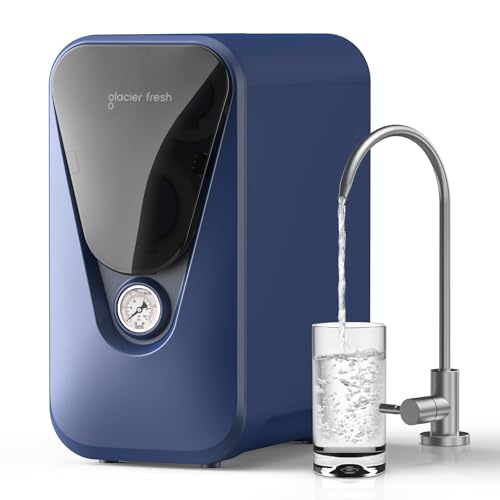
- Water-powered design works without electricity
- 800 GPD output with tankless space savings
- 5-stage filtration with NSF/ANSI certifications
Best For: Buyers who want an emergency-friendly under-sink RO system without power dependence
All-in-One Survival Filtration
BKLES 3-in-1 Emergency Water Filter

- Electric, hand-pump, and solar operation
- Portable 450 g body with carry case
- Built-in light, SOS, and phone charging features
Best For: Emergency kits, camping, and off-grid use where backup water access matters
Countertop Backup Purifier
Bluevua RO100ROPOT Glass Carafe RO

- No-install countertop RO setup
- Glass carafe and remineralization filter
- Filter life monitor for easier maintenance
Best For: Homes that want an easy-to-use countertop RO backup with no plumbing
Gravity-Fed Survival Filter
Uzima UZ-2 Portable Camping Water Filter

- Manual gravity-fed operation needs no power
- Protects against 99.999% of bacteria
- Portable, shelf-stable design for emergency kits
Best For: No-power emergency backup, camping, and 72-hour kits
Portable Battery RO Purifier
Purewell K8680/P01 UV Water Filter
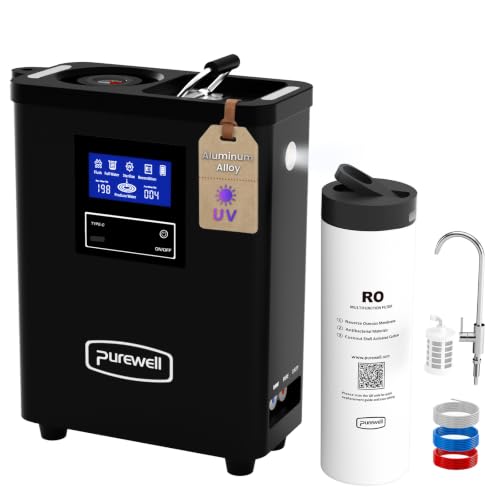
- 0.0001-micron RO with dual UV lamp
- Battery powered for up to 6.5 hours
- TDS display and carry bag for emergency use
Best For: Portable emergency RO filtration with UV and battery backup
Manual 3-Stage RO Pump
Portable Survival Water Purifier

- Manual pump design works without power
- 0.0001-micron RO membrane with 3-stage filtration
- 10,000-liter capacity claim for long use
Best For: Manual emergency RO purification for hiking and camping
Portable RO Pump – Portable Reverse Osmosis for Outdoor Survival
If you want reverse osmosis systems for emergencies in a truly portable form, this pump-based unit is built for off-grid water collection. It uses high-precision RO filtration to improve water taste and help remove small particles and impurities from creek or stream water, making it a practical backup for camping, hiking, and preparedness kits.
Best For: Campers, hikers, and preppers who need a compact RO-style purifier for emergency water gathering.
Pros:
- Portable reverse osmosis design for outdoor use
- Fast flow rate of 200-300 ml per minute
- Rated to filter up to 8,000 liters
- Chemical-free purification method
Cons:
- Lower flow than larger pump-style survival filters
- Best suited to emergency and outdoor use, not household plumbing
This is a focused emergency tool: compact, chemical-free, and designed to make untreated natural water more drinkable when you are away from normal utilities.
Trailgo Pro Pump – High-Volume Survival Water Filter
Among reverse osmosis systems for emergencies, this one stands out more for high-volume hand pumping than RO filtration. It is designed to pull water from streams, lakes, or rain barrels and turn it into safer drinking water for a group, which makes it useful when you need a dependable backup during outages or off-grid trips.
Best For: Groups, camps, and emergency kits that need a hand-operated water filter with strong output.
Pros:
- Delivers up to 1.5 liters per minute
- Handles 4-6 people at a time
- 3-stage filtration removes bacteria, protozoa, cysts, microplastics, and sediment
- Includes filter body, tubes, clamps, carry bag, and instructions
Cons:
- Not a reverse osmosis system
- Bulkier than ultralight personal filters
If your emergency plan needs volume more than compact size, this pump is a practical survival choice with a solid long-life filter rating.
Purewell U01 – Tankless Electric-Free Under-Sink RO
If you need reverse osmosis systems for emergencies at home, this under-sink model is designed to keep working without electricity. It uses water pressure instead of power, so it can still provide purified water during outages while also fitting neatly into a compact kitchen setup.
Best For: Households that want a dependable under-sink RO system with outage-ready operation.
Pros:
- No electricity required and zero mechanical noise
- 7-stage filtration tested to NSF/ANSI 58 and 372
- Reduces up to 90% of TDS and 1,000+ contaminants
- Tankless design saves under-sink space
Cons:
- Requires under-sink installation
- Not a portable emergency purifier
This is a strong fit if you want an emergency-capable household RO system that stays functional when the power goes out and avoids the drawbacks of a storage tank.
Survivor Filter PRO – Compact Survival Pump Filter
For emergency kits, this survival filter is a compact alternative when you need a portable purifier rather than a true reverse osmosis system. It is built for backpacking and emergency use, with a three-stage setup that targets virus, bacteria, protozoa, and some heavy metals from fresh water sources.
Best For: Solo travelers, hikers, and preppers who want a lightweight pump filter for long-term emergency storage.
Pros:
- Very lightweight at 12.8 oz
- Fast flow rate of 500 ml per minute
- Three-stage filtration includes replaceable and reusable filters
- Lifetime manufacturer defect warranty
Cons:
- Not a reverse osmosis system
- Designed for fresh water sources, not all water conditions
It is a practical emergency pick if you value portability, long filter life, and simple manual operation over RO-level filtration.
Electric-Free Whole-Home Backup – GLACIER FRESH GFU03 Tankless RO
If you want reverse osmosis systems for emergencies that still work when power is out, the GLACIER FRESH GFU03 stands out with its water-powered, electricity-free design. It also avoids the bulk of a storage tank, making it a practical under-sink option for households that want cleaner water without sacrificing cabinet space.
Best For: Homes that want a tankless RO system with no electricity dependency and fast everyday output.
Pros:
- Electric-free water-powered design with zero operating noise
- 5-stage filtration meets NSF/ANSI 58, 372, and 401 standards
- 800 GPD fast flow and a compact tankless footprint
- 3:1 pure-to-drain ratio helps reduce wastewater
Cons:
- Requires under-sink installation and a drilled faucet hole
- Needs at least 40 PSI inlet pressure for best flow
- Cabinet space still needs to fit the unit’s dimensions
Overall, this is a strong choice if your priority is dependable RO filtration without relying on electrical power. The combination of tankless design, quick replacement filters, and high output makes it well suited to both routine use and backup-minded buyers.
All-in-One Survival Filtration – BKLES 3-in-1 Emergency Water Filter
For shoppers comparing reverse osmosis systems for emergencies, the BKLES BK3000 is built more like a survival tool than a kitchen appliance. It supports electric mode, hand pumping, and solar charging, so it is designed to keep producing drinking water when the grid is down or you are far from home.
Best For: Preppers, campers, and travelers who need portable water filtration with multiple backup power options.
Pros:
- Works with electric, hand pump, and solar charging modes
- Dual 0.01-micron ultrafiltration membranes and 6-stage purification
- Lightweight 450 g build with storage case for travel
- Includes LED lighting, SOS light, and phone reverse charging
Cons:
- Portable design is less suited to permanent home installation
- Filter replacements need to be tracked separately
- Best results will depend on available charge or hand-pumping effort
This is a practical emergency-ready purifier if mobility and backup operation matter more than under-sink convenience. Its strongest advantage is versatility: you can charge it, pump it, or use solar power when conditions get rough.
Countertop Backup Purifier – Bluevua RO100ROPOT Glass Carafe RO
The Bluevua RO100ROPOT is a countertop reverse osmosis option that keeps setup simple: no plumbing, no installation, just plug it in and fill the tank. For buyers looking at reverse osmosis systems for emergencies, its portable form and glass carafe make it a solid choice for short-term backup water treatment at home.
Best For: Households that want a plug-in countertop RO system with a glass carafe and easy setup.
Pros:
- No plumbing or installation required
- Glass carafe helps reduce secondary pollution risk
- 5-stage RO filtration with remineralization
- Filter life monitor helps track service life and water quality
Cons:
- Requires electric power to operate
- Slower flow rate than many under-sink systems
- Countertop footprint may be noticeable in small kitchens
As a backup drinking-water solution, this model is strongest when you want clean water without modifying plumbing. The combination of a glass carafe, 2:1 pure-to-drain ratio, and filter monitoring makes it practical for everyday use and emergency readiness.
Gravity-Fed Survival Filter – Uzima UZ-2 Portable Camping Water Filter
If you want reverse osmosis systems for emergencies only in the broad sense of reliable water backup, the Uzima UZ-2 is a simpler, electricity-free option that prioritizes portability and fast setup. This gravity-fed purifier is aimed at camping, off-grid use, and disaster kits, with a hollow fiber membrane that can help make questionable water safer to drink.
Best For: People who want a lightweight, shelf-stable emergency water filter for camping, 72-hour kits, and power-outage preparedness.
Pros:
- Manual gravity-fed design needs no power, making it useful during outages.
- Protects against 99.999% of bacteria, with globally certified filtration claims.
- Portable, freestanding build is suited to camping, overlanding, and survival bags.
- Compatible with water purification tablets for added flexibility.
Cons:
- Uses hollow fiber membrane filtration, not reverse osmosis.
- 1-liter capacity is modest for larger groups.
- Best fit is basic emergency purification rather than high-TDS water treatment.
For a no-power emergency filter, the UZ-2 is a practical choice when simplicity and shelf stability matter more than advanced desalination. It makes sense for preparedness plans where portability and reliability are the main priorities.
Portable Battery RO Purifier – Purewell K8680/P01 UV Water Filter
For buyers comparing reverse osmosis systems for emergencies, the Purewell K8680/P01 is the most feature-rich portable option here. It uses a 0.0001-micron RO membrane plus UV light, and it is built for fresh or brackish water, making it a strong pick for emergency prep, camping, RV use, and power outages.
Best For: Emergency-prep users who want a portable electric RO purifier with UV treatment, battery power, and TDS monitoring.
Pros:
- 0.0001-micron RO membrane with dual UV lamp for multi-stage treatment.
- Portable battery operation lasts up to 6.5 hours.
- TDS display helps track filter status and water quality.
- Compact carry bag, night-vision lighting, and emergency light mode add utility.
Cons:
- Designed for fresh/brackish water, not ocean seawater.
- Requires charging and eventual filter replacement.
- More complex than a manual gravity filter.
This is the closest match for users who specifically want a portable RO unit for emergency scenarios. Its battery backup, UV stage, and TDS monitoring make it a capable choice when you need more advanced filtration on the go.
Manual 3-Stage RO Pump – Portable Survival Water Purifier
If you need reverse osmosis systems for emergencies without depending on electricity, this portable 3-stage pump purifier is a straightforward survival option. It uses a 0.0001-micron RO membrane and a freestanding manual design, which makes it practical for hiking, camping, and general emergency water treatment.
Best For: Hikers, campers, and preparedness buyers who want a manual RO purifier for emergency water treatment.
Pros:
- Manual pump design works without power.
- 0.0001-micron RO membrane supports advanced purification.
- 3-stage filtration adds an extra layer of treatment.
- 10,000-liter capacity suggests long service life.
Cons:
- Specs are limited, so setup and performance details are unclear.
- Manual pumping can be slower than electric systems.
- No TDS display or battery features listed.
This is a sensible pick if you want an RO-style emergency purifier that stays usable when power is unavailable. Its manual operation and high-capacity claim make it appealing for outdoor survival planning and backup water treatment.
How We Picked the Best Reverse Osmosis Systems for Emergencies
We focused on Reverse Osmosis Systems for Emergencies that are realistically useful when power, plumbing, or convenience are limited. Priority went to filtration capability, portability, setup simplicity, maintenance burden, and whether the system can handle emergency use cases like boil-water advisories, camping, storms, or temporary outages.
Quick Comparison
The selection splits into a few clear categories: portable pump systems for field use, electric-free models for off-grid reliability, countertop units for home backup, and higher-capacity electric systems for users who want more convenience. If your main goal is mobility, choose a compact manual or battery-friendly option. If you want household backup, a countertop RO system is usually the better fit.
Key Buying Factors for Reverse Osmosis Systems for Emergencies
Power Independence
In an emergency, electricity may be unavailable. Electric-free and manual systems are often the safest choice for long outages, while electric countertop units work best when you still have backup power.
Filtration Performance
Look for true RO membranes and any added stages such as sediment, carbon, or UV treatment. For uncertain water sources, broader contaminant reduction matters more than raw flow rate alone.
Water Source Compatibility
Some systems are designed for tap water, while others are better suited to natural sources, stored water, or questionable field water. Make sure the product matches your likely emergency scenario.
Portability and Storage
For bug-out bags and vehicle kits, compact size and simple assembly matter. For home prep, larger countertop systems may be acceptable if they are easy to store and deploy quickly.
Output and Recovery
Emergency water needs can rise fast. Check how much purified water a system can produce and whether it wastes a lot of water during filtration, especially if your supply is limited.
Who Should Buy Which Reverse Osmosis Systems for Emergencies?
If you want a grab-and-go option for camping, hiking, or evacuation, choose a portable pump-style system. If you want dependable backup for a house or apartment, a countertop RO unit is more practical. If you are building an off-grid or disaster-ready kit, electric-free models offer the best resilience. For users who want extra convenience and are willing to rely on power, electric RO systems can be a strong fit.
In short, the best choice depends on where you will use it, how much water you need, and whether you can count on electricity. For most buyers, the safest approach is to match the system to the worst-case scenario you expect to face.