The best bodyboards for children make beach and pool sessions more comfortable, manageable, and fun. The right board should match a child’s size, swimming ability, intended water conditions, and supervision level.
Our roundup includes lightweight foam boards, inflatable designs, and versatile options with features such as slick bottoms, handles, and coiled wrist leashes. Use the guide below to narrow the choices before buying.
Best 10 Bodyboards for Children Picks for 2026
Best Overall

- 40-inch board with 180-pound capacity
- Lightweight foam construction with wrist leash
- Textured deck and slick bottom for control
Best For: Families wanting a versatile board for youth through adults
Best Compact Pick
Lightweight 33-Inch EPS Bodyboard

- Compact 33-inch size for kid riders
- Lightweight EPS core and HDPE slick bottom
- Includes adjustable wrist rope and leash
Best For: Children and beginners needing an easy-to-handle board
Best Two-Pack
Wavestorm 40-Inch Bodyboard 2-Pack

- Two soft foam bodyboards for shared use
- 40-inch size with 180-pound capacity
- Leashes, EPS cores, and slick bottoms included
Best For: Siblings or families needing two beginner boards
Best Junior Fit
33-Inch EPS Bodyboard for Kids
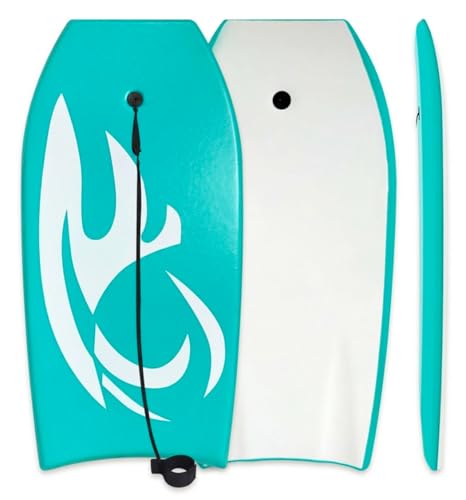
- Junior-focused 33-inch design
- 75-pound maximum weight capacity
- Rigid EPS core with channeled slick bottom
Best For: Children up to 75 pounds learning balance and control
Durable All-Level Pick

- Heat-sealed XPE deck helps prevent peeling
- EPS core provides buoyancy and cushioning
- Includes a coiled wrist leash
Best For: Older children and families seeking a durable, versatile board
Beginner-Friendly Compact Pick

- Listed for ages 3 and up
- Lightweight EPS core improves handling
- Includes a leash with wristband
Best For: Young beginners using it at beaches, rivers, or water parks
Best All-Around Choice

- Lightweight EPS core with buoyant, flexible construction
- Heat-laminated deck and bottom for added durability
- Includes coiled wrist leash and control-focused channels
Best For: Kids and teens learning bodyboarding in waves
Best Inflatable Option

- Designed for beach and pool use
- Stitched edges and thermal seams help resist wear and leaks
- Push-button valve supports easier inflation and deflation
Best For: Beginner-friendly recreational beach and pool play
Best Overall – Wavestorm Foam Bodyboard 40"
For families seeking versatile bodyboards for children, the Wavestorm 40-inch model offers generous flotation, a lightweight build, and enough size for youth through adult riders. Its contoured deck, rail grips, and slick bottom are designed to support comfortable, controlled wave riding.
Best For: Families wanting one buoyant board that can suit children, teens, and adults.
Pros:
- 180-pound recommended weight capacity and 6.55 liters of volume provide strong flotation.
- Includes a wrist leash for keeping the board nearby.
- Textured deck, rail grips, nose grips, and elbow texture help provide a secure ride.
- Channels and a rigid slick bottom support smooth gliding and wave performance.
Cons:
- At 40 inches, it may be oversized for smaller children.
- The product is described as suitable for youth through adult riders, rather than being specifically junior-sized.
This is a practical all-around choice when flotation and long-term versatility matter more than a child-specific fit. Check the board’s 40-inch size against the child’s height and comfort before buying.
Best Compact Pick – Lightweight 33-Inch EPS Bodyboard
This 33-inch board is a compact option among bodyboards for children, pairing a lightweight EPS core with a slick HDPE bottom. The crescent tail, water channels, and 60/40 rails are intended to help younger riders practice maneuverability across different water settings.
Best For: Children and beginners who want a smaller, lightweight board with a leash included.
Pros:
- 33-inch size and 0.52-kilogram weight make it easier for kids to handle.
- HDPE slick bottom includes channels and a crescent tail for glide and control.
- 60/40 rails are designed to support maneuverability.
- Includes a wristband leash to help keep the board close.
Cons:
- The supplied details do not state a maximum weight capacity.
- Its compact dimensions may offer less flotation for larger riders.
With a child-oriented age description and manageable 33-inch dimensions, this board is a sensible beginner option. Parents should still match the board’s size to the child’s body and swimming ability.
Best Two-Pack – Wavestorm 40-Inch Bodyboard 2-Pack
Families shopping for bodyboards for children can get two beginner-friendly boards in this Wavestorm set. Each 40-inch foam board has an EPS core, a contoured deck, a speed slick bottom, and a removable wrist leash, making the pair useful for siblings or shared beach outings.
Best For: Siblings, friends, or families that need two boards for beginner riders.
Pros:
- Includes two soft foam bodyboards in contrasting color combinations.
- 40-inch boards have a stated maximum weight capacity of 180 pounds.
- Strong EPS core, contoured deck, and speed slick bottom support beginner riding.
- Pre-installed leash plugs and removable wrist leashes are included.
Cons:
- The 40-inch size may be large for very young or smaller children.
- The set is listed at beginner skill level, so advanced riders may want more specialized features.
The two-pack is a convenient value-oriented choice when more than one child needs a board. Its full-size dimensions provide versatility, but parents should confirm that each rider can comfortably control a 40-inch board.
Best Junior Fit – 33-Inch EPS Bodyboard for Kids
Designed specifically for junior riders and beginners, this 33-inch board is a focused choice among bodyboards for children. Its rigid EPS core, HDPE slick bottom, water channels, and crescent tail are intended to provide flotation, tracking, and control while kids build balance and surfing skills.
Best For: Junior beginners weighing up to 75 pounds who need a child-sized board.
Pros:
- 33-inch dimensions are specifically positioned for children and junior riders.
- 75-pound maximum weight capacity helps clarify the intended rider range.
- Rigid EPS core is designed to maintain shape and stiffness in choppy conditions.
- Includes a child-friendly wrist leash and a slick, channeled bottom for tracking.
Cons:
- The 75-pound capacity limits use as the child grows.
- Its junior-focused size is less suitable for teens or adults.
This is the most explicitly child-focused option in the group, especially for a smaller beginner within the stated weight limit. Its compact shape and included leash prioritize manageable learning, though the capacity may shorten its useful life.
Durable All-Level Pick – WOOWAVE 41-Inch Bodyboard
For shoppers comparing bodyboards for children, the WOOWAVE 41-inch model emphasizes durability and buoyancy. Its heat-sealed XPE deck, EPS core, and HDPE slick bottom are designed to resist peeling, absorb less water, and provide smoother movement in the water. The included coiled wrist leash adds practical security for beach and river use.
Best For: Older children or families wanting a sturdier board that can suit beginners and more experienced riders.
Pros:
- Heat-sealed construction helps reduce peeling and blistering.
- EPS core offers buoyancy and resistance to deformation.
- HDPE slick bottom, crescent tail, and channels support speed and control.
- Includes a coiled wrist leash and replacement support if the board is damaged.
Cons:
- At 41 inches, it may be oversized for smaller children.
- The notes do not specify a child-focused age or weight range.
This is a feature-rich choice when construction quality and adaptable performance matter more than a compact, preschool-friendly size.
Beginner-Friendly Compact Pick – Bo Toys 33-Inch Body Board
Among bodyboards for children, this 33-inch Bo Toys board is a compact beginner option listed for ages 3 and up. Its lightweight EPS core, heat-laminated construction, and HDPE slick bottom are designed to balance easy handling with durability, while the included leash helps keep the board close during use.
Best For: Young beginners who want a lightweight 33-inch board for beach, river, or water-park fun.
Pros:
- Lightweight EPS core supports maneuverability and easier handling.
- HDPE bottom includes channels and a crescent tail for water movement.
- 60/40 rails are designed for maneuverability and skill development.
- Includes a pro-quality leash with wristband.
Cons:
- The listed 30-day warranty is relatively limited.
- Its 33-inch size may not suit larger riders.
- Only the pink configuration is specified in the supplied product details.
With its smaller size and beginner rating, this board is a practical starting point for children who need a manageable option rather than an oversized adult-style board.
Travel-Friendly Float Set – 4E's Inflatable Boogie Boards
For families seeking portable bodyboards for children, this two-pack uses inflatable PVC construction that folds compactly for travel. Each board has two handles to provide a secure grip, and the boards can be used as pool floats, swim boards, or playful beach and water-slide accessories for children ages 8 and older.
Best For: Children 8 and up who need compact floats for pools, beach trips, lakes, or water slides.
Pros:
- Two-board set is useful for siblings or shared activities.
- Inflatable design is lightweight and folds for transport and storage.
- Two sturdy handles on each board offer a secure grip.
- Suitable for pool, beach, lake, and water-slide activities.
Cons:
- Inflatable PVC can require inflation before use and deflation afterward.
- These are floats and swim aids rather than rigid surf bodyboards.
- They are specified for children ages 8 and older.
This set makes the most sense for casual water play and travel convenience, especially when storage space and having two boards are priorities.
Best All-Around Choice – Reed Kids’ EPS Bodyboard
For children ready to move beyond simple pool floats, this Reed board is a traditional bodyboard for children with a lightweight EPS core, buoyant construction, and features designed for beginner and intermediate riders. Its 33-inch size is suited to kids and teens, while the leash helps keep the board nearby in the water.
Best For: Kids and teens learning bodyboarding in varied wave conditions.
Pros:
- Lightweight EPS core with an FRP stringer for buoyancy and flexibility.
- Heat-laminated construction helps resist bubbles, deformation, and fading.
- HDPE slick bottom, dual channels, crescent tail, and 60/40 rail support control.
- Includes a stainless-steel, double-swivel coiled wrist leash.
Cons:
- The 33-inch size may not suit every child or older teen.
- It is designed for bodyboarding rather than serving as a general-purpose pool float.
This is the most surf-oriented option in the group, combining a structured board shape with a leash and control-focused underside. Check the sizing carefully before buying, especially if the rider is between age or height ranges.
Best Inflatable Option – Premium Kids’ Boogie Board
This inflatable boogie board is a practical pick for families seeking bodyboards for children that can work at both the beach and pool. Its updated shape is intended to improve stability and wave control, while the lightweight design, 110-pound capacity, and push-button valve make it convenient for recreational use.
Best For: Beginners who want a lightweight inflatable board for beach and pool play.
Pros:
- Redesigned shape aims to improve stability and wave control.
- Thicker nylon fabric and stitched edges are intended to improve durability.
- Thermal seams help prevent leaks, and the push-button valve simplifies inflation and deflation.
- Lightweight construction supports easy handling and storage between outings.
Cons:
- Inflatable construction requires inflation before use.
- The three-month warranty is shorter than the warranty listed for the Reed board.
Choose this model if portability and versatility matter more than the rigid feel of a traditional foam bodyboard. It is suitable for beginners and recreational water fun, but users should follow the instructions and observe the stated 110-pound maximum capacity.
Best for Learning to Swim – Inflatable Board with Handles
Families comparing bodyboards for children may prefer this inflatable board when swimming practice is a priority. It has a woven handle strap, non-slip material, buoyant construction, and a compact folded form, making it useful for shallow-water play, kicking practice, pool workouts, and beach activities.
Best For: Beginning swimmers and families wanting a portable buoyancy aid with handles.
Pros:
- Designed to provide buoyancy for children and adults up to 180 pounds.
- Non-slip material and a woven handle strap support grip.
- Folds compactly and weighs less than one pound for easier transport.
- Can be used for swim training, pool play, slip-and-slide games, and beach floating.
Cons:
- It is an inflatable buoyancy aid, not a rigid surf-style bodyboard.
- It requires inflation and includes no separate leash in the supplied details.
- Its broad capacity may be more than needed for a small child who only wants a compact board.
This model stands out for versatility and portability rather than wave performance. The handles and buoyancy make it useful for supervised kicking practice and recreational floating, while the 180-pound capacity allows other family members to use it too.
How We Picked the Best Bodyboards for Children
We evaluated these Bodyboards for Children based on construction, size options, weight, stability, user-friendly features, and versatility. Foam boards with EPS cores and slick bottoms can offer a useful balance of buoyancy, speed, and durability for recreational bodyboarding. Inflatable models may be easier to store and transport, while handles can help younger users feel more secure.
We also considered whether each design appears better suited to pool play, calm shoreline waves, or broader family use. A leash is helpful for keeping the board close, but it does not replace active adult supervision or appropriate water-safety equipment.
Quick Comparison
| Type | Best For | Main Advantage | Potential Trade-Off |
|---|---|---|---|
| Foam bodyboard | Beginner wave riding | Lightweight and buoyant | Can wear with rough use |
| Foam board with slick bottom | Older children and family use | Smoother glide | May be less forgiving on hard surfaces |
| Inflatable bodyboard | Pools, travel, and casual play | Easy storage and transport | Needs inflation and careful handling |
| Two-pack | Siblings and shared use | Good value for families | May offer fewer size choices |
Key Buying Factors for Bodyboards for Children
Size and Weight Capacity
Choose a board that supports the child’s weight and provides enough surface area for comfortable chest positioning. A board that is too large may be difficult for a smaller child to control, while one that is too small may feel unstable. Always check the manufacturer’s size and weight guidance.
Construction and Water Conditions
EPS foam cores are common because they provide buoyancy without adding much weight. XPE decks can improve cushioning, and HDPE slick bottoms may help the board move more smoothly across small waves. For pool use or calm-water floating, an inflatable design may be more practical than a performance-oriented board.
Safety Features
Look for a secure coiled wrist leash, comfortable wrist attachment, and handles if the child is still developing confidence in the water. Avoid treating any bodyboard as a flotation device unless it is specifically certified for that purpose. Children should use boards only with close, capable adult supervision and should follow local water-safety rules.
Storage and Portability
Inflatable boards pack down easily but require inflation and inspection for leaks. Foam boards are ready to use immediately but take up more space and should be stored away from prolonged heat and direct sunlight.
Who Should Buy Which Bodyboards for Children?
- For younger beginners: Choose a lightweight board with handles, generous buoyancy, and a manageable size.
- For children learning to ride small waves: A foam board with a slick bottom and wrist leash offers a practical starting point.
- For pool play and travel: An inflatable model is convenient when compact storage matters most.
- For siblings: A two-pack can be economical, provided both boards suit the children’s sizes.
- For families sharing one board: Select a sturdier, larger design with a clearly stated weight capacity.
Before ordering, confirm dimensions, recommended user weight, included accessories, inflation requirements, and current seller specifications. The best choice is the board that fits the child’s ability and environment—not simply the largest or most feature-packed option.