When you boat beyond easy cell coverage, a reliable beacon can make the difference between a fast rescue and a long wait. The best emergency locator beacons for boats give you a direct line to search and rescue when every second matters.
This roundup focuses on compact, marine-ready options with the features boaters actually need: GPS positioning, buoyancy, battery life, and clear distress signaling.
Best 10 Emergency Locator Beacons for Boats Picks for 2026
All-Around Offshore Safety

- No subscription required
- GPS and Galileo GNSS positioning
- LED and infrared strobes for visibility
Best For: Boat owners who want a subscription-free personal locator beacon with global coverage.
US-Programmed Emergency Beacon
McMurdo FastFind 220 for Boating

- Pre-programmed for US registration
- Simple antenna-and-button activation
- Built for remote, extreme conditions
Best For: Boaters who want a US-programmed personal locator beacon with simple activation.
All-in-One Distress Kit
ResQLink View and ResQFlare for Boats
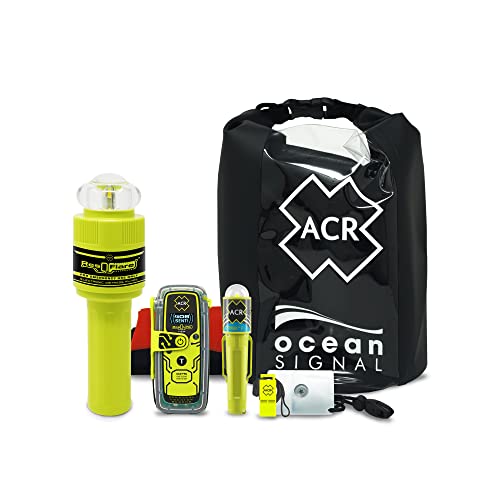
- Includes PLB and electronic flare
- Adds whistle, mirror, light, and flag
- Packaged as a boating survival kit
Best For: Boaters who want a beacon bundle with multiple distress and survival tools.
Compact Long-Life Beacon

- Just 4 oz with lifejacket clip
- 7-year battery and 24+ hours runtime
- Waterproof and no subscription required
Best For: Boaters who want the smallest possible no-subscription PLB with long battery life.
Premium Offshore Survival Kit
ResQLink View RLS GPS PLB & ResQFlare Kit

- PLB with Return Link Service confirmation
- USCG-approved buoyant electronic flare
- Includes strobe, mirror, whistle, and dry bag
Best For: Boaters wanting a complete distress-signaling kit
Compact Rescue Kit
ACR ResQLink 400 GPS PLB Survival Kit

- GPS personal locator beacon for quick rescue use
- Includes strobe, whistle, mirror, and drybag
- Compact kit for easy boat storage
Best For: Boaters who want a straightforward beacon kit
Buoyant GPS Beacon
ACR ResQLink View PLB for Boating
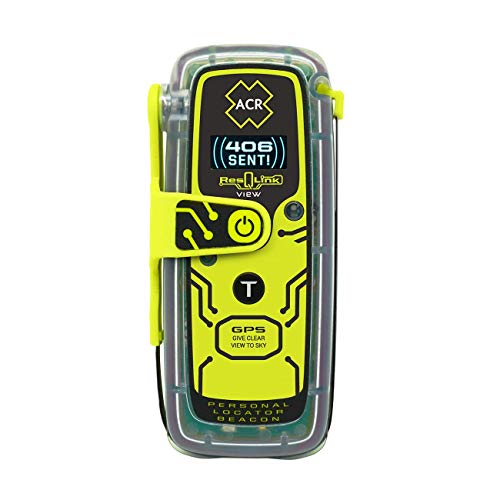
- 406 MHz distress signal with GPS position
- 121.5 MHz homing signal for rescue location
- Buoyant body with strobe and infrared strobe
Best For: Boaters who want a dedicated buoyant PLB
AIS + Satellite Signal Beacon

- AIS distress alert for nearby vessels with receivers
- 406 MHz satellite signal plus 121.5 MHz homing
- No subscription; 5-year battery life
Best For: Boaters who want AIS visibility plus satellite distress signaling
Display + Return Link Beacon

- Digital display with infrared strobe
- Return Link Service confirms rescue received the alert
- GPS, Galileo GNSS, and MEOSAR global coverage
Best For: Boaters who want a digital display and rescue confirmation
Compact RLS Beacon

- Return Link Service confirms rescue receipt
- GPS/Galileo/MEOSAR global coverage
- Lightweight, buoyant design with strobe lights
Best For: Boaters who want a simple, compact distress beacon
All-Around Offshore Safety – ACR ResQLink 400 for Boats
If you want emergency locator beacons for boats that keep things simple, the ACR ResQLink 400 is built around no-subscription emergency use, GPS positioning, and global satellite coverage. It’s a practical choice for boaters who want a compact beacon with clear distress signaling and reliable rescue support without ongoing fees.
Best For: Boat owners who want a subscription-free personal locator beacon with global coverage.
Pros:
- No subscription required, with no ongoing fees.
- 406 MHz distress and homing signals help rescuers identify your location.
- GPS and Galileo GNSS support precise position data.
- LED strobe and infrared strobe improve visibility in low light.
Cons:
- Designed as a personal locator beacon, so it is not a general-purpose marine radio.
- Wrist-mount setup may not suit every onboard carry preference.
For boaters who value dependable emergency signaling and worldwide rescue coverage, this model keeps the feature set focused on fast location and visibility. It’s a straightforward option when you want a beacon that’s ready without recurring costs.
US-Programmed Emergency Beacon – McMurdo FastFind 220 for Boating
The McMurdo FastFind 220 is aimed at boaters who want a straightforward PLB with US programming and a simple emergency activation process. Among emergency locator beacons for boats, it stands out for its clear registration-first setup and its focus on grave-and-imminent-danger use.
Best For: Boaters who want a US-programmed personal locator beacon with simple activation.
Pros:
- Pre-programmed for registration with the US country code.
- Works anywhere around the world once registered.
- Easy emergency activation with antenna deployment and one-button operation.
- Built for remote, treacherous, and extreme conditions.
Cons:
- Initial registration is tied to the US country code listing.
- Designed only for grave and imminent danger situations.
If you’re mainly boating under US registration and want a no-frills beacon, this model keeps the process simple. Its value is in direct emergency use and international operating capability, not extra features.
All-in-One Distress Kit – ResQLink View and ResQFlare for Boats
If you want emergency locator beacons for boats plus extra signaling gear in one package, this kit combines the ResQLink View PLB with the ResQFlare electronic distress flare and several survival accessories. It’s a practical bundle for boaters who prefer a more complete emergency pack rather than a standalone beacon.
Best For: Boaters who want a beacon bundle with multiple distress and survival tools.
Pros:
- Includes a ResQLink View personal locator beacon.
- Bundles a USCG-approved electronic distress flare.
- Adds a rescue light, signal mirror, whistle, dry bag, and distress flag.
- Useful as a ready-made survival kit for boating emergencies.
Cons:
- Bulkier than a standalone beacon at 2.4 pounds.
- More of a kit purchase than a single-device solution.
This bundle makes sense if you want a layered emergency setup rather than just a beacon. It gives you multiple ways to signal for help, which is helpful when assembling a boat safety kit.
Compact Long-Life Beacon – rescueME PLB1 for Boat Safety
The rescueME PLB1 is a compact option for boaters who want an easy-to-carry emergency locator beacon for boats with long battery life and simple one-handed operation. It focuses on the essentials: GPS positioning, high visibility, waterproofing, and no subscription requirement.
Best For: Boaters who want the smallest possible no-subscription PLB with long battery life.
Pros:
- Very compact at just 4 oz, with a lifejacket mounting clip.
- One-handed operation is designed for difficult situations.
- 66-channel GPS receiver and high-intensity strobe improve findability.
- 7-year battery life and 24+ hours of operation add confidence.
- Waterproof up to 49 feet and no subscription required.
Cons:
- Focused on core beacon functions, not extra kit accessories.
- Smaller size may mean fewer onboard convenience features.
For boaters who want a minimalist beacon that’s easy to clip on and forget about until needed, this is a strong fit. Its combination of compact size, long battery life, and free-to-use rescue service makes it very practical.
Premium Offshore Survival Kit – ResQLink View RLS GPS PLB & ResQFlare Kit
If you want emergency locator beacons for boats that cover both satellite distress signaling and on-water visual signaling, this ACR kit is built for a more complete grab-and-go response. It pairs a GPS personal locator beacon with an electronic distress flare and other compact survival tools, giving boaters multiple ways to alert rescuers and stay visible.
Best For: Boat owners who want an all-in-one distress signaling kit with a PLB, electronic flare, and backup safety tools.
Pros:
- Includes a ResQLink View RLS personal locator beacon with Return Link Service confirmation.
- ResQFlare is USCG approved, fully buoyant, and visible for 6 nautical miles.
- Also includes a C-Strobe H2O rescue light, signal mirror, whistle, and RapidDitch dry bag.
- 5-year warranty adds support for long-term ownership.
Cons:
- More of a safety kit than a single-purpose beacon, so it may be more than some boaters need.
- Runs on C-batteries for the flare, which adds a battery maintenance step.
Overall, this is a strong pick if you want layered emergency signaling rather than relying on one device alone. The combination of satellite distress alerting and high-visibility flare support makes it especially practical for boating safety kits.
Compact Rescue Kit – ACR ResQLink 400 GPS PLB Survival Kit
For boaters comparing emergency locator beacons for boats, this ACR survival kit focuses on a compact GPS PLB with a few practical signaling backups. It is designed for quick rescue use and includes the core tools many boaters want in a small, ready-to-pack emergency setup.
Best For: Boaters who want a compact GPS beacon kit with simple backup signaling tools.
Pros:
- Includes the ResQLink 400 personal locator beacon with GPS and fast rescue focus.
- Comes with a C-Strobe H2O rescue light for bright signaling.
- Includes a whistle, signal mirror, and RapidDitch drybag for backup emergency use.
- Kit is compact and designed for easy storage aboard a boat.
Cons:
- Lacks the added Return Link Service found on some higher-end beacons.
- Does not include an electronic flare like some more complete kits.
This is a sensible choice if you want the beacon first and the extras second. It keeps the setup straightforward while still adding useful visual and audible backup signals for boating emergencies.
Buoyant GPS Beacon – ACR ResQLink View PLB for Boating
If you need emergency locator beacons for boats with a simple, boat-friendly design, this buoyant ACR PLB is a practical option. It sends a 406 MHz distress signal with GPS position and also includes a 121.5 MHz homing signal, giving rescuers both broad alerting and a way to close in on your location.
Best For: Boaters who want a buoyant personal locator beacon with GPS and no subscription requirement.
Pros:
- 406 MHz distress signal with GPS position is sent directly to Search and Rescue forces worldwide.
- Includes a 121.5 MHz homing signal for final-location assistance.
- Buoyant and rugged, with attachment clips, straps, and lanyards for wearability.
- Bright LED strobe and infrared strobe add extra visual signaling options.
Cons:
- Primarily a beacon rather than a full safety kit, so you may want to add separate onboard gear.
- Optional testing subscription is only for pre-canned self-test and GPS test messages, not core distress use.
For boaters who want a dedicated PLB with strong signaling features and straightforward emergency use, this model is easy to understand and deploy. Its buoyant build and multiple signal types make it a solid boating safety staple.
AIS + Satellite Signal Beacon – ACR ResQLink AIS PLB-450
If you want emergency locator beacons for boats that add both local and global signaling, the ACR ResQLink AIS PLB-450 is built for layered rescue coverage. It combines AIS distress alerts for nearby vessels, 406 MHz COSPAS-SARSAT satellite signaling, and a 121.5 MHz homing signal, so it’s aimed at getting your call for help seen in more than one way.
Best For: Boat owners who want AIS visibility plus satellite distress signaling in one compact beacon.
Pros:
- AIS distress alert can be received by nearby vessels with AIS receivers or plotters within about 5 miles, conditions permitting.
- Includes 406 MHz COSPAS-SARSAT signaling, MEOSAR compatibility, and 121.5 MHz local homing for rescue location support.
- Return Link Service confirms when Search and Rescue has received the distress signal.
- Small, lightweight design with no subscription required and 5-year battery life.
Cons:
- AIS range depends on conditions and nearby vessels equipped to receive it.
- Designed around emergency signaling rather than extra consumer features.
For boaters who want a beacon that emphasizes both local AIS alerting and global satellite distress messaging, this model offers a well-rounded emergency package. The clip system and PFD-friendly design also make it easier to carry where it’s needed.
Display + Return Link Beacon – ACR ResQLink View RLS
For emergency locator beacons for boats, the ACR ResQLink View RLS focuses on feedback and visibility. Its digital display, infrared strobe, and Return Link Service give you a clear way to confirm that your distress alert has been received while keeping the beacon compact enough for everyday carry on the water.
Best For: Boaters who want a compact PLB with a digital display and confirmation that rescue received the signal.
Pros:
- Return Link Service confirms Search and Rescue has received the emergency distress signal.
- Digital display and infrared strobe help improve visibility and emergency status awareness.
- GPS, Galileo GNSS, and MEOSAR compatibility support global coverage and accurate positioning.
- Compact, lightweight build with built-in buoyancy and a multifunction clip system.
Cons:
- Operational life is listed at 28+ hours, which may be more than enough for rescue, but still finite.
- Primarily designed for distress signaling rather than extra onboard features.
This is a strong pick if you want a boat-ready beacon with a visible status display and a clear confirmation signal from rescue services. The combination of buoyancy, global GNSS support, and clip-based mounting makes it practical to carry.
Compact RLS Beacon – ACR ResQLink 410 RLS
If you’re comparing emergency locator beacons for boats and want a stripped-down model focused on core rescue functions, the ACR ResQLink 410 RLS keeps things simple. It offers Return Link Service, global GPS/Galileo/MEOSAR support, and both strobe and infrared strobe lights for emergency visibility.
Best For: Boaters who want a compact, lightweight distress beacon with rescue confirmation and global coverage.
Pros:
- Return Link Service confirms that Search and Rescue has received the distress signal.
- GPS, Galileo GNSS, and MEOSAR compatibility provide global positioning support.
- Small, lightweight design with built-in buoyancy and both strobe and infrared strobe lights.
- No subscription required and 5-year battery life.
Cons:
- Lacks a digital display found on some higher-end models.
- Focused on essentials, so it offers fewer extra features.
This model is a practical option for boaters who value simplicity, buoyancy, and core distress signaling over bells and whistles. It still delivers the key tools needed for serious emergency use.
How We Picked the Best Emergency Locator Beacons for Boats
We looked for beacons that are practical for real boating use: fast distress alerting, strong satellite coverage, marine-friendly design, and simple operation in an emergency. We also favored models with GPS, long battery life, and visible status or confirmation features that can reduce uncertainty when help is on the way.
Quick Comparison
In this category, the main differences come down to positioning and confirmation. Standard PLBs are a proven choice for offshore alerting. Models with digital displays or Return Link Service add reassurance by showing beacon status or confirming that the distress signal was received. AIS-enabled options can also help nearby vessels spot you faster in crowded or coastal waters.
Key Buying Factors for Emergency Locator Beacons for Boats
GPS and Global Coverage
For marine emergencies, built-in GPS is a major advantage because it can send rescuers a more accurate location. Global satellite coverage matters if you travel offshore, cross borders, or fish in remote areas.
Battery Life and Operational Time
Look for a beacon with long standby life and enough transmit time to keep broadcasting during a prolonged rescue window. Battery replacement schedules also matter, since a beacon is only useful if it is current and maintained.
Buoyancy and Mounting
Boaters should consider whether the beacon floats, clips to a life jacket, or stores securely in a grab bag. For Emergency Locator Beacons for Boats, accessibility is just as important as performance.
Confirmation and Visibility Features
Return Link Service, digital displays, and AIS signaling can add useful feedback. These features do not replace a distress alert, but they can improve confidence and visibility during a rescue.
Regulatory and Use Considerations
Make sure the model is appropriate for your boating region and intended use. Some beacons are built mainly for personal rescue, while others are part of a broader safety kit with electronic flares or accessory clips for easier deployment.
Who Should Buy Which Emergency Locator Beacons for Boats?
Offshore sailors and serious anglers should prioritize GPS-equipped PLBs with long battery life and global coverage. Coastal boaters who want added visibility may prefer AIS or combo safety kits. If you want the simplest, most compact option, a basic PLB with strong satellite performance is often the best fit. If reassurance matters most, choose a model with a display or Return Link Service.
Whichever option you choose, keep it registered, test it according to the manufacturer’s guidance, and store it where you can reach it quickly in an emergency.