Growing herbs, seedlings, and houseplants indoors is easier when natural light is limited or inconsistent. The right grow light can provide a dependable spectrum, coverage area, and schedule throughout the year.
These 10 options span compact bulbs, flexible clip lights, linkable fixtures, halo designs, and larger floor or tabletop panels. Use the guide below to match brightness, placement, controls, and coverage to your plants and growing space.
Best 10 Grow Lights for Year Round Growing Picks for 2026
High-Output Bulb
SANSI 36W Full-Spectrum BR30 Grow Light

- 4000K full-spectrum output for every growth stage
- Optical lens with 65.6 µmol/s PPF
- ETL listed with ceramic cooling and five-year protection
Best For: Individual plants using a compatible E26 fixture
Shelf-Friendly Strip
4FT Linkable Full-Spectrum Grow Light

- Slim 4-foot design for shelves and indoor stands
- 660nm red enhancement for flowering and fruiting
- Daisy-chain up to four strips from one cord
Best For: Long plant shelves, greenhouses, and grow tents
Adjustable Stand
Full-Spectrum Tripod Grow Light

- Adjusts from 15 to 62 inches
- Works on a tripod, desktop, floor, or inside a pot
- Daily 8-, 12-, or 16-hour timer cycles
Best For: Mixed-height plants and flexible room setups
Customizable Clip Lamp
LEOTER 80-LED Adjustable Grow Light
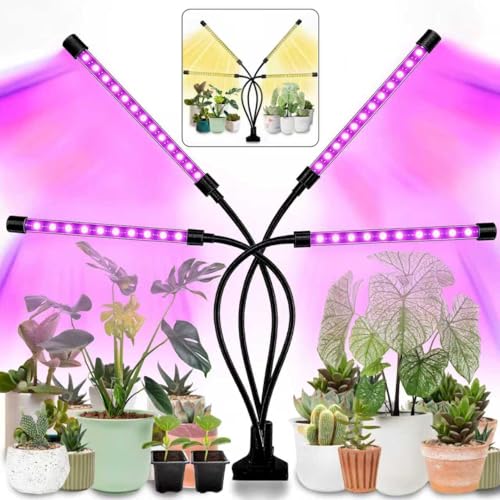
- 80 LEDs with three spectrum modes
- Ten dimming levels and recurring timer settings
- Four flexible heads with a metal clamp
Best For: Small indoor plant collections and desktop growing
Best Compact Halo Pick
Adjustable 3-Pack Full-Spectrum Halo Grow Lights

- Three compact lights for multiple plants
- Ten brightness levels and three spectrum modes
- Adjustable height with daily timer
Best For: Small indoor plants and tabletop displays
Best Clip-On Pick
Flexible Two-Head LED Grow Light

- Clamp-mounted design saves floor space
- 84 LEDs with three spectrum modes
- Flexible goosenecks and repeat timer
Best For: Shelves, desks, and small plant collections
Best Wide-Coverage Pick

- Ten adjustable light heads and 500 LEDs
- Full-spectrum blue and red wavelengths
- Reinforced tripod with repeating timer
Best For: Larger indoor plant groupings and succulents
Compact Daily Care
Two-Tube Full-Spectrum Grow Light
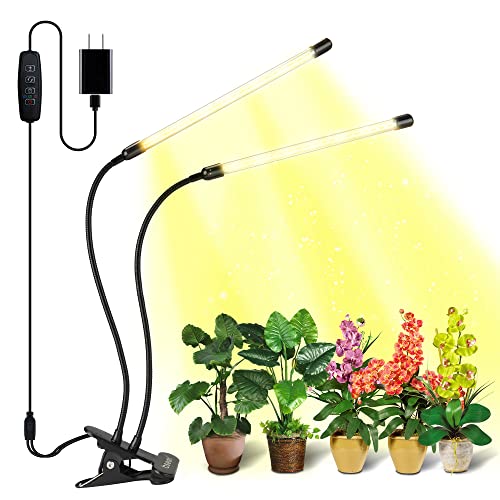
- Full-spectrum LED supports multiple growth stages
- 10 dimming levels with three lighting modes
- Automatic 3/9/12-hour timer and flexible metal gooseneck
Best For: Small tabletop plant collections and indoor potted plants
Wide-Coverage Floor Setup

- Five heads and 450 LEDs provide broad coverage
- 11 brightness levels and selective head control
- Timer offers six preset daily cycles from 3 to 18 hours
Best For: Multiple plants, tall plants, and flexible floor or stand setups
Room-Filling Coverage

- 8.7-inch panel with 300 LEDs targets broad, even coverage
- Three modes combine white, red, and blue light
- 15- to 56-inch stand works on floors or tabletops
Best For: Multiple plants and adaptable floor-to-table indoor setups
High-Output Bulb – SANSI 36W Full-Spectrum BR30 Grow Light
For shoppers comparing grow lights for year round growing, this SANSI bulb is a strong choice when you want a conventional E26 fixture with concentrated output. Its 4000K full-spectrum light, high color rendering, and optical lens are designed to support plants through their full growth cycle.
Best For: Indoor growers who want a powerful bulb for a compatible E26 socket, especially for individual plants or compact growing areas.
Pros:
- 4000K full-spectrum light covers the visible 400nm–780nm range and is suitable for all growth stages.
- Produces 65.6 µmol/s PPF and 3,250 lumens, with an optical lens intended to improve light distribution.
- Ceramic heat-management design, low IR output, ETL listing, and a stated 25,000-hour life.
- Backed by a five-year protection plan.
Cons:
- Requires a separate compatible E26 fixture or lamp.
- Its BR30 bulb format is less suitable for evenly lighting a long shelf or wide plant collection.
This is a practical option when concentrated, high-intensity supplemental light matters more than built-in mounting or automation. Verify that your fixture can accommodate the BR30 size and 36W load.
Shelf-Friendly Strip – 4FT Linkable Full-Spectrum Grow Light
This 4-foot fixture is well suited to grow lights for year round growing when you need broad, shelf-level coverage without a bulky lamp. Its slim profile, full-spectrum LEDs, and 660nm red-light enhancement support seedlings, flowering plants, and fruiting plants in indoor setups.
Best For: Plant shelves, cabinets, greenhouses, and grow tents where a long, low-profile light can be mounted or suspended.
Pros:
- Full-spectrum output includes a 660nm red-light enhancement for sprouting, flowering, and fruiting plants.
- Uses 30W to provide up to 3,600 lumens.
- Can be hung or mounted using the included hardware and two-foot hanging cable.
- Up to four fixtures can be daisy-chained from one power cord.
Cons:
- The 4-foot length may be excessive for a small desktop collection.
- Operation uses a basic inline on/off switch rather than an automatic timer.
- Its stated 3,600-lumen output does not provide a PPFD specification for intensity comparisons.
Choose this fixture for straightforward, organized coverage across a shelf or growing rack. The linkable design is especially useful if your setup may expand over time.
Adjustable Stand – Full-Spectrum Tripod Grow Light
For flexible grow lights for year round growing, this stand-style model adapts from a compact 15 inches to 62 inches. It can sit on a desktop or floor, or be inserted directly into a pot, making it useful as plants grow from small seedlings into taller specimens.
Best For: Indoor gardeners who want one adjustable light for plants of different sizes and prefer a freestanding or pot-mounted design.
Pros:
- Height adjusts from 15 to 62 inches for small and large plants.
- Detachable tripod can be used on a floor or desktop, while the pointed nut allows direct pot insertion.
- Full-spectrum LEDs cover the stated 380nm–800nm range.
- Automatic 8-, 12-, or 16-hour timing cycles can repeat daily, and the aluminum construction has a polished decorative look.
Cons:
- The supplied notes do not specify lumen output, PPFD, or color temperature.
- At 80W, it may use more power than lower-wattage supplemental lights.
- Only one light is included, so wide plant groupings may need additional coverage.
This model emphasizes positioning flexibility and convenience rather than published lighting measurements. It is a good fit for mixed-height houseplants when an adjustable, decorative stand and recurring timer are priorities.
Customizable Clip Lamp – LEOTER 80-LED Adjustable Grow Light
This LEOTER lamp offers useful control for grow lights for year round growing in smaller indoor spaces. Its four adjustable goosenecks, three spectrum modes, ten dimming levels, and recurring timer make it easy to tailor light around several nearby plants.
Best For: Desktop collections, offices, and small plant groups that need adjustable positioning and USB-powered convenience.
Pros:
- Uses 80 LEDs with full-spectrum, red-and-blue, and combined spectrum modes.
- Ten dimming levels help adjust intensity for different growth stages.
- Three-hour, nine-hour, and 12-hour timer settings can repeat automatically.
- Four 360-degree flexible heads and a metal clamp allow targeted positioning, while USB and included adapter support convenient power options.
Cons:
- The timer must be reset after the light loses power.
- It is not waterproof and is intended for indoor use.
- The supplied notes do not provide a PPFD or lumen rating.
This is a versatile small-space lamp for growers who value adjustability over broad, measured coverage. Its clamp and independent-looking flexible heads can help position light close to multiple plants, provided the setup remains indoors and dry.
Best Compact Halo Pick – Adjustable 3-Pack Full-Spectrum Halo Grow Lights
For year-round growing in smaller indoor planters, this three-pack provides compact halo lighting with adjustable height, three lighting modes, and ten brightness levels. The corded design and timer help create a consistent routine, while the included bases or soil inserts offer flexible placement.
Best For: Small indoor plants, tabletop displays, and gardeners who need several compact lights.
Pros:
- Three lights provide coverage for multiple plants.
- Adjustable height reaches up to 26 inches and the pole rotates 90 degrees.
- Offers three spectrum modes, ten brightness levels, and 3/9/12-hour timer settings.
- Can be installed in soil or used with the included base.
Cons:
- The base needs to be pressed down by a flower pot for stability.
- It is corded and not wireless.
- Indoor use only; it is not waterproof or water resistant.
This is a practical choice when you want several adjustable lights without taking up much space. Its main limitation is the need for a supporting pot and nearby power outlet.
Best Clip-On Pick – Flexible Two-Head LED Grow Light
For year-round growing where floor space is limited, this clip-mounted LED light attaches to a tabletop or nearby surface and uses flexible goosenecks to direct illumination. Its 84 LEDs, three spectrum modes, ten dimming levels, and automatic timer make it easy to tailor coverage as plants develop.
Best For: Small plant collections, shelves, desks, and growers who want directional lighting.
Pros:
- Strong clip and flexible 360-degree gooseneck support adjustable positioning.
- Includes 84 LEDs with white and red light options.
- Provides three modes and ten brightness levels for different growth stages.
- 3/9/12-hour cycle timer can repeat the schedule daily.
Cons:
- It is corded and intended for indoor use.
- The light is not waterproof or water resistant.
- One light kit may be less suitable for a large plant collection.
The clamp-on format is especially convenient for shelves and work areas where a tripod would be cumbersome. Choose it when positioning flexibility matters more than broad, freestanding coverage.
Best Wide-Coverage Pick – 500-LED Tripod Grow Light
For year-round growing across a larger indoor plant display, this tripod system combines ten light branches with up to 500 LEDs. Each head has an adjustable 15-inch flexible pipe, so you can direct light across multiple plants while using the 4/8/12-hour repeating timer for a regular schedule.
Best For: Larger indoor plant groupings, succulents, and plants progressing from germination through flowering and fruiting.
Pros:
- Ten light heads and up to 500 LEDs provide wide coverage.
- Each light head can be individually adjusted for direction.
- Full-spectrum output includes blue and red wavelengths and has a listed CRI of 95.
- Reinforced tripod and 4/8/12-hour daily timer support stable, repeatable use.
Cons:
- Its floor-mounted tripod requires more space than clip-on or halo lights.
- The 120-volt corded design limits placement to locations near an outlet.
- It is a single larger setup rather than a multi-pack of separate lights.
This model makes the most sense when several plants need coverage from one centralized stand. Its adjustable branches improve targeting, but the larger tripod footprint should be planned for before purchase.
Compact Daily Care – Two-Tube Full-Spectrum Grow Light
If you need grow lights for year round growing in a small indoor setup, this tabletop bseah model keeps the arrangement simple. Its two LED tubes offer full-spectrum light, adjustable brightness, flexible positioning, and an automatic timer for consistent daily sessions.
Best For: Small collections of potted plants, desks, shelves, and indoor gardeners who want straightforward scheduled lighting.
Pros:
- Full-spectrum yellow-and-white LED combination supports plants through germination, growth, flowering, and fruiting.
- Ten dimming levels and three switch modes allow adjustments for different growth stages.
- Automatic 3-, 9-, or 12-hour timer can repeat the same schedule each day when continuously powered.
- Metal gooseneck, non-slip base, and USB connectivity suit tabletop use.
Cons:
- Its two-tube tabletop design is better suited to compact coverage than a large plant collection.
- It is not waterproof, so it requires protection from splashes and wet environments.
- The timer offers fewer preset durations than some larger models.
This is a practical choice when you want adjustable, hands-off lighting without a bulky floor stand. Its compact format and flexible arms make positioning easy, while the limited coverage favors individual plants or a small indoor garden.
Wide-Coverage Floor Setup – Five-Head LED Grow Light
For year round growing across several plants, this five-head LED system is designed to spread light more broadly than a compact lamp. It combines 450 LEDs, full-spectrum output, individually usable light heads, and a display-based timer with multiple scheduling options.
Best For: Tall plants, plant stands, shelves, microgreens, hydroponic systems, and growers who need flexible coverage from one fixture.
Pros:
- Five wide round heads with up to 450 LEDs provide broader coverage for multiple plants.
- Full-spectrum light supports development from germination and seedlings through flowering and fruiting.
- Eleven brightness levels help accommodate delicate seedlings and more established plants.
- Heads can be used together, partially, or individually, and the timer supports 3-, 6-, 9-, 12-, 15-, and 18-hour cycles.
Cons:
- The 32-watt corded design requires access to an electrical outlet.
- Its larger multi-head arrangement may be more equipment than a single small plant needs.
- The supplied details describe a one-year warranty rather than a longer coverage period.
The standout advantage is control: you can illuminate only the heads your plants need and tailor brightness to their stage. The broad, adjustable setup is particularly useful when a single narrow lamp would leave parts of a plant group in shadow.
Room-Filling Coverage – Oversize 300-LED Grow Light
This oversized-panel fixture is a strong option for year round growing when several plants need even illumination. Its 8.7-inch, 300-LED panel is paired with three lighting modes, ten brightness levels, a remote, and an adjustable stand that works on the floor or a tabletop.
Best For: Multiple plants needing wide, uniform coverage, from tabletop displays to taller floor plants.
Pros:
- Large 8.7-inch panel with 300 LEDs is designed to reduce dark spots and illuminate multiple plants.
- Three modes—red and blue, white, and red-blue-full-spectrum white—support different lighting preferences and growth stages.
- Remote control provides ten brightness levels, mode selection, and timer access.
- Adjustable 15- to 56-inch stand supports both tabletop and floor placement.
Cons:
- The timer has only 4-, 8-, and 12-hour presets.
- The remote works best within 13 feet and when aimed toward the rear receiver.
- The shade is plastic, and the fixture is intended for indoor use only.
This model emphasizes coverage and placement flexibility rather than a compact footprint. The wide panel can serve a group of plants, while the height-adjustable stand lets the same fixture adapt as your setup changes from a table to the floor.
How We Picked the Best Grow Lights for Year Round Growing
We focused on practical features that affect indoor plant performance and everyday convenience: light type, stated output, coverage, adjustability, timer controls, mounting options, and suitability for different plant sizes. The selection includes compact lights for a single plant, multi-head fixtures for collections, and broader panels for seedlings or larger displays.
Because listed wattage, LED counts, and “equivalent” ratings are not always directly comparable, treat manufacturer specifications as useful starting points rather than a guarantee of identical performance. Placement and distance from the leaves matter just as much as the headline numbers.
Quick Comparison
| Light style | Best for | Main advantage | Potential limitation |
|---|---|---|---|
| Bulb | One plant or lamp fixture | Simple installation | Limited directional coverage |
| Clip-on or gooseneck | Small collections | Flexible positioning | Usually covers a smaller area |
| Tripod or floor stand | Multiple plants | Height and coverage flexibility | Needs more floor space |
| Panel or linkable bar | Seedlings, shelves, and trays | More even area coverage | Requires suitable mounting or placement |
Key Buying Factors for Grow Lights for Year-Round Growing
Coverage and Plant Distance
Choose a light that can illuminate the entire canopy, not just the center leaves. Adjustable stands and flexible heads make it easier to maintain a suitable distance as plants grow. For shelves or trays, bar lights and panels generally distribute light more evenly than a single bulb.
Spectrum and Brightness
Full-spectrum LEDs are a versatile choice for foliage, herbs, seedlings, and many houseplants. Red and blue modes can be useful for specific growth stages, but brightness and coverage are more important than color claims alone. Look for published output information when available, and avoid judging performance solely by LED count.
Timers, Dimming, and Heat
Built-in 3-, 9-, or 12-hour timers can create a consistent routine and reduce daily maintenance. Dimming helps accommodate shade-tolerant plants and changing growth stages. LEDs typically produce less heat than older grow-light technologies, but leave ventilation around the fixture and monitor leaves for bleaching, curling, or excessive warmth.
Installation and Power
Check whether the light clips onto furniture, inserts into soil, sits on a base, or requires a tripod or mounting surface. Measure the available space before buying. For continuous use, consider cord length, switch access, power consumption, and whether multiple fixtures can be linked.
Who Should Buy Which Grow Lights for Year Round Growing?
- For one houseplant: Choose a grow-light bulb or compact halo light that fits an existing lamp or small pot.
- For several small plants: A clip-on or multi-head gooseneck model offers flexible positioning without taking over a room.
- For seedlings and trays: Choose a broad panel or 4-foot linkable fixture for more uniform coverage across the growing area.
- For a larger plant display: A tripod or floor-standing light is easier to reposition and can cover plants at different heights.
- For low-maintenance routines: Prioritize automatic timers and dimming controls so the light schedule remains consistent.
Whichever style you choose, start with the manufacturer’s recommended distance and schedule, then adjust based on plant response. Healthy new growth, compact spacing, and normal leaf color are better indicators than maximum brightness alone.