Loading a boat by hand can be slow, tiring, and difficult to manage when the ramp is busy or conditions are less than ideal. An electric trailer winch can make the process more controlled while reducing the strain on your back, arms, and trailer connection.
This roundup compares 10 electric boat trailer winches with different weight ratings, controls, cables, ropes, and operating modes. Use the guide below to match winch capacity and features to your boat, trailer, and typical launching conditions.
Best 10 Electric Boat Trailer Winches Picks for 2026
Heavy-Duty Synthetic-Rope Pick
3500-Lb Portable Electric Winch
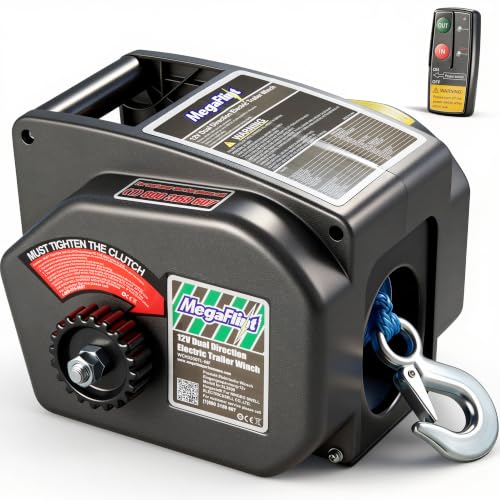
- Up to 10,500-lb rolling pull
- Dyneema rope with safety hook
- Wireless, wired, and manual control
Best For: Remote-controlled boat loading with a lightweight synthetic rope
High-Capacity Value Pick
Bravex 6000-Lb Reversible Winch
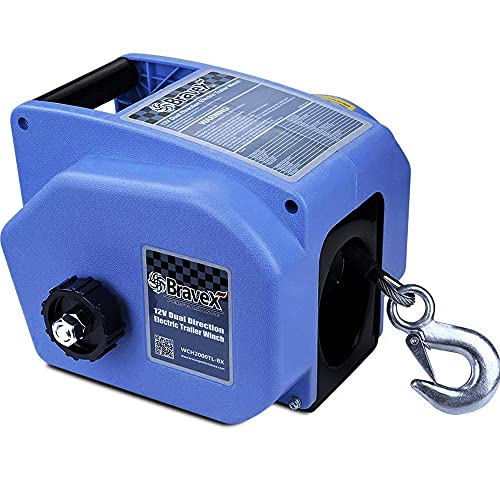
- 6,000-lb rolling capacity
- Power-in, power-out, and manual modes
- Two-year warranty listed
Best For: General boat, trailer, truck, and car winching
Compact Utility Pick

- 6,000-lb rolling-load rating
- 300W motor with overload protection
- Wired remote and manual crank included
Best For: Portable handling of smaller boats and light trailer jobs
Flexible Mounting Pick

- 9,500-lb rolling rated pull
- Wireless, wired, and manual controls
- Tool-free 2-inch hitch mounting plate
Best For: Portable hitch-mounted loading with flexible control options
Heavy-Duty Marine Puller
6000-Lb 12V Electric Boat Winch

- 2,000-lb pulling and 6,000-lb rolling capacity
- 29.53-ft steel cable
- Wired control plus hand crank
Best For: Marine towing and trailer users needing manual backup control
Quiet Synthetic-Rope Choice
Reversible 6000-Lb Boat Trailer Winch

- Power-in, power-out, and freewheel modes
- Flexible Dyneema synthetic rope
- Rated for boats up to 5,000 pounds
Best For: Quieter boat loading with reversible electric operation
Versatile Hitch-Mount Option

- Wireless, wired, and hand-crank controls
- 34-ft galvanized steel cable
- Slide-on 2-inch hitch mounting plate
Best For: Portable boat loading with flexible control options
High-Capacity Reversible Winch

- Reversible 12V electric and manual operation
- Wireless IN/OUT remote control included
- Nylon rope and stated 11,000-lb boat capacity
Best For: Portable, high-capacity marine and trailer use
Compact Wired-Control Winch
VEVOR 2,000-Lb Boat Trailer Winch
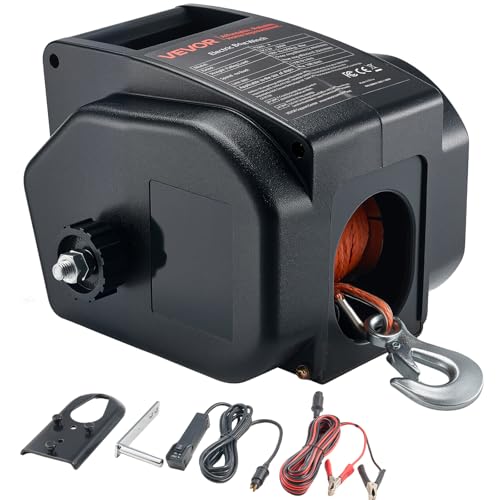
- 12V, 300W copper motor
- Electric, manual, and freewheel modes
- 30-ft polyethylene rope included
Best For: Boats up to 2,000 pounds with wired operation
Remote-Control Marine Winch
Reversible 2,000-Lb Trailer Winch

- 12V reversible power-in and power-out
- Wireless remote and hand crank included
- Low-noise design with mounting plate
Best For: 2,000-pound boats needing remote operation
Heavy-Duty Synthetic-Rope Pick – 3500-Lb Portable Electric Winch
For shoppers comparing electric boat trailer winches, this 12V model stands out for its high stated marine and rolling capacities, lightweight Dyneema rope, and multiple control options. Its planetary gearing, automatic brake, and waterproof sealed plug suit demanding trailer-loading conditions.
Best For: Boat owners who want strong pulling capacity, synthetic rope, remote operation, and a manual backup.
Pros:
- 3500-lb rated pull, 8750-lb marine working pull, and up to 10,500-lb rolling pull.
- Dyneema fiber rope is lighter than steel and designed to reduce snap-back risk.
- Includes wireless and wired remotes, freewheel operation, and a hand-crank backup.
- 265:1 gear reduction, automatic braking, and low-noise operation.
Cons:
- Traction output decreases on steeper inclines.
- The listed maximum boat weight and capacity figures vary by operating condition.
This is a feature-rich choice for users prioritizing remote control and synthetic rope. Confirm the applicable load rating for your boat and launch angle before installation.
High-Capacity Value Pick – Bravex 6000-Lb Reversible Winch
This Bravex model is a practical option among electric boat trailer winches for owners seeking a higher advertised rolling capacity and straightforward 12V operation. It provides power-in and power-out control, plus a hand crank for situations when electric power is unavailable.
Best For: Boat, trailer, truck, and car owners handling boats up to the product’s stated 5,000-lb maximum weight.
Pros:
- Advertised capacity reaches 6,000 lb rolling, 5,000 lb marine, and 2,000 lb pulling.
- Dual-direction electric operation supports pulling and spooling.
- Includes corded remote control and manual hand-crank operation.
- Automatic braking and a low-noise design rated below 75 dB at 12 inches.
Cons:
- The cable is considered consumable and is excluded from the warranty.
- The listed direct pulling capacity is lower than the rolling and marine ratings.
- Its remote is corded rather than wireless.
With a two-year warranty and flexible electric/manual operation, the Bravex is appealing for general trailer use. Match the relevant pulling rating—not just the headline rolling figure—to your boat and ramp conditions.
Compact Utility Pick – 300W 12V Electric Boat Winch
If portability and simple controls matter most, this compact 12V unit offers a practical entry point for electric boat trailer winches. Its 300W permanent-magnet motor, steel-and-ABS construction, overload protection, and integrated handle support routine trailer and light towing jobs.
Best For: Users hauling boats under the stated 1,984.14-lb limit who want a portable winch with wired and manual operation.
Pros:
- Provides 2,000-lb rated pull, 5,000-lb floating pull, and 6,000-lb rolling force.
- Includes a 9.84-foot wired controller and hand crank for no-power situations.
- Overload protection automatically cuts power when the unit is overloaded.
- Integrated handle and included mounting plate simplify moving and installation.
Cons:
- Its stated recommended boat weight is substantially below the rolling-load figure.
- It uses a wired controller rather than wireless remote operation.
- The supplied wire rope is steel rather than synthetic fiber.
This model makes sense for smaller boats and buyers who value portability over maximum capacity. Use the recommended boat-weight figure as the key sizing reference, especially for inclined ramps.
Flexible Mounting Pick – Nilight 3500-Lb Marine Winch
The Nilight combines three control methods with a slide-on hitch mounting plate, making it a flexible choice among electric boat trailer winches. Its 12V motor, galvanized steel cable, automatic brake, and waterproof sealed plug are aimed at repeat marine and trailer use.
Best For: Boat owners who want hitch-mounted portability, wireless and wired control, and a manual emergency option.
Pros:
- Rated for 3,500 lb line pull, 6,500 lb marine pull, and 9,500 lb rolling pull.
- Supports wireless remote, wired remote, and hand-crank operation.
- Includes a tool-free slide-on 2-inch hitch mounting plate.
- Features 265:1 gearing, automatic braking, low-noise operation, and a waterproof sealed plug.
Cons:
- The stated maximum boat weight is 5,000 lb despite higher marine and rolling ratings.
- Galvanized steel cable is heavier than synthetic rope.
- Pulling capacity decreases as the incline increases.
Nilight is a strong fit for users who frequently move the winch between compatible 2-inch hitch receivers. Its multiple controls and included mounting hardware add convenience, but boat weight and ramp angle should guide final sizing.
Heavy-Duty Marine Puller – 6000-Lb 12V Electric Boat Winch
This 12V electric boat trailer winch combines a 300W permanent-magnet DC motor with a steel cable and dual operating controls. Its listed capacities make it suitable for various towing and positioning jobs, but buyers should match the rated pull to their boat and loading conditions.
Best For: Boat owners and outdoor users who want electric operation with a manual backup for marine towing, trailer work, or vehicle recovery.
Pros:
- Offers 2,000 pounds of pulling force, 5,000 pounds of floating pull, and 6,000 pounds of rolling force.
- Includes a 29.53-foot steel wire rope for flexible reach.
- Provides wired control and hand-crank operation, plus overload protection.
- Includes a mounting plate, hand crank, and installation accessories.
Cons:
- At 35.3 pounds, it is heavier than some alternatives.
- Its steel cable may require more care against corrosion in marine environments.
- The notes specify suitability for boats under 1,984.14 pounds, so capacity claims should be checked carefully for a specific boat.
Choose this model if dual control and a long steel cable are priorities. Its overload protection adds a useful safety feature, while the capacity ratings support a range of trailer and recovery tasks.
Quiet Synthetic-Rope Choice – Reversible 6000-Lb Boat Trailer Winch
This reversible electric boat trailer winch is designed for power-in, power-out, and freewheel operation. Its Dyneema synthetic rope is flexible and reusable, while the 12V system is rated for boats up to 5,000 pounds according to the supplied specifications.
Best For: Boat owners who want reversible electric control, lower operating noise, and a lightweight synthetic-rope setup.
Pros:
- Supports power-in, power-out, and freewheel modes.
- Uses Dyneema synthetic rope described as flexible and stronger than similarly sized steel cable.
- Provides 6,000 pounds of rolling capacity, 5,000 pounds of marine capacity, and 2,000 pounds of pulling capacity.
- Includes a corded rocker-switch remote and a 16-foot power cord.
Cons:
- The supplied details do not list wireless remote control.
- Its maximum stated boat weight is 5,000 pounds, so larger boats may be outside the recommended range.
- Synthetic rope may not suit buyers specifically seeking a steel cable.
This is a strong fit for users who value quiet operation and flexible rope handling. The reversible controls and freewheel mode also make loading and unloading more adaptable than a basic pull-only winch.
Versatile Hitch-Mount Option – Nilight 3500-Lb Marine Winch
The Nilight is a portable 12V electric boat trailer winch with steel cable, wireless and wired remotes, and a hand crank. Its slide-on mounting plate fits a 2-inch ball hitch receiver, making it a practical option for users who want a removable winch for boat and trailer loading.
Best For: Boat owners seeking multiple control methods, portable hitch mounting, and support for boats up to 18 feet and 5,000 pounds.
Pros:
- Offers power-in, power-out, and freewheel operation.
- Includes wireless remote, wired remote, and manual hand-crank control.
- Supplies a 34-foot galvanized steel cable and hook.
- Features a 3-stage planetary gear drive, automatic braking, and a waterproof sealed plug.
Cons:
- The rated line pull is 3,500 pounds, with capacity reduced as the incline increases.
- Its 27.1-pound weight may still be substantial for frequent removal and transport.
- The supplied details do not specify the wireless remote’s operating range.
Consider this Nilight model when portability and control flexibility matter most. Its hitch-mounted design and long galvanized cable are useful for trailer work, while the automatic brake and sealed plug add practical operating features.
High-Capacity Reversible Winch – Portable 3,500-Lb Boat Winch
For shoppers comparing electric boat trailer winches, this portable 12V model stands out for its reversible power-in and power-out operation, wireless remote, and included hand crank. Its nylon rope and stated 11,000-pound boat capacity make it suited to demanding trailer and marine recovery tasks.
Best For: Boat owners who want a portable winch with high stated capacity and both electric and manual operation.
Pros:
- Reversible electric operation with manual hand-crank backup.
- Wireless remote includes IN/OUT buttons and a power switch.
- Low-noise design avoids ratchet noise during operation.
- Includes mounting hardware and a built-in handle for installation and carrying.
Cons:
- At 24.4 pounds, it is heavier than some compact alternatives.
- The stated 3,500-pound winch rating and 11,000-pound boat-pulling claim should be matched carefully to the towing setup.
This is a feature-rich choice when remote control, manual backup, and extra pulling capacity matter more than minimizing weight.
Compact Wired-Control Winch – VEVOR 2,000-Lb Boat Trailer Winch
This VEVOR model is a practical option among electric boat trailer winches for boats up to 2,000 pounds. It combines a 12V, 300W copper motor with power-in, power-out, and freewheel modes, plus a wired control switch and hand crank for flexible trailer use.
Best For: Owners of boats up to 2,000 pounds who prefer wired controls and a compact, durable winch design.
Pros:
- 0.4HP copper motor delivers a stated 2,000-pound pulling force.
- Offers electric, manual, and freewheel operation modes.
- Includes 30 feet of polyethylene rope with 2,030 kg tensile strength.
- ABS housing and cast-iron interior are designed for a sturdy build.
Cons:
- Uses a wired control rather than a wireless remote.
- Its stated capacity is limited to boats up to 2,000 pounds.
With a 20-foot power cable, manual crank, and multiple operating modes, this winch emphasizes straightforward control and dependable everyday loading.
Remote-Control Marine Winch – Reversible 2,000-Lb Trailer Winch
For buyers seeking electric boat trailer winches with convenient remote operation, this 12V reversible model provides power-in, power-out, and freewheel functions. It also includes a hand crank, built-in handle, and mounting plate for a flexible setup when loading or launching a boat.
Best For: Boat and trailer owners who want wireless control with a manual backup for boats up to 2,000 pounds.
Pros:
- Supports electric and manual operation.
- Wireless remote is included for convenient control.
- Low-noise design avoids ratchet noise during operation.
- Built-in handle and mounting plate support portability and installation.
Cons:
- The supplied notes do not specify the rope material or length.
- At 23.6 pounds, it is not the lightest portable option.
- Its stated boat capacity is 2,000 pounds, so heavier boats require careful compatibility checks.
This model makes sense when wireless control and a backup hand crank are priorities, while its capacity and available installation details should be checked against your trailer.
How We Picked These Electric Boat Trailer Winches
We focused on portable 12V models designed for boat trailers and compared their stated load ratings, operating modes, control options, and included manual backups. The selected winches include models rated for lighter boats as well as options with 3,500- or 6,000-pound advertised capacities.
Because manufacturers may describe capacity using rolling, pulling, or maximum load figures, treat published ratings as reference points rather than a guarantee for every launch. Actual performance depends on boat weight, trailer angle, surface friction, battery condition, cable or rope length, and whether the trailer is submerged correctly.
Quick Comparison
| Feature | What to look for | Why it matters |
|---|---|---|
| Power | 12V DC, commonly 300W | Works with many vehicle or marine battery setups |
| Capacity | Match the real loaded boat weight | Provides a safer operating margin |
| Controls | Wired or wireless remote | Lets you operate from a useful position |
| Backup operation | Manual crank and freewheel | Helps when power or the battery is unavailable |
| Line type | Steel cable or synthetic rope | Affects handling, abrasion resistance, and maintenance |
Key Buying Factors for Electric Boat Trailer Winches
Capacity and Actual Boat Weight
Calculate the combined weight of the boat, fuel, battery, gear, and accessories. Do not select a winch based only on the boat’s dry weight. A model with additional capacity can be useful on steeper ramps or when the trailer and boat are not moving freely, but an oversized rating does not eliminate the need for correct setup.
Power-In, Power-Out, and Freewheel Modes
Power-in pulls the boat onto the trailer, while power-out can provide controlled line release. Freewheel operation allows faster manual line deployment. These modes are especially useful when conditions change or when you need to position the bow strap before engaging the motor.
Remote, Wiring, and Battery Setup
A wired remote is generally straightforward and does not require separate pairing, while a wireless remote can offer more freedom around the ramp. Check cable length, connector placement, fuse requirements, and whether the winch includes the wiring or battery leads needed for your trailer.
Cable, Rope, and Maintenance
Steel cable is familiar and can tolerate abrasion, but it needs inspection for rust, kinks, and broken strands. Synthetic rope is lighter and easier to handle, but it should be protected from sharp edges, excessive heat, and abrasion. Rinse marine equipment after saltwater use and keep the line wound evenly.
Who Should Buy Which Electric Boat Trailer Winches?
Choose a lower-capacity portable model for a lighter boat when easy storage and occasional use are priorities. A 3,500-pound class winch is a practical middle-ground option for many small and midsize boats, provided the loaded weight and ramp conditions remain within its limits.
Consider a 6,000-pound class model if your boat is heavier, your ramp is steeper, or you want more operating margin. Models with both remote control and a hand crank are best for owners who want convenience without giving up a manual fallback. Before buying, verify mounting compatibility, electrical requirements, line reach, and the manufacturer’s instructions for safe trailer use.