The best pruning shears for small hands should feel secure without forcing your fingers to overextend. A compact handle, smooth spring action, and sharp blade can make routine trimming more comfortable and controlled.
This roundup compares 10 garden pruners across cutting capacity, grip design, blade style, and ease of use, so you can choose a pair that matches your plants, hand strength, and pruning routine.
Best 10 Pruning Shears for Small Hands Picks for 2026
Small-Hand Swiss Precision

- Compact 7.1-inch, 6.72-ounce design
- Adjustable, replaceable, maintainable parts
- Lifetime warranty and rubberized grip
Best For: Small-handed gardeners prioritizing lightweight, serviceable pruners
Low-Effort Branch Cutting

- Four-times cutting-force lever design
- Cuts branches up to 3/4 inch
- Ergonomic grip, safety lock, spare spring
Best For: Users seeking reduced hand effort for thicker garden branches
Everyday Sap-Resistant Pick
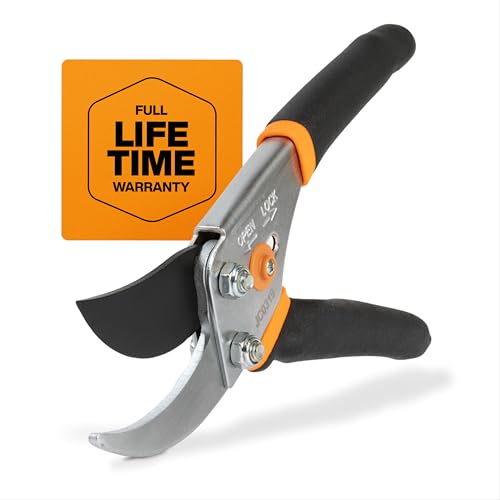
- Bypass blade for live growth
- Cuts branches up to 5/8 inch
- Sap groove, non-slip grip, lifetime warranty
Best For: Routine pruning of flowers, stems, and smaller branches
Ratchet Power for Weak Grips
Gerossi Ratchet Pruning Shears
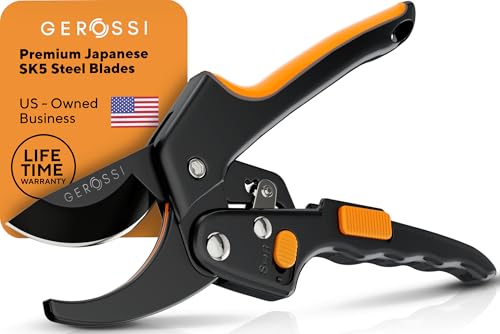
- Three-step ratchet multiplies hand power
- Cuts branches up to 3/4 inch
- Ergonomic ambidextrous grip and safety lock
Best For: Users with weak grips or arthritis pruning thicker branches
Durable Lightweight Pick
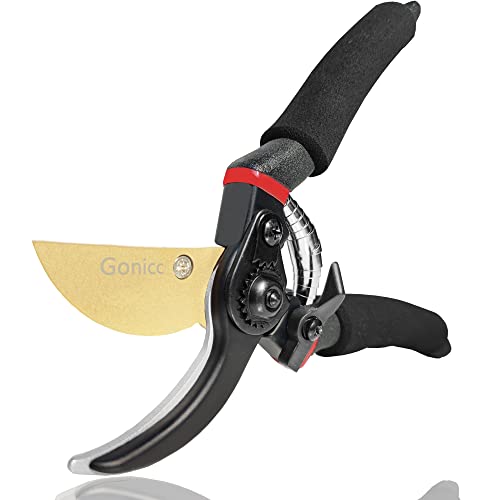
- Lightweight 150-gram design
- Titanium-coated SK-5 blade
- Cuts branches up to 3/4 inch
Best For: Routine pruning with reduced hand fatigue
High-Capacity Comfort Pick

- SoftGrip handle cushions pressure
- Cuts branches up to 1 inch
- Ambidextrous with safety lock
Best For: Users with weak hands or arthritis concerns
Compact Everyday Pick
Fiskars SoftGrip Bypass Pruner
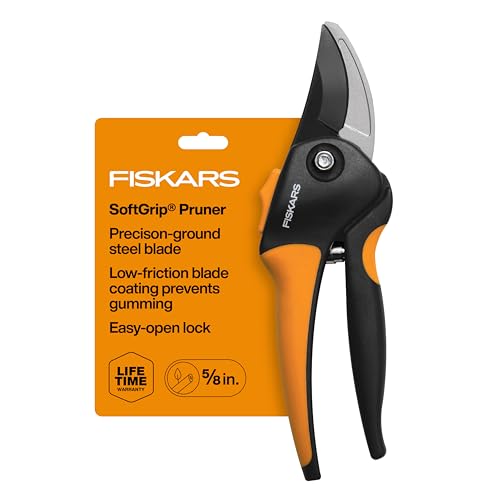
- 5/8-inch cutting capacity
- SoftGrip ergonomic handle
- Low-friction coated steel blade
Best For: Flowers, herbs, and smaller routine pruning tasks
Low-Effort Pick

- Sharp SK5 steel blade with titanium coating
- Non-slip handle designed to reduce hand fatigue
- Cuts branches up to 3/4 inch
Best For: Gardeners with small or weaker hands who want easier everyday pruning
Comfortable Everyday Choice
Fiskars SoftGrip Bypass Pruning Shears

- Ambidextrous design for right- or left-handed use
- SoftGrip handle helps reduce hand fatigue
- Handles live stems and branches up to 5/8 inch
Best For: Routine trimming when comfort and handedness flexibility are priorities
High-Leverage Pick

- Lever design provides four times the cutting power
- Cuts branches up to 1 inch thick
- Ergonomic rubber handle suits small and large hands
Best For: Users with weaker hands who need extra leverage for thicker branches
Small-Hand Swiss Precision – Felco F 14
For shoppers comparing pruning shears for small hands, the Felco F 14 stands out for its compact 7.1-inch design, lightweight construction, and maintainable parts. Its bypass and anvil blade setup, micrometric adjustment, and forged alloy-steel build make it a specialized option for detailed garden work.
Best For: Gardeners with small hands who want lightweight, adjustable pruners with replaceable components.
Pros:
- Lightweight 6.72-ounce design measures about 7.1 inches long.
- Micrometric adjustment supports blade alignment and replacement.
- Forged aluminum handles, carbon-steel blades, rubberized grips, and bumper.
- Lifetime warranty and replaceable, maintainable parts.
Cons:
- Its listed 18 mm cutting width is smaller than some heavy-duty options.
- Designed for right-handed use.
The F 14 is a strong fit when hand size, low weight, and long-term serviceability matter more than maximum branch capacity.
Low-Effort Branch Cutting – DECERK Professional Shears
The DECERK is a practical choice among pruning shears for small hands when cutting power and reduced hand strain are priorities. Its lever-action design, non-slip rubber handles, and Japanese SK5 titanium-coated bypass blade are aimed at easier work on branches up to 3/4 inch.
Best For: Gardeners, seniors, or users with arthritis who need ambidextrous pruners for thicker branches.
Pros:
- Lever action is designed to multiply cutting force up to four times.
- Bypass blade handles branches up to 3/4 inch according to the supplied specifications.
- Ergonomic rubber grips help cushion pressure during longer sessions.
- Includes a replacement spring and one-hand safety lock.
Cons:
- At 8.5 inches long, it is larger than the compactest small-hand pruners.
- Its 0.25 kg weight may feel less lightweight for extended use.
This model makes the most sense when easier cutting of thicker growth outweighs the benefits of a very short, lightweight tool.
Everyday Sap-Resistant Pick – Fiskars Bypass Pruner
The Fiskars Bypass Pruning Shears offer a straightforward option for pruning shears for small hands, with an ambidextrous grip and a bypass blade for live growth. A low-friction coating and self-cleaning sap groove are useful features for routine trimming of stems and branches up to 5/8 inch.
Best For: Everyday flower, shrub, and live-stem pruning where easy handling and low-maintenance blade features are useful.
Pros:
- Bypass design is intended to reduce crushing on live growth.
- Cuts stems and small branches up to 5/8 inch.
- Low-friction coating helps reduce sap buildup and sticking.
- Ambidextrous non-slip grip, safety lock, and lifetime warranty.
Cons:
- The listed 9.07-inch length may be less compact for very small hands.
- Its 5/8-inch capacity is below the thicker-branch ratings of the ratcheting models.
Choose the Fiskars for dependable everyday pruning and sap-management features rather than maximum leverage or the smallest overall footprint.
Ratchet Power for Weak Grips – Gerossi Ratchet Pruning Shears
The Gerossi combines an 8.1-inch form with a three-step ratchet mechanism, making it a compelling option among pruning shears for small hands when grip strength is limited. Its anvil blade, ergonomic rubber grip, and claimed 3x power multiplication are suited to thicker or dried branches.
Best For: Gardeners with weak grips or arthritis who need extra leverage for branches up to 3/4 inch.
Pros:
- Ratchet mode is designed to multiply hand power threefold.
- Handles branches up to 3/4 inch according to the supplied details.
- High-carbon SK-5 steel blade has a corrosion-resistant coating.
- Ambidextrous ergonomic grip and one-hand safety lock.
Cons:
- Anvil design is intended for forceful cuts rather than the bypass style commonly used for delicate live stems.
- At 0.22 kg, it is heavier than the Felco F 14.
- Ratchet operation can require multiple steps for one cut.
The Gerossi is a sensible leverage-focused choice for users who value easier cutting of thicker material over the lightest possible pruner.
Durable Lightweight Pick – gonicc Titanium Bypass Shears
For shoppers comparing pruning shears for small hands, these 8-inch gonicc bypass shears combine a lightweight 150-gram build with ergonomic, non-slip handles. The titanium-coated SK-5 blade is designed for smooth cuts on live stems and branches up to 3/4 inch thick.
Best For: Gardeners who want a lightweight, ambidextrous pruner for routine pruning and light woody growth.
Pros:
- Lightweight aluminum handles with PVC wrapping help reduce hand fatigue.
- Titanium-coated SK-5 steel blade offers sharpness and rust resistance.
- Built-in sap groove helps keep the blade from sticking.
Cons:
- Its 3/4-inch capacity is lower than some heavy-duty alternatives.
- The 8-inch handle length may not feel compact for every small hand.
- A light layer of protective oil may be present when opened.
This is a practical choice when comfort and low weight matter more than maximum cutting capacity. Its bypass design and sap groove suit everyday garden maintenance.
High-Capacity Comfort Pick – Kynup Ergonomic Garden Shears
These Kynup bypass pruning shears are worth considering if you need pruning shears for small hands with extra cutting capacity. The soft-grip handle is designed to cushion pressure, while the ambidextrous balance and safety lock support both left- and right-handed use.
Best For: Gardeners with limited hand strength, arthritis concerns, or a need to cut branches up to 1 inch thick.
Pros:
- SoftGrip cushioning is designed to reduce hand fatigue and wrist strain.
- SK-5 stainless steel blade handles branches up to 1 inch thick.
- Ambidextrous design and secure safety lock suit left- and right-handed users.
- Bright red handle is easy to spot in the garden.
Cons:
- At 8.6 inches long, these may feel large for very small hands.
- The higher cutting capacity can make them more tool than needed for delicate stems.
Kynup stands out for combining a cushioned grip with a 1-inch cutting capacity. It is a strong option when hand comfort and branch versatility are higher priorities than the most compact form.
Compact Everyday Pick – Fiskars SoftGrip Bypass Pruner
For pruning shears for small hands focused on everyday garden upkeep, the Fiskars SoftGrip bypass pruner offers a relatively compact 8.35-inch profile and a 5/8-inch cutting capacity. Its ergonomic grip, low-friction coating, and easy-open lock are suited to flowers, herbs, and routine plant maintenance.
Best For: Gardeners who primarily prune flower stems, herbs, and smaller branches with a familiar ergonomic grip.
Pros:
- SoftGrip handle and ambidextrous design support controlled use.
- Low-friction coating helps smooth cutting and resist rust.
- Self-cleaning sap groove helps reduce sticking.
- Includes a full lifetime warranty.
Cons:
- The 5/8-inch capacity is limited for thicker branches.
- It may be less suitable for heavy-duty pruning than the Kynup model.
Fiskars is a sensible everyday option for smaller pruning jobs, especially when low-friction performance and a manageable cutting capacity are enough. Choose another model if you regularly tackle branches near 1 inch thick.
Low-Effort Pick – Japanese Steel Pruning Shears
These Japanese steel pruning shears for small hands are designed to reduce cutting effort while keeping control comfortable. The non-slip handle, sharp SK5 steel blade, and bypass action make them a practical option for routine trimming and gardeners managing hand fatigue.
Best For: Gardeners with small or weaker hands, arthritis, or anyone who wants low-effort pruning for stems and branches up to 3/4 inch.
Pros:
- Sharp, titanium-coated SK5 steel blade is designed for easier cutting.
- Comfortable, non-slip handles support control and reduce hand fatigue.
- Rust-resistant construction is easy to clean and maintain.
- Safety lock helps keep the blades closed during storage or transport.
Cons:
- The listed 3/4-inch capacity is lower than that of some heavy-duty pruners.
- The larger blade opening may not suit very delicate, precision-only trimming.
Choose this model if minimizing hand effort is your priority. Its combination of sharpness, grip, and locking safety makes it a well-rounded choice for everyday garden maintenance.
Comfortable Everyday Choice – Fiskars SoftGrip Bypass Pruning Shears
For shoppers comparing pruning shears for small hands, these Fiskars SoftGrip bypass pruners offer a compact design with a comfort-focused handle. Their ambidextrous shape and 5/8-inch capacity suit routine trimming of live stems, flowers, vines, and small branches.
Best For: Small-hand users who want a comfortable right- or left-handed pruner for green growth and regular garden maintenance.
Pros:
- Ambidextrous design works for both right- and left-handed users.
- SoftGrip handle helps improve comfort, control, and fatigue resistance.
- Low-friction coating supports smoother cuts and helps reduce sap buildup.
- Hardened, precision-ground steel blade includes rust-resistant protection.
Cons:
- Its 5/8-inch cutting capacity is more limited than larger-capacity models.
- It is intended for green, living growth rather than the thickest branches.
This is a sensible pick when comfort, handedness flexibility, and dependable everyday performance matter more than maximum cutting capacity. The lifetime warranty adds extra reassurance for routine use.
High-Leverage Pick – Germany Pruning Shears
These Germany pruning shears stand out among pruning shears for small hands because their segmented-lever design is intended to provide four times the cutting power. The ergonomic rubber handle and 1-inch capacity make them suitable for gardeners who need extra leverage for thicker branches.
Best For: Small-handed or arthritis-affected gardeners who want high leverage for branches, shrubs, roses, bonsai, and other trimming tasks.
Pros:
- Segmented-lever design is intended to provide four times the cutting power.
- Listed 1-inch capacity handles thicker branches than the other models here.
- Ergonomic rubber handle is designed for both small and large hands.
- High-carbon steel construction has a wear-resistant, rust-resistant coating.
Cons:
- The lever mechanism requires pressing the handles and unlocking the slider to create more room.
- The anvil-and-bypass configuration may feel less straightforward than a basic bypass pruner.
- Its 8-inch overall size may feel large for users seeking an especially compact tool.
This model is the strongest fit when cutting power is the deciding factor. It offers a larger stated capacity and leverage-focused design, though its operating mechanism may take a little practice.
How We Picked the Best Pruning Shears for Small Hands
We focused on features that directly affect comfort and control: handle size, grip shape, spring resistance, locking mechanisms, blade quality, and stated cutting capacity. The selection includes compact bypass pruners for live stems, anvil models for tougher dry wood, and ratcheting designs that reduce the hand force needed for each cut.
We also considered practical details such as sap-management features, low-friction coatings, rust resistance, ambidextrous use, and replacement or maintenance potential. Product claims about cutting power should be treated as estimates; actual performance depends on wood type, freshness, tool sharpness, and technique.
Quick Comparison
| Best For | Look For | Why It Matters |
|---|---|---|
| Small or narrow hands | Compact handle and light action | Reduces stretching and fatigue |
| Live stems and green growth | Bypass blade | Creates a cleaner, less crushing cut |
| Dry or hard branches | Anvil blade | Supports forceful cuts on dead wood |
| Arthritis or weak grip | Ratchet mechanism | Splits one cut into easier squeezes |
| Frequent pruning | Sharp coated steel blade | Improves cutting efficiency and durability |
Key Buying Factors for Pruning Shears for Small Hands
Handle Fit and Ergonomics
Measure how comfortably your fingers wrap around the handles while leaving room to squeeze without locking your knuckles. A non-slip grip is especially useful when gloves, sap, or moisture make the tool harder to hold. Rotating or oversized handles may suit some users but can feel bulky on smaller hands.
Blade Type and Capacity
Choose bypass blades for green stems, flowers, shrubs, and precise shaping. Anvil blades are better suited to dry, brittle, or dead material, although they may crush fresh stems. A larger stated capacity is useful only if the handles remain manageable and the blade can close fully around the branch.
Force, Spring, and Locking
Look for a smooth return spring that opens the handles without excessive resistance. Ratchet pruners can help users with arthritis or reduced grip strength, but they generally require multiple squeezes and may be slower for light trimming. A secure lock protects the blade during storage and carrying.
Maintenance and Safety
Clean sap from the blade after use, dry the tool before storage, and apply a small amount of lubricant to the pivot when needed. Keep the locking mechanism engaged when carrying pruners, and avoid cutting material beyond the manufacturer’s recommended capacity.
Who Should Buy Which Pruning Shears for Small Hands?
Choose a compact bypass model if you have small hands and mainly prune fresh stems, roses, herbs, or ornamental shrubs. Select a ratcheting pair if reducing hand strain is more important than speed. An anvil model makes more sense for occasional deadwood and dry branches. For frequent garden work, prioritize a comfortable grip, replaceable or durable cutting components, and a blade coating that resists sap and corrosion.
If more than one person will use the tool, an ambidextrous design offers added flexibility. When deciding between similar options, favor the pair that fits your hand naturally and cuts your typical branches cleanly with the fewest uncomfortable squeezes.