Keeping aquarium conditions stable is easier when you can monitor and adjust equipment from your phone. The best WiFi aquarium controllers connect heaters, fans, lights, pumps, or top-off systems to automated schedules and remote alerts.
We’ve selected 10 options covering temperature control, smart power management, aquarium lighting, and water-level automation. Use the guide below to match the controller’s capabilities, probe setup, power rating, and app ecosystem to your tank.
Best 10 Wifi Aquarium Controllers Picks for 2026
Best All-Around Temperature Control

- Remote iOS and Android app control
- Controls heating and cooling equipment
- High- and low-temperature alarms
Best For: Aquarium keepers needing remote temperature control
Best Multi-Device Automation
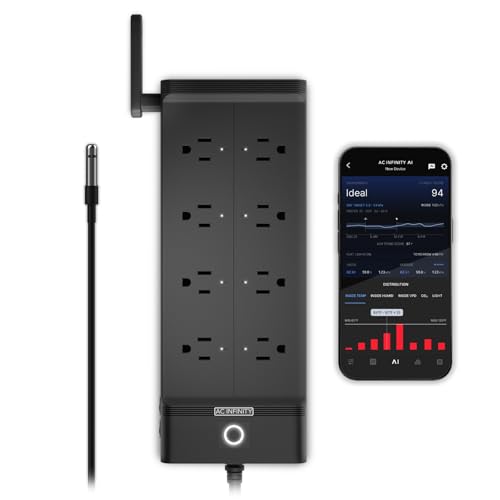
- Eight independently controlled outlets
- Climate triggers, schedules, and AI targeting
- Dual-zone monitoring and surge protection
Best For: Multi-device aquarium automation
Best Heater Safety Monitoring

- Dual probes monitor temperature differences
- Dual relays add overheating protection
- Wi-Fi alerts for heater and probe issues
Best For: Dedicated aquarium heater control
Best Smart-Home Integration
Meross Smart Temperature Controller

- Compatible with four major smart-home platforms
- Supports heating, cooling, timers, and schedules
- Includes water-capable sensor and history tracking
Best For: Voice-controlled aquarium and smart-home setups
Best Programmable Lighting Pick
Lominie WiFi LED Light Controller

- Wired, remote, or WiFi control
- Ramp timer and dimming functions
- Daylight, moonlight, sunrise, and sunset modes
Best For: Custom aquarium LED lighting schedules
Best Smart Power Management
AC Infinity Outlet AI Controller

- Four independently controlled smart outlets
- WiFi app with alerts and data charts
- Supports heaters, lights, fans, CO₂ systems, and pumps
Best For: Multi-device aquarium automation
Best Simple Temperature Control
Inkbird ITC308S Aquarium Thermostat
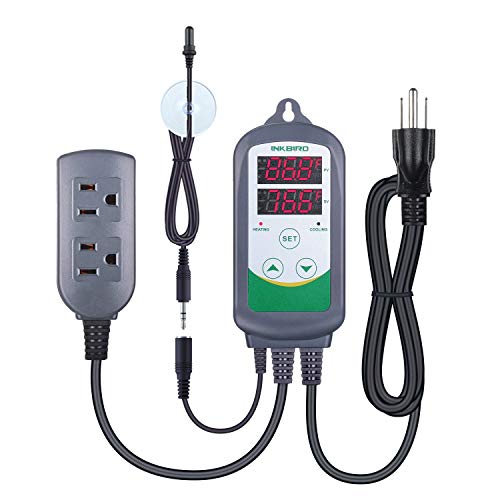
- Controls heating and cooling outlets
- Fully submersible aquarium probe
- Dual display with temperature alarms
Best For: Basic aquarium heater and fan control
Best Smart Water-Level Automation
Tuya WiFi Water Level Controller

- Four fill and drain operating modes
- App alerts with remote monitoring
- Three probes and a 5-meter cable
Best For: Automated clean-water filling, draining, and level alerts
Best Dual-Stage Aquarium Temperature Control
Inkbird ITC-308S Aquarium Temperature Controller

- Controls heating and cooling together
- High, low, and sensor-failure alarms
- LCD shows measured and target temperatures
Best For: Freshwater, saltwater, coral, and tropical aquariums
Best High-Power Smart Temperature Switch
eWeLink 16A WiFi Temperature Controller

- Remote app and voice control
- Waterproof temperature probe included
- Automatic modes, timers, and history
Best For: Connected aquarium heating with scheduling and remote monitoring
Best All-Around Temperature Control – Inkbird WiFi ITC-308
The Inkbird WiFi ITC-308 is a practical choice for aquarium keepers who want remote temperature management without a complicated setup. Its 2.4 GHz Wi-Fi connection lets you monitor and adjust settings in the INKBIRD app, while dual relay outputs handle heating and cooling equipment.
Best For: Aquarium keepers who need remote heating and cooling control.
Pros:
- Supports remote control through iOS and Android devices.
- Dual relay outputs automatically switch heating and refrigeration equipment.
- High- and low-temperature alarms can flag unsafe readings or sensor problems.
- Plug-and-play design supports Celsius, Fahrenheit, and temperature calibration.
Cons:
- Requires a 2.4 GHz Wi-Fi connection for app control.
- Maximum output load is 1100W at 110V.
For shoppers comparing wifi aquarium controllers, the ITC-308 offers a straightforward balance of app access, alarms, and two-way temperature control. It is especially useful when both heating and cooling equipment need coordinated operation.
Best Multi-Device Automation – AC Infinity Outlet AI+
The AC Infinity Outlet AI+ expands wifi aquarium controllers beyond a single thermostat by giving you independent control of eight outlets. Its app supports schedules, timers, climate triggers, alerts, and AI targeting for coordinating equipment such as heaters, lights, fans, and water pumps.
Best For: Aquariums with several devices that need coordinated automation.
Pros:
- Provides independent control of eight smart outlets.
- Supports climate triggers, schedules, timers, and AI-based targeting.
- Offers dual-zone temperature and humidity monitoring with VPD tracking.
- Includes real-time alerts, data charts, surge protection, and an 1800W capacity.
Cons:
- Optional CO₂, hydro, and soil sensors are sold separately.
- Its broader feature set may be more than needed for a simple heater-only setup.
This is a strong fit when aquarium automation involves multiple connected devices rather than temperature alone. The eight individually managed outlets provide room to build a more integrated setup, while the app adds monitoring and notification tools.
Best Heater Safety Monitoring – Inkbird ITC-306A
The Inkbird ITC-306A is a heater-focused option for aquarium owners who want Wi-Fi alerts and added temperature protection. It uses two probes, dual relays, and app notifications to help identify overheating, probe differences, or a heater that cannot reach the selected temperature.
Best For: Aquariums that need dedicated heater control and probe redundancy.
Pros:
- Dual relays can shut off the connected heater when overheating is detected.
- Two probes provide added monitoring and trigger an alarm if readings differ by over 3°C.
- Supports heating-time settings from 1 to 72 hours with timeout alerts.
- Plug-and-play design supports heaters up to the stated 1100W capacity.
Cons:
- Designed for heater control rather than heating and cooling.
- Temperature setting range is limited to 20°C–35°C (68°F–95°F).
Among wifi aquarium controllers, the ITC-306A stands out for heater-specific safeguards rather than broad equipment control. Its dual-probe design and overheating protections are useful for aquarium setups where stable heating is the main concern.
Best Smart-Home Integration – Meross Smart Temperature Controller
The Meross Smart Temperature Controller combines Wi-Fi temperature control with compatibility across Apple Home, Alexa, Google Home, and SmartThings. Its water-capable stainless steel sensor, scheduling tools, temperature history, and 15A output make it a flexible option for aquarium and general heating or cooling applications.
Best For: Aquarium keepers who want voice control and smart-home automation.
Pros:
- Works with Apple Home, Alexa, Google Home, and SmartThings.
- Supports heating and cooling equipment with a 15A, 1800W maximum load at 120V.
- Offers schedules, countdown and cycle timers, temperature history, and energy monitoring.
- Includes a 79-inch stainless steel sensor for water placement and sensor-failure alerts.
Cons:
- The display can turn off after extended inactivity and must be reactivated.
- Its default control range reaches 95°F unless modified in the Meross app.
- Smart-home features may be unnecessary for a basic aquarium thermostat.
The Meross is a compelling choice for shoppers who want wifi aquarium controllers to fit into an existing smart-home ecosystem. Its broad platform compatibility and scheduling features add convenience, while compressor protection and power-off memory support connected equipment.
Best Programmable Lighting Pick – Lominie WiFi LED Light Controller
Lominie Programmable WiFi Controller LED Aquarium Lights with Ramp Timer Dimmer APP Remote Control
Check Price On AmazonFor aquarists focused on programmable lighting, this Lominie controller adds flexible control to compatible LED aquarium lights. It supports wired, remote, and WiFi control, along with ramp timing, dimming, and multiple lighting modes.
Best For: Aquarium owners who want app-based control and customizable sunrise, daylight, moonlight, and sunset settings.
Pros:
- Offers wired, remote, and WiFi control options.
- Supports programmable ramp timer and dimming.
- Includes daylight, moonlight, sunrise, and sunset modes.
- Compact ABS controller with a one-year manufacturer warranty.
Cons:
- Designed for compatible LED aquarium lights rather than general aquarium equipment.
- The power source is corded electric.
This is a focused lighting controller rather than an all-purpose aquarium automation hub. Its strongest advantage is giving users several control methods and detailed timing options for LED lighting.
Best Smart Power Management – AC Infinity Outlet AI Controller
Among wifi aquarium controllers, the AC Infinity Outlet AI is suited to setups that need coordinated control of several devices. Its four independently managed outlets can run schedules, timers, climate triggers, or AI-based programs through the app.
Best For: Aquariums and mixed environments using multiple heaters, lights, fans, pumps, or other compatible outlet devices.
Pros:
- Provides independent control of four smart outlets.
- Works with heaters, lights, fans, CO₂ systems, and water pumps.
- Offers WiFi access, alerts, data charts, guides, and AI-powered insights.
- Includes dual-zone temperature and humidity monitoring with 1800W maximum capacity.
Cons:
- Optional CO₂, hydro, and soil sensors are sold separately.
- The feature set may be more extensive than needed for a simple aquarium setup.
This model stands out when aquarium equipment needs to work together rather than being controlled individually. Its four outlets and climate-focused app features provide broader automation than a lighting-only controller.
Best Simple Temperature Control – Inkbird ITC308S Aquarium Thermostat
The Inkbird ITC308S is a straightforward temperature controller for aquarium heating and cooling. Its fully submersible probe, dual display, and separate heating and cooling outlets make it a practical option for maintaining a set water temperature.
Best For: Aquarists who need simple on/off temperature control for a heater and cooling fan.
Pros:
- Controls both heating and cooling equipment.
- Uses a fully submersible aquarium probe.
- Displays measured and set temperatures simultaneously.
- Includes temperature calibration, over-temperature, and sensor-fault alarms.
Cons:
- Uses on/off temperature control rather than advanced proportional control.
- It is not described as WiFi-enabled, so remote app control is not included in the supplied specifications.
- Maximum output load is 1200W at 110V.
This is a good fit for buyers prioritizing dependable, uncomplicated temperature management over connected features. The submersible probe and heating-and-cooling outlets keep the system focused on core aquarium temperature control.
Best Smart Water-Level Automation – Tuya WiFi Water Level Controller
For aquarium keepers who need more than basic monitoring, this Tuya-based unit adds WiFi water-level control to a fill or drain setup. It supports app-based monitoring, pump control, and high- or low-level alerts, though it is intended for clean water and requires a compatible pump.
Best For: Aquariums, tanks, ponds, and other clean-water setups needing automated filling, draining, or overflow alerts.
Pros:
- Offers auto-fill, auto-drain, timed-fill, and timed-drain modes.
- Provides remote monitoring and push notifications through the Tuya or Smart Life app.
- Includes three probes with a 5-meter cable for flexible installation.
- Connects directly to 2.4GHz WiFi without a hub.
Cons:
- Designed specifically for clean water, so probe maintenance is important.
- Requires a separate compatible water pump for filling or draining.
- Additional text or phone-call alerts may require a paid option.
This is the most capable option here for managing aquarium water level rather than temperature. Its four operating modes and remote alarms make it useful for setups where overflow prevention or maintaining a minimum level matters.
Best Dual-Stage Aquarium Temperature Control – Inkbird ITC-308S Aquarium Temperature Controller
The Inkbird ITC-308S is a practical alternative to app-based wifi aquarium controllers when dependable local temperature regulation is the priority. It can operate heating and cooling equipment at the same time and displays both the measured and target temperatures.
Best For: Freshwater, saltwater, coral, tropical-fish, and ornamental-shrimp aquariums requiring heating and cooling control.
Pros:
- Controls heating and cooling devices simultaneously.
- Includes high- and low-temperature alarms plus a sensor-failure alarm.
- Supports Celsius and Fahrenheit readings on a dual-display LCD.
- Offers corrosion protection suitable for freshwater and saltwater aquarium environments.
Cons:
- It is not a WiFi or smartphone-connected controller.
- Maximum output is limited to 1,200 watts at 110 volts.
- Requires separate heating and cooling equipment.
Choose this model if temperature stability matters more than remote access. Its dual-stage design is particularly useful for aquariums that need a heater in cooler conditions and cooling equipment when temperatures rise.
Best High-Power Smart Temperature Switch – eWeLink 16A WiFi Temperature Controller
This eWeLink temperature controller brings WiFi access, scheduling, and voice-control compatibility to aquarium heating equipment. With a waterproof probe and automatic temperature-range switching, it suits keepers who want app-based control and monitoring from a compact unit.
Best For: Aquarium owners who want remote temperature control, schedules, and compatibility with Alexa or Google Home.
Pros:
- Supports 2.4GHz WiFi and remote control through the eWeLink or Smart Life app.
- Includes a waterproof DS18B20 temperature probe.
- Offers automatic, manual, countdown, scheduled, and loop-timer modes.
- Rated for up to 16 amps and 3,500 watts at the stated voltage range.
Cons:
- The probe measures temperature but not humidity.
- Its relay-module design may require more setup than a plug-in controller.
- The supplied notes do not describe simultaneous heating-and-cooling control.
This is a strong fit for connected aquarium setups that benefit from remote status checks, temperature history, and automation. It also offers more flexible scheduling than a basic thermostat, provided the installation matches your equipment and electrical requirements.
How We Picked the Best Wifi Aquarium Controllers
We focused on controllers that offer practical remote access, dependable sensing, and useful aquarium-specific automation. The lineup includes dedicated heater and cooling thermostats, smart power strips, lighting controllers, and water-level monitors so different aquarium setups are represented.
We also considered probe design, heating and cooling support, outlet capacity, scheduling, mobile-app functionality, smart-home compatibility, and whether each device is better suited to freshwater, saltwater, reef, or general aquarium use. Always confirm electrical ratings and environmental limitations before connecting equipment.
Quick Comparison
| Controller type | Best suited for | What to check |
|---|---|---|
| Temperature controller | Heaters, fans, and chillers | Heating-only or dual-stage operation, probe placement, and temperature range |
| Smart power strip | Multiple aquarium devices | Outlet count, independent control, total wattage, and scheduling |
| Lighting controller | Programmable aquarium LEDs | Light compatibility, ramp timing, dimming, and app controls |
| Water-level controller | Auto-fill, drain, or overflow monitoring | Sensor type, pump compatibility, fail-safes, and alert options |
Key Buying Factors for Wifi Aquarium Controllers
Temperature Control and Probe Design
For heaters, choose a controller with a probe designed for continuous immersion and a clear temperature display or app readout. Dual-stage models can control heating and cooling independently, while heating-only units are simpler for tanks that do not need active cooling. A two-probe design may provide additional monitoring or redundancy, but verify how the manufacturer assigns each probe.
Power Capacity and Outlet Layout
Check the controller’s voltage, amperage, and wattage limits against every connected device. Aquarium heaters can draw substantial power at startup, and a power strip’s total rating may differ from the rating of an individual outlet. Separate outlet control is valuable when you want to schedule lights, pumps, or aeration independently.
App, Alerts, and Smart-Home Support
A reliable app should show current readings, support schedules, and notify you when temperatures or water levels move outside safe limits. Compatibility with platforms such as Apple HomeKit can simplify broader home automation, but native aquarium controls may still be more useful for temperature thresholds and equipment routines.
Safety and Installation
Use drip loops, keep plugs and controllers protected from splashes, and position probes where they measure representative tank water rather than direct heater output. Smart control does not replace a properly sized heater, mechanical fail-safe, or regular inspection. For auto-fill and drain systems, look for overflow protection and test the setup while you are present.
Who Should Buy Which Wifi Aquarium Controllers?
- For straightforward heater protection: Choose a dedicated Inkbird-style aquarium thermostat with a clear display and suitable probe.
- For heating and cooling: Pick a dual-stage temperature controller if your tank uses a fan or chiller as well as a heater.
- For several connected devices: A smart power strip is the better fit when you need separate control of lights, pumps, and other equipment.
- For programmable LEDs: Use a lighting controller that explicitly supports your fixture and provides ramping or dimming.
- For evaporation management: Consider a WiFi water-level controller, prioritizing sensor reliability and overflow safeguards.
- For smart-home integration: Select a model compatible with the platform you already use, while confirming that aquarium-specific alerts are available.