Choosing the right diffuser can make a low-pressure CO₂ setup more consistent, efficient, and easier to maintain. The best option depends on your tubing, tank size, flow rate, and preferred installation style.
This roundup compares 10 aquarium CO₂ diffusers for low-pressure systems, from compact in-tank atomizers to external inline models designed to keep equipment out of sight.
Best 10 Aquarium Co2 Diffusers for Low Pressure Systems Picks for 2026
Best External Inline Pick
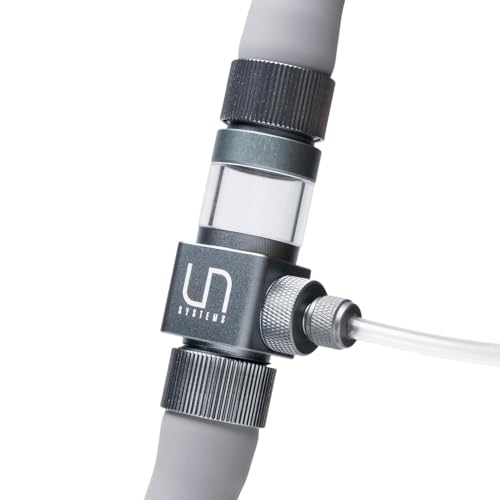
- External installation keeps the tank uncluttered
- Aluminum body with accessible ceramic plate
- Available for 12mm, 16mm, and 20mm tubing
Best For: Canister-filter planted tanks needing an inline diffuser
Best Fine-Mist Glass-Style Pick

- Operates from 20 PSI; above 25 PSI recommended
- Customized ceramic produces fine CO2 mist
- Three sizes cover different tank volumes
Best For: Visible in-tank diffusion on low-pressure CO2 setups
Best Stainless Steel High-Pressure Option

- 304 stainless steel body with one-piece tube
- Integrated check valve helps prevent backflow
- Requires 42 PSI minimum and 50–70 PSI recommended
Best For: High-pressure systems serving small or shallow tanks
Best Built-In Check Valve Pick

- Ultra-fine bubbles from a micro-pore ceramic disc
- Built-in check valve and bubble-counter chamber
- Includes syringe, suction cup, and tubing
Best For: In-tank planted setups needing visible CO2 monitoring
Low-Flow Inline Pick
LINLAN Center-Disc CO2 Diffuser
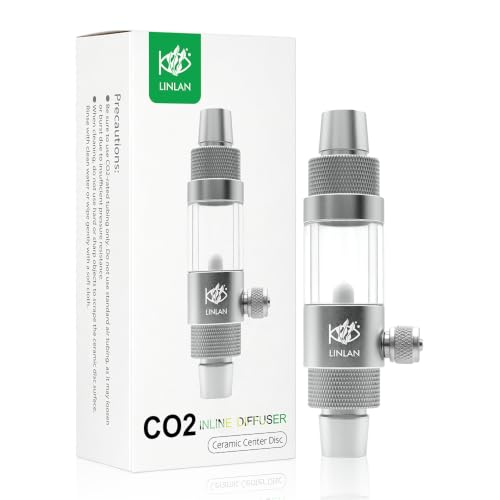
- Designed for low- and medium-flow systems
- External installation saves tank space
- Fits 5/8-inch (16mm ID) filter hose
Best For: Low- to medium-flow planted tanks
Visible Bubble-Counter Choice
Acrylic CO2 Diffuser with Bubble Counter

- Includes an integrated bubble counter
- Needs at least 14 PSI for optimal operation
- Fits 4/6mm CO2 tubing
Best For: Pressurized setups needing bubble monitoring
High-Flow External Option
FZONE Aluminum Inline Diffuser

- Claims up to 70% CO2 diffusion efficiency
- External aluminum design saves tank space
- S size fits 1/2-inch ID tubing
Best For: Medium to large tanks with strong filtration
Quiet Nano-Bubble Pick

- Produces small, dense CO2 bubbles
- Durable, corrosion-resistant acrylic body
- Includes a secure suction cup
Best For: Small aquariums and aquaponic tanks needing simple acrylic diffusion
Premium Glass Choice

- Creates fine, even CO2 bubbles
- Includes U-tube, check valve, and two suction cups
- Designed for systems with at least 14 PSI
Best For: Small pressurized aquariums where fine diffusion and included fittings matter
Compact Low-Pressure Design

- Compact body saves aquarium space
- High-efficiency super atomization design
- Includes buckle and suction cup
Best For: Space-conscious aquarium setups needing a simple acrylic atomizer
Best External Inline Pick – UNS Pro Inline CO2 Diffuser
For aquarium co2 diffusers for low pressure systems, the UNS Pro is an external inline option that keeps equipment out of the tank. It installs on a filter return line and uses a side-mounted ceramic plate designed to preserve water flow while diffusing CO2.
Best For: Planted aquariums using 12mm canister-filter tubing, including compatible UNS Delta and Blitz setups.
Pros:
- Installs outside the aquarium for a cleaner aquascape.
- Aluminum construction is corrosion-resistant and durable.
- Side-mounted ceramic plate is designed for strong flow and easier access.
- Available in 12mm, 16mm, and 20mm sizes.
Cons:
- Requires an appropriately sized external filter return line.
- Does not provide an in-tank visual bubble counter.
This is a practical choice when you want discreet CO2 diffusion and straightforward maintenance. Confirm your tubing size before ordering.
Best Fine-Mist Glass-Style Pick – Fzone Neo CO2 Diffuser
The Fzone Neo is a compact choice among aquarium co2 diffusers for low pressure systems, requiring only 20 PSI to operate and recommending pressure above 25 PSI. Its customized Korean ceramic produces a fine mist, while the clear acrylic construction makes operation easy to observe.
Best For: Small to large planted tanks that need size-specific CO2 output and an in-tank diffuser with visible bubble action.
Pros:
- Fine-pore ceramic is designed for thorough bubble diffusion.
- Works with all CO2 systems, including DIY setups, according to the supplied specifications.
- Clear acrylic construction is easier to handle than glass during maintenance.
- Three sizes match different tank volumes and bubble rates.
Cons:
- Recommended pressure is above 25 PSI, despite the 20 PSI minimum.
- Requires placement inside the aquarium with a suction cup.
Choose the S, M, or L version according to the stated tank-size and bubble-rate guidance. This model is appealing when fine mist and visible operation matter more than an external installation.
Best Stainless Steel High-Pressure Option – DC300-20 CO2 Atomizer
The DC300-20 is not a low-pressure diffuser: it needs at least 42 PSI and performs best between 50 and 70 PSI. Its 304 stainless steel body, integrated check valve, and removable ceramic disc make it better suited to aquarists who prioritize durability and high-pressure atomization.
Best For: Medium, small, or shallow tanks with a CO2 system capable of reaching the specified high operating pressure.
Pros:
- Durable 304 stainless steel construction is rust-resistant.
- Built-in check valve helps limit backflow when gas shuts off.
- Removable ceramic disc can be cleaned or replaced.
- One-piece steel tube is designed to reduce leak points.
Cons:
- Not suitable for low-pressure systems below 42 PSI.
- Optimal operation requires substantially higher pressure, from 50 to 70 PSI.
- The stainless steel body should not be soaked during cleaning.
For this roundup’s target use, the pressure requirement is the key caveat. Consider it only if your regulator and CO2 source meet its high-pressure specifications.
Best Built-In Check Valve Pick – FZONE Acrylic CO2 Diffuser
The FZONE Acrylic diffuser combines an ultra-fine ceramic disc with a built-in check valve and bubble-counter chamber. For aquarium co2 diffusers for low pressure systems, its clear acrylic body and included installation accessories make it a convenient in-tank option, though the supplied notes do not state a minimum operating pressure.
Best For: Planted aquariums where visible bubble monitoring, backflow protection, and simple installation are priorities.
Pros:
- Micro-pore ceramic disc produces fine, evenly dispersed bubbles.
- Built-in check valve helps protect against reverse water flow.
- Filled chamber functions as a bubble counter.
- Includes a syringe, suction cup, and tubing for setup.
Cons:
- Designed for in-tank installation rather than external filtration.
- The ceramic disc is permanently bonded to the bubble-counter chamber.
- Pressure compatibility should be confirmed because no minimum pressure is provided.
Its integrated monitoring and protection features simplify everyday use. Select the S, M, or L size based on the stated tank-volume ranges, and verify regulator compatibility before purchase.
Low-Flow Inline Pick – LINLAN Center-Disc CO2 Diffuser
For aquarium CO2 diffusers for low pressure systems, the LINLAN inline model is designed around low- and medium-flow filter setups. Its external installation keeps equipment out of the tank while the center ceramic disc creates a fine mist for more even CO2 distribution.
Best For: Planted aquariums using 5/8-inch (16mm ID) filter hose and low- to medium-flow filtration.
Pros:
- Designed to work without requiring high water flow speeds.
- External placement preserves aquascape space and reduces visible equipment.
- Center-positioned ceramic disc produces fine bubbles and promotes uniform diffusion.
- Disc is positioned outside the tank, away from light, to help resist algae and biofilm buildup.
Cons:
- Compatibility is limited to 5/8-inch (16mm ID) filter hose.
- Intended for use with a pressurized CO2 cylinder, rather than an unspecified low-pressure source.
This is the most specifically targeted option for lower-flow filtration. Confirm your hose diameter and CO2 setup before buying, but its external design and low-flow focus make it a practical choice when an in-tank diffuser would be restrictive.
Visible Bubble-Counter Choice – Acrylic CO2 Diffuser with Bubble Counter
Clscea Acrylic CO2 Diffuser with Integrated Bubble Counter for Aquarium Plants (L)
Check Price On AmazonThis acrylic diffuser is a useful option for aquarium CO2 diffusers for low pressure systems when the setup can provide at least 14 PSI of working pressure. Its integrated bubble counter makes CO2 activity easier to observe, while the transparent body offers more durability than glass.
Best For: Pressurized CO2 systems using 4/6mm (3/16-inch ID) tubing and users who want an integrated bubble counter.
Pros:
- Transparent acrylic construction is designed to be less fragile than glass.
- Built-in bubble counter can record bubbles when filled with water.
- Injection-molded ceramic plate is designed to limit large bubbles and increase outlet area.
- Replaceable ceramic plates are available, and a check valve and suction cups are included.
Cons:
- Requires at least 1kg/cm² (14 PSI) working pressure for optimal operation.
- Fits only 4/6mm (3/16-inch ID) CO2 tubing.
- Alcohol should not be used for cleaning because it can damage the acrylic.
Unlike the inline models, this diffuser mounts in the aquarium and adds monitoring directly to the unit. It is a sensible pick for a pressurized setup at or above its stated pressure requirement, especially if replacing the ceramic plate matters to you.
High-Flow External Option – FZONE Aluminum Inline Diffuser
For aquarium CO2 diffusers for low pressure systems that also need to handle stronger filtration, the FZONE inline diffuser offers an external aluminum design and fine-bubble diffusion. It fits 1/2-inch ID tubing in this size and is designed to distribute CO2 through the filter outflow.
Best For: Medium to large planted aquariums with 1/2-inch ID tubing and filter flows that need broad CO2 coverage.
Pros:
- Creates bubbles smaller than 0.1mm and claims up to 70% diffusion efficiency.
- External installation reduces equipment inside the aquarium.
- Aluminum alloy body is designed for durability and corrosion resistance.
- Replaceable ceramic diffuser, hose-locking nuts, and quick-connect fittings support ongoing use.
Cons:
- Requires at least 30 PSI working pressure, so it is not suited to every low-pressure source.
- This S size fits 1/2-inch ID tubing; other hose sizes require different versions.
- Its higher-flow focus may be more than a small or gently filtered aquarium needs.
The FZONE is best viewed as a robust external diffuser for systems with adequate pressure and substantial water movement. Check both the 30 PSI requirement and tubing size carefully, since those specifications determine whether its efficiency-focused design is appropriate for your setup.
Quiet Nano-Bubble Pick – Acrylic CO2 Diffuser
For aquarium CO2 diffusers for low pressure systems, this acrylic model is a compact option focused on producing small, dense bubbles. Its clear, corrosion-resistant construction and included suction cup suit smaller fish tanks, home aquariums, and aquaponic nutrient tanks.
Best For: Aquarists wanting a quiet acrylic diffuser with dense bubble output and simple suction-cup mounting.
Pros:
- Produces small, dense bubbles to help CO2 dissolve more effectively.
- Acrylic construction is durable, corrosion-resistant, and transparent.
- Includes a suction cup for secure tank placement.
- Cleaning is straightforward with monthly soaking and light brushing.
Cons:
- The diffuser stone should be cleaned regularly to help prevent clogging.
- The package includes one diffuser and one suction cup, with no additional accessories listed.
This is a practical, low-maintenance choice when you want a compact diffuser and an attractive atomization effect without a glass component.
Premium Glass Choice – Mini Glass CO2 Diffuser
Clscea Aquarium Glass CO2 Diffuser Atomizer with U Tube Check Valve Suction Cup Premium Version
Check Price On AmazonAmong aquarium CO2 diffusers for low pressure systems, this mini glass atomizer is designed for pressurized CO2 setups and small tanks. It combines a fine-bubble ceramic piece with a widened U-tube, check valve, suction cups, and protective acrylic storage packaging.
Best For: Small aquarium owners using a pressurized CO2 system and wanting a transparent glass diffuser with included mounting and safety components.
Pros:
- Premium ceramic media produces fine, even bubbles.
- Widened U-tube fits tanks less than 1 inch thick.
- Includes two suction cups and a check valve.
- Protective acrylic storage box helps reduce transportation damage.
Cons:
- Requires at least 14 PSI working pressure for optimal operation.
- The ceramic piece is non-removable and non-replaceable.
- Glass requires more careful handling than acrylic.
This is the most specification-conscious option here: verify your system reaches the stated pressure and that your tank rim is compatible with the U-tube before buying.
Compact Low-Pressure Design – Mini Acrylic CO2 Atomizer
This mini acrylic atomizer is aimed at shoppers comparing aquarium CO2 diffusers for low pressure systems. Its compact footprint, high-efficiency atomization design, and included buckle and suction cup make it convenient for setups where installation space is limited.
Best For: Compact aquarium installations needing a small acrylic atomizer with immediate, accessory-supported setup.
Pros:
- Designed for high-efficiency CO2 atomization and dissolution.
- Compact dimensions help conserve space inside the aquarium.
- Includes a buckle and suction cup for straightforward installation.
- Premium acrylic has a smooth, glossy surface intended for durability.
Cons:
- The supplied notes do not specify a PSI operating range.
- The package contents are limited to the atomizer, buckle, and suction cup.
Choose this model when a small footprint and easy installation are higher priorities than detailed pressure specifications; confirm tubing compatibility with your particular system before installation.
How We Picked the Best Aquarium Co2 Diffusers for Low Pressure Systems
We focused on diffuser designs suited to lower-pressure aquarium CO₂ setups, weighing gas dissolution, bubble fineness, installation method, compatibility, visibility, maintenance, and construction. The selection includes inline aluminum and acrylic models, glass atomizers, stainless steel designs, and compact nano options.
We also considered practical details such as tubing size, integrated check valves, viewing windows, removable ceramic discs, bubble counters, and whether a diffuser is better suited to a canister-filter return line or direct placement inside the aquarium.
Quick Comparison
| Diffuser type | Best for | Main advantage | Watch for |
|---|---|---|---|
| Inline aluminum | Clean planted-tank setups | Stays outside the aquarium | Requires compatible tubing and filter flow |
| Inline acrylic | Budget-conscious users | Lightweight and easy to inspect | May be less durable than metal |
| Glass atomizer | Visible fine mist | Compact, attractive design | More fragile and needs careful cleaning |
| Stainless steel | Long-term durability | Strong, corrosion-resistant body | Can be harder to see during adjustment |
| Nano or mini diffuser | Small aquariums | Compact footprint | Limited capacity for larger tanks |
Key Buying Factors for Aquarium CO₂ Diffusers for Low-Pressure Systems
Pressure and Tubing Compatibility
Confirm that the diffuser is designed to work with your regulator and low-pressure output. Check the required tubing inner diameter and connector size before buying. Inline products must also match the hose connected to your filter or pump.
Diffusion Efficiency
Fine bubbles generally dissolve more efficiently than large bubbles, but efficiency also depends on water movement, tank depth, CO₂ pressure, and diffuser placement. A viewing window or visible ceramic disc can make performance easier to monitor.
Inline Versus In-Tank Installation
Inline diffusers keep equipment outside the aquarium and can produce excellent circulation through the return line. In-tank glass, acrylic, and stainless steel atomizers are usually easier to add to an existing setup and do not require modifying the filter tubing.
Maintenance and Durability
Ceramic discs gradually clog with algae and mineral deposits. Removable discs and accessible designs simplify cleaning. Glass offers a polished appearance but needs careful handling, while aluminum, acrylic, and stainless steel are typically better suited to users who prioritize toughness.
Who Should Buy Which Aquarium Co2 Diffusers for Low Pressure Systems?
- Choose an inline aluminum diffuser if you want a discreet setup with efficient external diffusion on a canister-filter system.
- Choose an acrylic inline model if you want a lighter, often more affordable alternative with easy visual inspection.
- Choose a glass diffuser for a minimalist planted tank where appearance and fine mist matter most.
- Choose stainless steel if durability, corrosion resistance, and a low-profile look are higher priorities than transparency.
- Choose a mini or nano diffuser for a small aquarium, shrimp tank, or limited-space installation.
- Choose a diffuser with a built-in check valve or bubble counter if you want simpler setup and fewer separate components.
Before ordering, verify the recommended tank size, hose diameter, regulator pressure, and filter flow. Correct sizing is just as important as the diffuser material when tuning a stable low-pressure CO₂ system.