Choosing the right CO2 diffuser can make planted-aquarium maintenance easier and CO2 delivery more consistent. Models in this roundup range from compact acrylic units to external inline atomizers for canister-filter systems.
Use the comparison and buying advice below to match diffuser size, connection type, bubble-counter design, and maintenance needs to your aquarium setup.
Best 10 Aquarium Co2 Diffusers with Bubble Counters Picks for 2026
Best Inline Efficiency
External Inline CO2 Diffuser with Bubble Counter
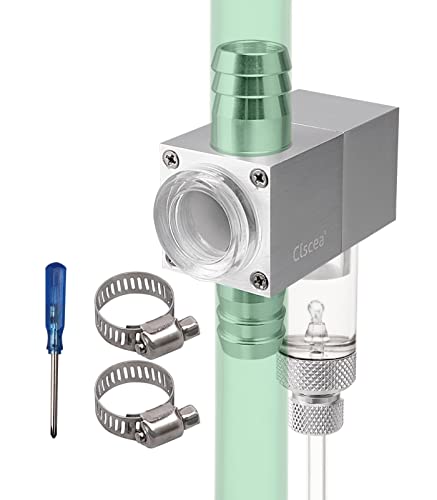
- External design preserves tank space
- Built-in check valve prevents backflow
- Fits 16/22mm hose in this version
Best For: Canister-filter planted aquariums
Best for Small Tanks
Fzone Neo S CO2 Diffuser with Bubble Counter

- Fine-mist ceramic diffusion
- Rated for tanks up to 13 gallons
- Includes suction cup and clear counter
Best For: Nano and small planted aquariums
Best Standalone Bubble Monitoring
Crystal Glass CO2 Bubble Counter

- Highly transparent glass for viewing bubbles
- Includes a securing suction cup
- Designed as a visible CO2 output gauge
Best For: Monitoring an existing CO2 setup
Best for Larger Tanks
Fzone Neo L CO2 Diffuser with Bubble Counter

- Rated for tanks 32 gallons and larger
- Supports output above 3 bubbles per second
- Fine-mist ceramic with clear counter
Best For: Large planted aquariums
Reliable Flow Check
Single-Head CO2 Bubble Counter

- Built-in check valve helps prevent back-siphoning
- Durable aluminum-alloy and PC construction
- Fits 4/6mm CO2 tubing
Best For: Straightforward bubble-rate monitoring and hose protection
Easy Refill Design

- Refill through a fill hole without disassembly
- Includes a water injector syringe
- Modular design supports cleaning and replacement
Best For: Low-maintenance planted-aquarium CO2 setups
Integrated Diffusion
Acrylic CO2 Diffuser with Counter

- Combines diffuser and bubble counter in one unit
- Replaceable ceramic plate supports fine bubbles
- Includes check valve and mounting accessories
Best For: Pressurized planted aquariums using 4/6mm tubing
Versatile 4-in-1 Pick

- Combines atomization, bubble counting, air intake, and a check valve.
- Impact-resistant polycarbonate construction.
- Designed for 12- to 47-inch planted tanks.
Best For: All-in-one planted-tank CO2 setups
Safety-Focused Choice
Pawfly CO2 Diffuser with Bubble Counter

- Replaceable ceramic disc creates fine, even bubbles.
- Built-in counter supports easy CO2 flow monitoring.
- Anti-reverse device helps prevent back siphoning.
Best For: Pressurized planted tanks needing added backflow protection
Replaceable-Plate Option
Acrylic CO2 Diffuser with Counter
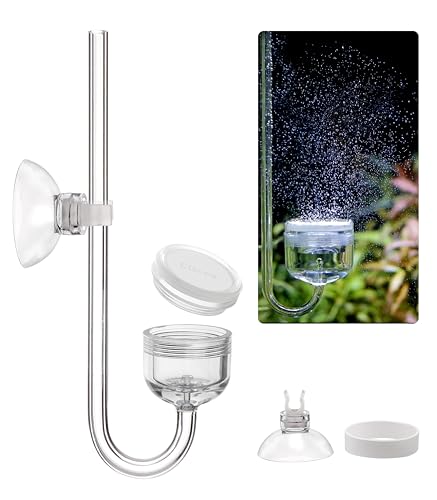
- Durable, transparent acrylic construction.
- Integrated bubble recorder with water-filled cup.
- Replaceable ceramic plate and 4/6 mm tubing fit.
Best For: Pressurized CO2 systems prioritizing serviceability
Best Inline Efficiency – External Inline CO2 Diffuser with Bubble Counter
For planted tanks using a canister filter, this aquarium CO2 diffuser with bubble counter keeps the diffuser outside the aquarium while providing a visible bubble-counting window. Its inline design is intended to preserve filter flow and dissolve CO2 efficiently.
Best For: Planted aquariums with compatible 16/22mm canister-filter hose connections.
Pros:
- External installation saves space inside the tank.
- Supports horizontal or vertical connections.
- Built-in check valve helps prevent water backflow.
- Removable diffuser disk can be cleaned or replaced.
Cons:
- Requires connection to a compatible filter.
- The listed version fits 16/22mm hose.
This is a practical choice when you want a neat, out-of-tank setup and clear visibility into diffuser operation. Confirm hose sizing and filter compatibility before ordering.
Best for Small Tanks – Fzone Neo S CO2 Diffuser with Bubble Counter
This aquarium CO2 diffuser with bubble counter uses a fine-pored ceramic disk to produce a fine mist and support CO2 saturation. The S model is rated for approximately 1–2 bubbles per second and aquariums up to 13 gallons.
Best For: Smaller planted aquariums up to 13 gallons using a standard or DIY CO2 system.
Pros:
- Customized ceramic produces fine CO2 bubbles.
- Transparent acrylic bubble counter makes output easier to observe.
- Includes a suction cup for corner placement.
- Works with CO2 systems at relatively low pressure.
Cons:
- The S size is intended for smaller aquariums.
- Pressure above 25 PSI is recommended by the manufacturer.
Its compact rating and integrated bubble counter make it a straightforward option for nano and small planted tanks. Match the model to your aquarium size and desired bubble rate.
Best Standalone Bubble Monitoring – Crystal Glass CO2 Bubble Counter
This aquarium CO2 diffuser with bubble counter listing is a standalone bubble-counter component designed to make CO2 output easier to observe. Its transparent crystal glass construction and suction cup suit setups where clear monitoring and secure placement are priorities.
Best For: Aquarists who need a visible external CO2 bubble gauge for monitoring output.
Pros:
- High-transparency glass supports easy bubble observation.
- Grinding-tool production is intended to provide consistent workmanship.
- Includes a suction cup for firm placement.
Cons:
- The supplied notes describe a bubble counter rather than a complete diffuser.
- Glass construction may require careful handling.
Choose this component when your priority is visually tracking bubble output rather than replacing the diffuser itself. Verify that its connections match your existing CO2 system.
Best for Larger Tanks – Fzone Neo L CO2 Diffuser with Bubble Counter
Designed for higher bubble rates, this aquarium CO2 diffuser with bubble counter combines a fine-pored ceramic disk with a clear acrylic counter. The L model is intended for outputs above 3 bubbles per second and aquariums measuring 32 gallons or more.
Best For: Larger planted aquariums needing higher CO2 output and visible bubble monitoring.
Pros:
- Fine ceramic pores help create a thorough mist.
- Integrated acrylic bubble counter is clear and pressure-resistant.
- Suction cup supports secure corner placement.
- Works with standard and DIY CO2 systems.
Cons:
- The L model is oversized for smaller tanks.
- Higher pressure than 25 PSI is recommended.
This model makes the most sense when your aquarium falls within the larger-tank range and your system requires more than 3 bubbles per second. Confirm available pressure and placement space before buying.
Reliable Flow Check – Single-Head CO2 Bubble Counter
For aquarium CO2 diffusers with bubble counters, this single-head model focuses on straightforward flow monitoring and equipment protection. Its screw connection works with many CO2 needle valves, while the built-in check valve helps prevent back-siphoning.
Best For: Aquarists who want a durable, easy-to-install bubble counter for 4/6mm CO2 tubing.
Pros:
- Built-in check valve helps prevent water from traveling back into the air line.
- Aluminum-alloy ends and a pressure-resistant PC cylinder provide a robust design.
- Designed to help monitor and maintain a consistent airflow rate.
- Compatible with 4/6mm (3/16-inch inner diameter) CO2 tubing.
Cons:
- Must be filled about three-quarters with water before use.
- This is a bubble counter rather than a complete diffuser.
Choose this option when durability and simple bubble-rate visibility matter more than integrated diffuser construction. Its conventional setup is practical for many pressurized CO2 systems.
Easy Refill Design – Modular CO2 Bubble Counter
Among aquarium CO2 diffusers with bubble counters, the LINLAN modular counter stands out for maintenance convenience. Its quick-fill module lets you add water through a fill hole with the included syringe, so routine refilling does not require disassembly.
Best For: Planted-aquarium keepers who prioritize fast refills, modular cleaning, and continued CO2 operation during topping up.
Pros:
- Refill through the dedicated fill hole without taking the counter apart.
- Included injector allows water to be added without turning off the CO2.
- Modular parts can be detached for cleaning or individual replacement.
- Built-in check valve helps protect equipment from backflow.
Cons:
- Its 3/16-inch tubing compatibility and M10x1 male-thread connections may require matching fittings.
- Listed starting pressure is up to 3 bar for CO2 and 1.5 bar for oxygen.
This is a convenience-focused choice for users tired of disassembling a bubble counter for water top-ups. Confirm your tubing and connector specifications before ordering.
Integrated Diffusion – Acrylic CO2 Diffuser with Counter
Clscea Acrylic CO2 Diffuser with Integrated Bubble Counter for Aquarium Plants (L)
Check Price On AmazonThis integrated unit combines CO2 diffusion and bubble counting in one aquarium component. The acrylic body is designed to be more durable than glass, while its injection-molded ceramic plate supports finer bubbles and can be replaced when needed.
Best For: Pressurized CO2 aquarium systems needing an integrated diffuser and bubble counter for 4/6mm tubing.
Pros:
- Combines a diffuser, bubble counter, suction cups, check valve, and anti-slip ring.
- Transparent acrylic is less fragile than glass.
- Injection-molded ceramic plate is designed to limit large bubbles and increase outlet area.
- Replacement ceramic plates are available.
Cons:
- Requires at least 1kg/cm² (14 PSI) working pressure for optimal operation.
- Acrylic should not be cleaned with alcohol.
- Fits 4/6mm tubing, so other hose sizes may need an adapter.
For shoppers seeking aquarium CO2 diffusers with bubble counters rather than a standalone counter, this integrated design is the most complete option here. Its pressure requirement makes it better suited to a pressurized system than a low-pressure setup.
Versatile 4-in-1 Pick – Compact U-Shape CO2 Diffuser
For shoppers comparing aquarium co2 diffusers with bubble counters, this compact 4-in-1 model combines ultramicropore atomization, a U-shape air intake, bubble counting, and a check valve in one unit. Its polycarbonate construction is designed to resist impact, discoloration, and deformation.
Best For: Planted tanks from 12 to 47 inches that need an integrated diffuser, bubble counter, and backflow protection.
Pros:
- Combines four functions in a single compact diffuser.
- Polycarbonate material offers impact resistance and avoids glass fragility.
- Listed as compatible with all sizes of N.P.T. setups.
Cons:
- Its stated coverage starts at 12-inch planted tanks, so it may be oversized for smaller aquariums.
- The supplied specifications do not identify whether the diffusion cartridge is replaceable.
This is a practical all-in-one option when minimizing separate CO2 components matters. Its compact 1.57-inch dimensions and integrated safety features make it suited to straightforward home planted-tank installations.
Safety-Focused Choice – Pawfly CO2 Diffuser with Bubble Counter
This Pawfly model is a strong contender among aquarium co2 diffusers with bubble counters, pairing a replaceable ceramic disc with a built-in anti-reverse device. It is designed to produce fine bubbles while making CO2 flow easier to monitor.
Best For: 11- to 47-inch planted aquariums using a pressurized CO2 generator that can provide at least 14 PSI.
Pros:
- Replaceable ceramic disc and double-seal outlet are designed for fine, even bubbles.
- Built-in bubble counter helps monitor and adjust diffusion speed.
- Anti-reverse device helps prevent back siphoning and related equipment damage.
- Clear polycarbonate construction resists cracking, fading, and deformation.
Cons:
- Requires a minimum working pressure of 14 PSI.
- Needs a 24-hour soak before first use, and fine bubbles may take 2 to 7 days to develop.
Choose this diffuser if startup preparation and pressure requirements fit your equipment. Its visible bubble counter, replaceable disc, and backflow protection provide useful control for routine planted-tank maintenance.
Replaceable-Plate Option – Acrylic CO2 Diffuser with Counter
Clscea Acrylic CO2 Diffuser with Integrated Bubble Counter for Aquarium Plants (S)
Check Price On AmazonFor aquarium co2 diffusers with bubble counters, this acrylic model offers an integrated bubble recorder and a replaceable ceramic plate. Its injection-molded plate and enlarged outlet area are designed to support fine bubbles and efficient CO2 dissolution.
Best For: Pressurized CO2 systems using 4/6 mm tubing and requiring a durable, glass-like diffuser with replaceable internals.
Pros:
- Acrylic construction is transparent like glass while being less fragile.
- Built-in bubble counter records bubbles after water is added to the cup.
- Replaceable ceramic plate and a larger effective outlet area support long-term use.
- Fits 4/6 mm, or 3/16-inch inner-diameter, CO2 tubing.
Cons:
- Requires at least 14 PSI for optimal operation.
- Alcohol should not be used to clean the acrylic.
- Designed for pressurized systems rather than unspecified or low-pressure setups.
This is a sensible choice for aquarists who want a clear, durable diffuser and the convenience of replacing the ceramic plate instead of replacing the entire unit. Confirm tubing size and system pressure before purchasing.
How We Picked the Best Aquarium Co2 Diffusers with Bubble Counters
We evaluated these Aquarium Co2 Diffusers with Bubble Counters by focusing on the features that affect installation, monitoring, and day-to-day reliability. The selection includes internal and external designs, glass and acrylic construction, ceramic atomizers, integrated check valves, refillable counters, and different hose sizes.
We also considered whether each style suits common planted-aquarium arrangements, including nano tanks, larger displays, and canister-filter systems. Because aquarium hardware compatibility varies, the best choice depends as much on tubing and equipment layout as on diffuser appearance.
Quick Comparison
| Best For | Recommended Style | Why It Helps |
|---|---|---|
| Canister-filter users | External inline diffuser | Keeps equipment outside the display and injects CO2 into the return line. |
| Nano and small tanks | Compact acrylic or small glass diffuser | Takes up less space and is easier to position discreetly. |
| Easy monitoring | Integrated bubble-counter model | Combines visible bubble counting with diffusion in one unit. |
| Fine mist output | High-quality ceramic diffuser | Can produce smaller bubbles when clean and operated at suitable pressure. |
| Low-maintenance refilling | Modular refillable bubble counter | Allows liquid replenishment without fully removing the assembly. |
Key Buying Factors for Aquarium Co2 Diffusers with Bubble Counters
Compatibility and Hose Size
Check the diffuser’s stated tubing diameter before ordering. External inline models must also match the canister-filter hose and return-line configuration. A secure connection is essential because loose CO2 tubing can waste gas or introduce leaks.
Placement and Tank Size
Internal diffusers need a stable mounting point and enough clearance for the ceramic disc or intake. Smaller models are generally easier to hide in nano aquariums, while larger diffusers may offer greater output for bigger planted tanks. Follow the manufacturer’s capacity guidance rather than relying only on visual size.
Bubble Counter and Check Valve Design
A bubble counter helps you monitor changes in CO2 delivery, but bubble rate is only a starting reference. Integrated check valves can help prevent aquarium water from traveling backward into the regulator or tubing. If a model lacks a valve, use an appropriate aquarium CO2 check valve in the line.
Maintenance and Visibility
Ceramic atomizers gradually collect algae and mineral deposits, which can reduce mist output. Choose a design that is easy to remove and clean. Clear glass offers a discreet appearance but may be more fragile; acrylic is typically lighter and more impact-resistant. Refill-friendly counters are useful when you want to minimize disassembly.
Who Should Buy Which Aquarium Co2 Diffusers with Bubble Counters?
Choose an external inline atomizer if you use a compatible canister filter and want a cleaner display with equipment kept outside the aquarium. Choose a compact acrylic or glass diffuser for a nano or moderately sized planted tank where simple suction-cup placement matters most.
For shoppers prioritizing fine mist and a polished appearance, a ceramic-disc glass model is a strong fit, provided you are comfortable with careful handling and regular cleaning. If convenient monitoring is your priority, select an integrated bubble-counter design. For frequent refills or easier servicing, a modular counter with a refill-friendly connection can save time.
Regardless of style, begin with a conservative bubble rate, confirm that the check valve is installed correctly, and watch plant response and livestock behavior when adjusting CO2. Bubble counts are not directly interchangeable between diffusers, so make changes gradually.