Choosing the right CO2 setup can make a big difference in plant growth, algae control, and overall tank stability. The best aquarium CO2 systems balance consistent output, safe operation, and easy adjustment.
In this roundup, we focus on practical options for different tank sizes, budgets, and experience levels so you can find a system that fits your planted aquarium with confidence.
Best 10 Aquarium Co2 Systems Picks for 2026
Dual-Stage Precision Regulator
FZONE Pro Series Dual Stage CO2 Regulator
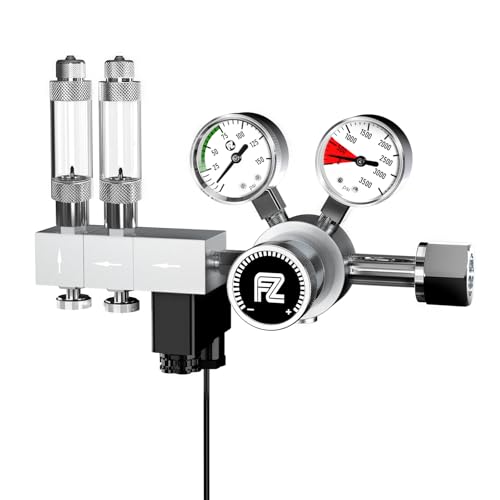
- Dual-stage design helps keep output stable as tank pressure drops.
- Adjustable 0-65 PSI output with precise needle valve control.
- Two manifold blocks can support one or two aquariums.
Best For: Planted tanks needing stable, precise CO2 control
Long-Run CO2 Generator
G700S 4L Double Runtime CO2 System

- 4L-equivalent gas capacity is designed for longer fills.
- Stainless steel filtration helps reduce solenoid clogging.
- Quick-connect fittings make setup faster and easier.
Best For: Users who want fewer refills and easy maintenance
Compact Nano CO2 Kit
FZONE Desktop Aquarium CO2 System

- Slim, portable design is made for small aquariums.
- Disposable 45g cartridge reduces refill hassle.
- Quick-connect tubing setup keeps installation simple.
Best For: Nano and desktop aquariums with limited space
DIY Reactor Kit
2L Aquarium CO2 Generator with Double Solenoid

- Includes bottle, regulator, diffuser, needle valve, and bubble counter.
- 304 stainless steel build is designed for durability and pressure resistance.
- Uses citric acid and baking soda for low-cost refills.
Best For: DIY aquarists wanting a complete refillable CO2 kit
Stainless 2L Generator Kit
2L CO2 Generator System with Regulator

- 2L SUS304 stainless bottle
- Pressure relief and waterproof solenoid
- Timer-ready with built-in check valve
Best For: Users wanting a durable DIY CO2 kit for planted aquariums
Compact Budget Pick
1L Aquarium CO2 Generator G600mini

- Compact 1L size for small tanks
- Cool-running solenoid and fine needle valve
- Low-cost repeated refills
Best For: Small planted tanks and desktop aquariums
Expandable Regulator Option
Upgraded CO2 Regulator with Timer

- Supports two tanks with expansion potential
- Dual-stage pressure and fine needle control
- Timer-ready motorized valve
Best For: Multi-tank setups needing flexible CO2 regulation
Premium All-in-One DIY CO2 Kit
FZONE 2.5L Upgraded Aquarium CO₂ System

- Complete kit with diffuser, tubing, check valve, and adapter
- 304 stainless steel body with thicker construction
- Integrated solenoid, bubble counter, and safety valves
Best For: Planted tanks needing an easy-to-set-up DIY CO2 generator
Long-Run Budget DIY Option
Fzone 2.5 L Aquarium CO2 Generator

- Thicker 1.5 mm SUS304 bottle with high pressure rating
- Precision needle valve and bubble counter for fine control
- 12V DC solenoid supports timer-based injection
Best For: DIY users wanting longer runtime and scheduled CO2 control
High-Capacity Complete Kit
FZONE 5L Upgraded Aquarium CO₂ System
- 5L generator offers more capacity for planted tanks
- Complete accessory bundle included for easier setup
- Thicker 304 stainless steel body with safety valves
Best For: Larger planted aquariums that need more CO2 capacity
Dual-Stage Precision Regulator – FZONE Pro Series Dual Stage CO2 Regulator
This FZONE unit is a strong fit for aquarium co2 systems where stable output and fine control matter. Its dual-stage construction helps keep pressure consistent as the cylinder empties, while the adjustable 0-65 PSI range and integrated needle valve make it easier to dial in a steady bubble rate.
Best For: Planted tanks that need stable, adjustable CO2 delivery and the option to run one or two aquariums.
Pros:
- Dual-stage design helps prevent end-of-tank-dump issues.
- Adjustable output pressure from 0-65 PSI for different setups.
- Two manifold blocks can run independently for one or two aquariums.
- DC solenoid is quiet, low-power, and made for timer use.
Cons:
- Requires a North American CGA320 CO2 cylinder adapter.
- More advanced than a basic single-output regulator.
Overall, this is a practical pick if you want a regulator built around stability and precision rather than simplicity. The safety valve, modular manifold design, and very low bubble adjustment range make it especially appealing for careful planted-tank control.
Long-Run CO2 Generator – G700S 4L Double Runtime CO2 System
If you want aquarium co2 systems with fewer refills, this generator is built around longer runtime and easier upkeep. It uses a 4L-equivalent gas capacity, stainless steel filtration, and a self-cleaning bubble counter to help reduce the clogging issues that can interrupt CO2 flow.
Best For: Aquarists who want a low-refill CO2 setup with maintenance-focused features.
Pros:
- 4L-equivalent capacity is designed for longer use between fills.
- Stainless steel filter helps block debris before it reaches the solenoid.
- Self-cleaning bubble counter flushes valve pathways during refills.
- Quick-connect fittings make tubing changes faster and tool-free.
Cons:
- Raw materials are not included and must be purchased separately.
- Solenoid valve requires regular maintenance to keep working properly.
This system stands out for convenience and repairability, especially if you prefer maintaining components instead of replacing the whole setup. The long runtime claim and clog-prevention features make it a strong choice for users who value lower maintenance frequency.
Compact Nano CO2 Kit – FZONE Desktop Aquarium CO2 System
This compact option is made for aquarium co2 systems in smaller spaces where a full-size tank would be impractical. With a slim regulator, disposable 45g cartridge, and quick-connect tubing setup, it keeps the process simple for nano aquariums.
Best For: Nano and desktop aquariums that need a small, portable CO2 solution.
Pros:
- Small footprint fits desktop and nano aquarium setups.
- Works with 5/8" threaded cylinders and includes a 3/8" adapter.
- Disposable cartridge design reduces refill hassle.
- Quick-connect feature allows fast tubing installation.
Cons:
- Built for smaller tanks rather than larger aquariums.
- Disposable cartridge format may not suit users who prefer refillable systems.
For a small planted tank, this is a practical space-saving choice that prioritizes convenience. The portability and simplified setup make it easier to add CO2 without taking over the tank area or cabinet space.
DIY Reactor Kit – 2L Aquarium CO2 Generator with Double Solenoid
This DIY kit is aimed at aquarium co2 systems that need a complete, budget-conscious reactor setup. It includes a stainless steel bottle, solenoid regulator, diffuser, precision needle valve, and adjustable bubble counter, giving you the core parts needed for a full CO2 installation.
Best For: Aquarium plant keepers who want a complete DIY CO2 kit with refillable ingredients.
Pros:
- Complete kit includes the main components needed for setup.
- 304 stainless steel construction is built for durability and pressure resistance.
- Needle valve and bubble counter support precise micro-adjustments.
- Uses citric acid, baking soda, and water for low-cost refills.
Cons:
- Requires DIY mixing and refilling rather than a plug-and-play cylinder.
- Heavier and bulkier than mini cartridge-based systems.
This model makes sense if you want an all-in-one reactor kit and do not mind the hands-on refill process. The included safety valve, check valve, and sealing-focused construction are useful details for users who want a more complete DIY route.
Stainless 2L Generator Kit – 2L CO2 Generator System with Regulator
If you’re comparing aquarium co2 systems for a planted tank, this 2L generator kit stands out for its stainless-steel build, pressure protection, and included regulator setup. It is designed for users who want a more durable DIY-style system with timer-based control and a bubble counter that includes a built-in check valve.
Best For: Planted aquarium keepers who want a robust 2L CO2 generator kit with safety features and automatic control.
Pros:
- 2L SUS304 stainless steel bottle is built thicker than standard tanks for added durability.
- Includes regulator, precision needle valve, solenoid valve, filter, and bubble counter for a complete setup.
- Automatic pressure relief valve and waterproof solenoid valve add important safety protection.
- Timer-friendly 12V solenoid supports scheduled CO2 injection.
Cons:
- Citric acid and sodium bicarbonate powders are not included and must be purchased separately.
- The motorized valve may make a soft sound when switching on or off.
- The diffuser should be soaked for 24 hours before use, so setup is not instant.
This is a strong pick if you want a safer, more substantial CO2 generator rather than a plastic bottle system. Just be ready to source the refill powders yourself and follow the setup notes carefully.
Compact Budget Pick – 1L Aquarium CO2 Generator G600mini
For smaller setups, this aquarium co2 systems option is aimed at desktop and compact aquariums that need a simple, repeatable source of CO2. The 1L bottle, low-temperature solenoid, and high-precision needle valve make it easy to dial in a light output for tanks with fewer plants.
Best For: Small or desktop planted aquariums that need a compact, low-cost CO2 generator.
Pros:
- Compact 1L size is well suited to limited spaces and easy handling.
- Low-temperature solenoid stays cool during prolonged operation.
- Needle valve can be set to very fine output, around 1 bubble every 4–5 seconds.
- Stainless steel cylinder and filter are designed to be durable, leak-proof, and high-pressure resistant.
Cons:
- Citric acid and baking soda are not included.
- Best suited to smaller tanks, so it may not be the right fit for larger planted aquariums.
- The refill process still requires DIY preparation at home.
This model makes sense if you want a compact system with low running cost and straightforward automation. It is especially appealing for smaller planted aquariums where precise, gentle CO2 delivery matters more than output volume.
Expandable Regulator Option – Upgraded CO2 Regulator with Timer
If you need aquarium co2 systems for more than one tank, this upgraded regulator is built around an expandable manifold and dual bubble counters right out of the box. It also adds dual-stage pressure regulation, a motorized valve with timer support, and a quick-connect layout that simplifies setup on CGA320 CO2 tanks.
Best For: Multi-tank aquarium owners who want a regulator with timer control, precise flow adjustment, and expansion potential.
Pros:
- Expandable manifold design supports two tanks immediately and allows future outlet expansion.
- Dual-stage pressure regulation helps keep output pressure more stable.
- Motorized valve works with a timer for automatic scheduling without continuous heat buildup.
- Dual-gauge layout, quick-connect bubble counter, and check valve make monitoring and setup easier.
Cons:
- Designed for CGA320 CO2 tanks, so compatibility is more specific.
- As a regulator-focused product, it does not include a CO2 cylinder.
- Its feature set may be more than you need for a single small aquarium.
This is the most flexible option in the group if you’re building a more advanced planted setup. It focuses on control, expansion, and reliable scheduling rather than a self-contained generator bottle.
Premium All-in-One DIY CO2 Kit – FZONE 2.5L Upgraded Aquarium CO₂ System
If you want aquarium co2 systems with a more complete setup, this FZONE 2.5L generator is built to cover the basics in one kit. It uses a citric acid and sodium bicarbonate reaction to produce CO2, and it pairs that with a regulator, bubble counter, diffuser, needle valve, and integrated solenoid for controlled injection in planted tanks.
Best For: Planted aquarium owners who want a ready-to-use DIY CO2 system with built-in safety and control features.
Pros:
- Includes the main accessories needed for setup, including diffuser, check valve, tubing, suction cups, and power adapter.
- Food-grade 304 stainless steel body is 50% thicker for added strength and pressure resistance.
- Built-in manual shut-off valve and automatic pressure-relief valve add dual safety protection.
- Upgraded all-in-one solenoid reduces connections and leak risks.
Cons:
- Requires raw materials that are not included.
- DIY mixing and maintenance will still be part of regular use.
Overall, this is a practical all-in-one option for aquarists who want convenience without moving to a traditional refillable cylinder. The combination of included accessories, clearer pressure monitoring, and easier cleaning makes it a strong fit for planted tanks.
Long-Run Budget DIY Option – Fzone 2.5 L Aquarium CO2 Generator
Among aquarium co2 systems, this Fzone 2.5 L generator stands out for its thicker bottle and longer runtime claims. It uses a stainless steel bottle with a regulator, precision needle valve, and bubble counter, and it is designed to run on citric acid and sodium bicarbonate powders that you add separately.
Best For: Aquarists who want a DIY CO2 setup with a thicker bottle, fine control, and timer-friendly solenoid operation.
Pros:
- 1.5 mm SUS304 stainless steel bottle is thicker than average and rated for high pressure.
- Designed to produce CO2 for about 1 month at 1 bps for 8 hours a day with 300–400 g of raw materials.
- Precision needle valve and bubble counter help fine-tune injection.
- 12V DC solenoid can be put on a timer for scheduled CO2 injection.
Cons:
- Required powders are not included.
- Setup is still a DIY system, so it is less plug-and-play than a fully bundled kit.
For buyers focused on runtime and precise adjustment, this model offers a strong balance of durability and control. It is a sensible pick if you are comfortable sourcing the reaction powders separately and want a more timer-ready CO2 generator.
High-Capacity Complete Kit – FZONE 5L Upgraded Aquarium CO₂ System
If you need aquarium co2 systems for a larger planted tank, this FZONE 5L version keeps the same all-in-one approach but adds more capacity. It uses a citric acid and sodium bicarbonate reaction, a regulator, bubble counter, diffuser, precision needle valve, and integrated solenoid to deliver controlled CO2 without needing station refills.
Best For: Planted aquariums that can benefit from a larger-capacity DIY CO2 generator with complete accessories.
Pros:
- 5L size offers more capacity than the smaller 2.5L version.
- Includes diffuser, check valve, U-connector, tubing, suction cups, funnel, syringe, sealing rings, and power adapter.
- Food-grade 304 stainless steel body is 50% thicker for strength and pressure resistance.
- Manual shut-off valve, pressure gauge, and relief valve support safer operation and monitoring.
Cons:
- Raw materials are not included.
- Larger size may take up more space under or beside the aquarium.
This is the most capacity-focused option in the lineup, which makes it a good fit if you want fewer refill cycles and a fuller accessory package. It keeps the same control and safety features as the smaller model while better serving bigger planted setups.
How We Picked the Best Aquarium Co2 Systems
We looked for Aquarium Co2 Systems that offer dependable pressure control, smooth needle-valve adjustment, and useful safety features such as solenoids, check valves, and pressure protection. We also weighed tank compatibility, refill/runtime capacity, and how easy each setup is to install and maintain.
Because planted tanks vary widely, we favored systems that serve different use cases: compact desktop tanks, standard home aquariums, and larger aquascapes that need more runtime and stronger output consistency.
Quick Comparison
Smaller kits are usually better for nano tanks and first-time buyers who want a simpler setup with lower gas volume. Mid-size generators are a strong middle ground for most planted aquariums, offering a balance of runtime and value. Larger systems are better for bigger tanks or for aquarists who want fewer refills and more consistent long-term use.
Key Buying Factors for Aquarium Co2 Systems
Tank Size and Runtime
The first thing to match is CO2 capacity to aquarium size. A system that is too small may need frequent refills, while an oversized system can be more expensive and unnecessary for a nano tank. Look at generator volume, cartridge size, and whether the setup is intended for one tank or expandable use.
Pressure Control and Output Stability
Stable pressure and precise needle-valve control are essential for consistent dosing. Dual-stage regulators and high-precision valves can help reduce fluctuations, which is especially useful for sensitive livestock and demanding plants.
Safety and Automation
Features like solenoid valves, safety valves, and integrated bubble counters add convenience and control. A solenoid is especially helpful if you want CO2 to shut off with a timer at night, while safety components help reduce the risk of overpressure.
Ease of Installation
Check thread compatibility, hose fittings, and whether the kit includes the accessories you need. Some Aquarium Co2 Systems are ready to run out of the box, while others may require extra parts or a more hands-on setup.
Who Should Buy Which Aquarium Co2 Systems?
Beginners usually do best with a complete kit that includes the main accessories and straightforward controls. Experienced aquascapers may prefer a dual-stage or motorized-valve regulator for finer adjustments and better stability. If you have a larger planted tank or want fewer interruptions, choose a higher-capacity generator with longer runtime. For small tanks, a compact desktop system can provide enough CO2 without taking up much space.
No matter which route you choose, the best aquarium CO2 system is the one that matches your tank size, your plant goals, and how much day-to-day maintenance you want to handle.