Keeping an aquarium stable does not have to require expensive automation. The best aquarium controllers under $50 can help regulate temperature, schedule LED lighting, or maintain water levels with less daily effort.
This roundup focuses on practical, budget-friendly controllers for freshwater, saltwater, reef, breeding, and specialty setups. We compare their control functions, sensor designs, connectivity, and installation considerations so you can choose the right level of automation for your tank.
Best 10 Aquarium Controllers Under 50 Picks for 2026
Best All-in-One Temperature Control
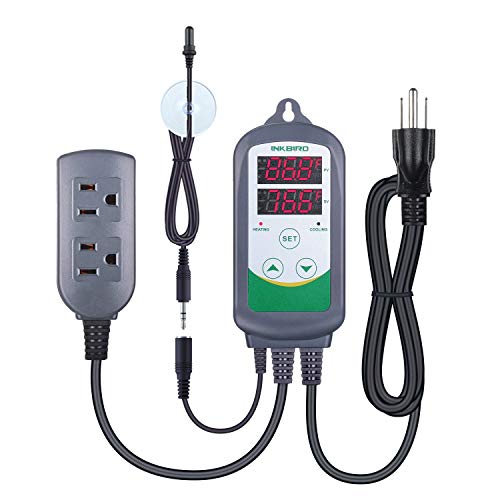
- Controls heating and cooling
- Fully submersible aquarium probe
- Dual temperature display and alarms
Best For: Simple heater-and-fan temperature management
Best Automatic Top-Off System

- Automates evaporation top-offs
- Includes sensor, pump, and controller
- Multiple safety alarms and pause function
Best For: Aquariums and sumps needing automatic water-level control
Best WiFi Heater Controller

- Monitors with two temperature probes
- App notifications for temperature differences
- Dual-relay heater protection
Best For: Heater-only setups needing alerts and safeguards
Best Aquarium Light Timer
Intelligent LED Dimmer Controller

- Controls compatible 12–24V LED lights
- Sunrise and sunset simulation
- LCD display with power-off memory
Best For: Timed dimming of compatible aquarium LED lights
Heating Pick
Inkbird ITC-306T Aquarium Temperature Controller

- Heating-only on/off temperature control
- Day/night temperature scheduling
- Dual displays and sensor-fault alarms
Best For: Simple aquarium heater management
Lighting Pick
LCD Aquarium Light Timer and Dimmer

- 12–24V light compatibility
- Sunrise, sunset, and dimming modes
- Power-off memory with LCD display
Best For: Custom aquarium lighting schedules
Dual-Control Pick
HiTauing S10B Aquarium Thermostat

- Independent heating and cooling outlets
- Seawater-resistant probe for saltwater tanks
- Touch display with wide temperature range
Best For: Freshwater or marine tanks using heaters and chillers
Flexible Lighting Control
Lominie WiFi Aquarium Light Controller

- Wired, remote, and WiFi control
- Ramp timer and dimming functions
- Daylight, moonlight, sunrise, and sunset modes
Best For: Flexible LED lighting control and scheduling
Automatic Water Level Control

- Maintains a nearly consistent water level
- Magnetic installation with no tank cable
- Includes pump, controller, hose, and power supply
Best For: Automatic aquarium evaporation top-off
LCD Lighting Scheduler
12–24V Aquarium Dimmer Controller

- LCD screen shows real-time status
- Sunrise, sunset, and multi-level dimming
- Power-off memory preserves settings
Best For: Visible scheduling for compatible 12–24V aquarium lights
Best All-in-One Temperature Control – Inkbird ITC308S
For shoppers comparing aquarium controllers under 50, the Inkbird ITC308S is a straightforward option for managing both heating and cooling. Its fully submersible probe, dual display, and built-in alerts make it practical for everyday temperature monitoring.
Best For: Aquarists who want one controller for aquarium heaters and cooling fans.
Pros:
- Controls heating and cooling with on/off operation.
- Fully submersible probe is designed for aquarium use.
- Displays measured and set temperatures simultaneously.
- Includes temperature calibration and over-temperature or sensor-fault alarms.
Cons:
- Maximum output is 1200W at 110V, so connected equipment must stay within that limit.
- It provides basic on/off control rather than advanced scheduling features.
The ITC308S is a useful choice when simple, centralized temperature control matters more than app connectivity or complex programming.
Best Automatic Top-Off System – Smart Aquarium ATO
Among aquarium controllers under 50, this smart ATO system focuses on maintaining water level rather than temperature or lighting. It combines a level sensor, submersible pump, and controller with multiple alarms to help automate routine top-offs.
Best For: Fishkeepers with aquariums or sumps that need automatic evaporation compensation.
Pros:
- Includes the controller, sensor, and submersible pump as a complete kit.
- Alarms for low reservoir water, leaks, stuck floats, timeouts, pump connection issues, and short circuits.
- Uses a low 12V working voltage.
- Offers a pause button and a precise water-level sensor to help prevent overflow.
Cons:
- Designed for water-level automation, not temperature or lighting control.
- Requires correct siphon-breaking-joint placement during installation.
- Fits tanks up to 5/8 inch (16 mm) thick.
This is a practical automation upgrade for reducing manual top-offs, provided the reservoir and installation requirements fit your setup.
Best WiFi Heater Controller – Inkbird ITC-306A
For aquarium controllers under 50 that prioritize heater protection, the Inkbird ITC-306A adds WiFi notifications and dual-probe monitoring. It is a plug-and-play thermostat for heaters, with safeguards intended to help identify overheating or temperature differences.
Best For: Aquarists who want app alerts and added monitoring for a single aquarium heater.
Pros:
- Uses two probes and alerts when their temperature difference exceeds 3°C (5°F).
- Dual relays can shut off the connected heater when overheating is detected.
- Supports customized heating periods from 1 to 72 hours.
- Plug-and-play design supports heaters up to 1200W at 120V.
Cons:
- Controls a heater only, not cooling equipment.
- Its temperature setting range is 20°C to 35°C (68°F to 95°F).
- Requires positioning the two probes apart in the aquarium for comparison.
The ITC-306A suits setups where heater redundancy and phone notifications are more valuable than all-in-one heating and cooling control.
Best Aquarium Light Timer – Intelligent LED Dimmer Controller
If your priority among aquarium controllers under 50 is lighting automation, this compact controller provides timing and dimming for compatible 12–24V fish-tank LED lights. Its LCD interface, sunrise and sunset simulation, and power-off memory add convenience to a daily lighting schedule.
Best For: Aquarium owners using compatible 12–24V LED lights who want timed dimming effects.
Pros:
- Compatible with tank lights using 12–24V input and output.
- Supports sunrise and sunset simulation.
- Offers multiple dimming levels and power-off memory.
- Compact design with an LCD status interface.
Cons:
- It is designed for lighting control, not temperature or water-level management.
- Compatibility depends on the aquarium light using the required 12–24V connection.
- The supplied notes do not specify included lighting adapters or accessories.
This controller is a focused choice for creating a more natural lighting routine, but verify your light’s voltage and connection requirements before buying.
Heating Pick – Inkbird ITC-306T Aquarium Temperature Controller
For shoppers comparing aquarium controllers under 50, the Inkbird ITC-306T is a straightforward option for managing aquarium heating. It uses on/off temperature control, shows the measured and set temperatures simultaneously, and supports separate day and night settings.
Best For: Aquarium owners who need simple heating control with scheduled day/night temperatures.
Pros:
- Plug-and-play design with Celsius and Fahrenheit support.
- Two display windows show current and set temperatures together.
- Supports separate day and night temperature cycles.
- Includes temperature calibration and alarms for over-temperature or sensor faults.
Cons:
- Heating-only design; it does not control cooling equipment.
- Both outlets control heating devices, with a combined maximum load of 1,200 watts at 110 volts.
This is a practical choice when your setup only needs heater management. Buyers seeking automatic heating and cooling should consider a dual-outlet controller instead.
Lighting Pick – LCD Aquarium Light Timer and Dimmer
Among aquarium controllers under 50, this LCD light controller focuses on creating a more natural lighting routine rather than regulating temperature. It works with compatible 12–24V tank lights and offers timing, dimming, sunrise, sunset, and power-loss memory features.
Best For: Freshwater or marine aquarium owners who want scheduled, adjustable LED lighting.
Pros:
- LCD interface displays the controller’s real-time status.
- Supports sunrise and sunset effects with multiple dimming levels.
- Power-off memory can restore saved lighting settings.
- Compact design with compatibility for 12–24V input and output lights.
Cons:
- Designed for lighting control, not aquarium temperature management.
- Compatibility depends on the tank light using a 12–24V input and output.
This controller is a useful upgrade for aquarists who want more gradual, customizable lighting. Confirm your light’s voltage requirements before ordering.
Dual-Control Pick – HiTauing S10B Aquarium Thermostat
For aquarium controllers under 50 that can manage both sides of temperature control, the HiTauing S10B offers separate heating and cooling outlets. Its seawater-resistant probe, touch-control display, and broad temperature range make it suitable for freshwater and saltwater setups.
Best For: Aquarium keepers who need independent heater and chiller control, including saltwater applications.
Pros:
- Dual outlets independently regulate heating and cooling equipment.
- Seawater-resistant probe helps suit saltwater aquarium use.
- Supports Fahrenheit and Celsius with a temperature range from -22°F to 230°F.
- Touch-control LED display and included one-year replacement warranty.
Cons:
- Setup involves learning the mode-selection and button-hold procedures.
- The included probe suction cup is described as small.
The S10B is the most versatile option here for systems using both a heater and chiller. Its dual-relay design is especially useful when avoiding temperature swings is a priority.
Flexible Lighting Control – Lominie WiFi Aquarium Light Controller
Lominie Programmable WiFi Controller LED Aquarium Lights with Ramp Timer Dimmer APP Remote Control
Check Price On AmazonIf you want aquarium controllers under 50 that focus on programmable lighting, this Lominie controller offers three ways to adjust compatible aquarium lights: a wired controller, remote, or WiFi app. Its ramp timer, dimming, and day/night modes make it useful for setting a more structured lighting schedule.
Best For: Aquarium owners who want flexible wired, remote, and app-based control over programmable LED lighting.
Pros:
- Offers wired, remote, and WiFi control options.
- Supports ramp timing, dimming, and programmable operation.
- Includes daylight, moonlight, sunrise, and sunset modes.
- Compact ABS controller with a one-year manufacturer warranty.
Cons:
- Designed as a lighting controller rather than a complete aquarium monitoring system.
- The supplied notes do not specify compatibility with every aquarium light.
This is a practical pick when lighting automation and control convenience matter most. Its multiple control methods provide flexibility, though you should confirm that your light setup is compatible before buying.
Automatic Water Level Control – Aquarium ATO Top-Up System
Among aquarium controllers under 50, this automatic top-off system is aimed at maintaining a consistent water level rather than managing lighting. It includes a controller, pump, power supply, hose, hose holder, and manual, with magnetic installation and no cable placed inside the tank.
Best For: Fish and reef aquarium owners who need automatic water top-ups for transparent containers up to about 13 mm thick.
Pros:
- Helps keep aquarium water at nearly the same level.
- Magnetic installation supports convenient placement.
- No cable is required inside the fish tank.
- Complete package includes pump, controller, hose, holder, power supply, and manual.
Cons:
- Limited to water-level top-off control, not general aquarium automation.
- Specified for transparent containers with a maximum thickness of about 12.5–13 mm.
- Requires an available water reservoir for the pump to draw from.
This ATO system makes the most sense for users prioritizing evaporation management and stable water levels. Check your container thickness and installation layout before ordering.
LCD Lighting Scheduler – 12–24V Aquarium Dimmer Controller
This LCD-based option stands out among aquarium controllers under 50 for straightforward control of compatible 12–24V aquarium lighting. It provides real-time status viewing, adjustable brightness, sunrise and sunset effects, and power-off memory for retaining preferred settings after an outage.
Best For: Freshwater or saltwater aquarium owners using 12–24V lights who want visible settings and scheduled dimming.
Pros:
- LCD screen displays real-time lighting status.
- Supports sunrise, sunset, and multiple brightness levels.
- Power-off memory retains preferred settings during outages.
- Compact design with stated compatibility for 12–24V lighting.
Cons:
- Compatibility is limited to lighting systems with 12–24V input and output.
- Controls aquarium lighting only, rather than water level or broader tank parameters.
- The supplied details do not list a warranty or included accessories.
Choose this controller if an LCD interface and lighting schedule are more important than WiFi access. Its broad 12–24V specification is useful, but voltage compatibility should be confirmed first.
How We Picked the Best Aquarium Controllers Under 50
We selected these products based on the aquarium task they automate, control precision, ease of setup, compatibility, and practical value. The list includes temperature controllers with heating and cooling outlets, automatic top-off systems, LED dimmers and timers, and Wi-Fi-enabled options. We also considered features that matter in real tanks, such as probe durability, outlet configuration, scheduling flexibility, remote access, and whether the controller is designed for freshwater, saltwater, or both.
Because these products serve different purposes, there is no single best controller for every aquarium. A temperature thermostat cannot replace an auto top-off system, and a lighting timer does not regulate water temperature. Match the controller to the problem you want to solve first.
Quick Comparison
| Controller type | Best for | Features to prioritize |
|---|---|---|
| Temperature controller | Heaters, fans, and stable water temperature | Accurate probe, separate heating/cooling outlets, alarms |
| Auto top-off system | Replacing evaporated water | Reliable level sensor, reservoir compatibility, safety shutoff |
| Light controller | Daily lighting and gradual transitions | Sunrise/sunset modes, timer memory, voltage compatibility |
| Wi-Fi controller | Remote monitoring and adjustment | App reliability, network setup, manual controls |
Key Buying Factors for Aquarium Controllers Under 50
Tank Compatibility and Voltage
Check the controller’s rated voltage, wattage, and outlet type before connecting equipment. Lighting controllers commonly support 12–24V LED systems, while temperature controllers may switch mains-powered heaters or fans. Never exceed the listed electrical limits.
Sensor Design and Placement
A temperature probe should remain fully submerged where it measures representative tank water, away from a heater’s immediate output. For auto top-off systems, confirm that the sensor works with your sump, reservoir, or aquarium layout and that the pump can deliver water safely.
Control Range and Fail-Safes
Look for adjustable temperature differentials, day/night settings, maximum run times, alarms, or backup shutoffs. These protections reduce the risk of overheating, overfilling, or leaving equipment running after a sensor problem.
Scheduling and Connectivity
LCD timers are often simpler and more dependable for basic lighting routines. Wi-Fi models are useful when you want remote adjustments or app-based scheduling, but they should still offer accessible manual controls if the network goes offline.
Who Should Buy Which Aquarium Controllers Under 50?
Choose a dual-outlet temperature controller if your main concern is maintaining stable water temperature or controlling both a heater and cooling fan. A heater-only thermostat is a better fit for straightforward setups that do not need active cooling.
Choose an auto top-off system for saltwater tanks, reef aquariums, or open-top setups where evaporation causes frequent water-level changes. Select a programmable LED controller if you want consistent photoperiods, dimming, or sunrise and sunset transitions without replacing your light.
Wi-Fi control makes the most sense for aquarists who travel, manage multiple tanks, or want to check settings remotely. For a smaller or simpler aquarium, a basic LCD controller may provide the essential automation with fewer setup steps and less dependence on an app.