Stable water quality is essential for a healthy betta, but clear aquarium water can still contain harmful ammonia, nitrite, or unsuitable pH levels. The right test kit makes routine checks faster and helps you respond before small problems become serious.
This roundup compares 10 aquarium test kits for betta tanks, including convenient strips and more detailed liquid tests. Use the buying guide below to match testing speed, coverage, accuracy, and ongoing cost to your aquarium routine.
Best 10 Aquarium Test Kits for Betta Tanks Picks for 2026
Best Overall Water Monitoring
API Freshwater Master Test Kit

- Tests five key freshwater parameters
- Includes ammonia, nitrite, and nitrate testing
- Suitable for weekly monitoring and troubleshooting
Best For: Betta keepers wanting broad freshwater test coverage
Best for Quick Routine Checks

- Checks six water conditions on one strip
- Provides results in 60 seconds
- Useful after water changes or when adding fish
Best For: Fast weekly screening in freshwater betta tanks
Best Strip Value

- Includes 125 test strips
- Covers seven common water indicators
- Uses a dip-and-compare color method
Best For: Frequent general water checks on a budget
Best Compact Strip Option

- Measures five routine water parameters
- Checks pH, nitrite, and nitrate
- Quick dip-and-read format
Best For: Simple spot checks in freshwater or saltwater tanks
Best Overall Coverage
JNW Direct 9-in-1 Aquarium Test Strips

- Tests nine aquarium parameters
- Includes 100 strips and a color chart
- Comes with an instructional eBook
Best For: Routine freshwater or saltwater aquarium monitoring with added guidance
Best With Accessories

- Tests seven core water parameters
- Includes 125 strips and a thermometer
- Uses a quick three-step testing process
Best For: Convenient routine testing with temperature monitoring
Most Comprehensive

- Covers 11 water-quality parameters
- Includes 50 ammonia strips
- Provides 150 total strips, tubes, and an eBook
Best For: Detailed aquarium monitoring with ammonia testing
Most Comprehensive Strip Coverage
DaToo 8-in-1 Aquarium Test Kit
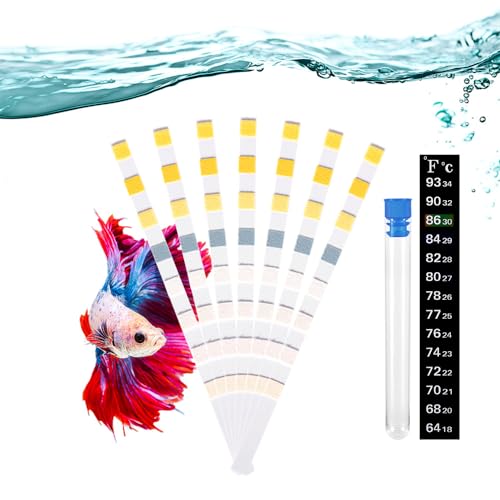
- Tests eight water parameters plus temperature
- Includes 100 strips with moisture-protective packaging
- Simple color-chart testing for routine checks
Best For: Betta owners wanting broad water and temperature monitoring
Best Educational Option

- Covers six listed water parameters plus temperature
- Includes 100 strips, testing tube, and ebook
- Suitable for betta and other freshwater setups
Best For: Beginners seeking simple testing with extra guidance
Best Compact 8-Parameter Kit
AAwipes 8-in-1 Aquarium Test Kit

- Includes ammonia nitrogen among eight tests
- Sealed bottle helps protect strips from moisture
- Suitable for aquariums, ponds, and shrimp tanks
Best For: Betta owners wanting ammonia-inclusive testing in a 50-strip kit
Best Overall Water Monitoring – API Freshwater Master Test Kit
API Freshwater Master Test Kit 800-Test Freshwater Aquarium Water Kit, White, Single, Multi-Colored
Check Price On AmazonFor aquarists seeking aquarium test kits for betta tanks, the API Freshwater Master Test Kit provides liquid tests for five core freshwater water parameters. Its weekly-testing format is useful for routine monitoring and troubleshooting water or fish problems.
Best For: Betta keepers who want broad freshwater testing, including ammonia and nitrite checks.
Pros:
- Tests pH, high-range pH, ammonia, nitrite, and nitrate.
- Includes seven testing-solution bottles, four tubes with caps, and a color card.
- Designed for weekly freshwater aquarium monitoring.
Cons:
- For freshwater aquariums only.
- Liquid testing requires following the instructional booklet directions.
This is the most comprehensive option in the group for routine freshwater testing, especially when ammonia and nitrite monitoring is a priority. It is less convenient than dip strips but offers coverage across five vital parameters.
Best for Quick Routine Checks – Tetra EasyStrips 6-in-1
Tetra EasyStrips are a convenient choice among aquarium test kits for betta tanks when speed matters. Dip one strip, wait 60 seconds, and read six water indicators for a quick weekly check or post-water-change check.
Best For: Betta owners who prioritize simple, fast testing and want one strip to check several general water conditions.
Pros:
- Tests nitrates, nitrites, hardness, chlorine, alkalinity, and pH.
- Results are read in about 60 seconds.
- Works in freshwater and saltwater aquariums.
Cons:
- The package contains 25 strips.
- Does not list ammonia testing among its six tests.
These strips are well suited to convenient weekly screening, but betta keepers specifically concerned about ammonia will need a separate test for that parameter.
Best Strip Value – 7 Way Aquarium Test Strips
With 125 strips in the package, this seven-way kit offers a large supply for frequent aquarium testing. It uses a dip-and-compare color format and covers several common freshwater and saltwater water-quality indicators.
Best For: Betta keepers who want a high-count strip kit for repeated general water checks.
Pros:
- Includes 125 aquarium test strips.
- Tests chlorine, total hardness, carbonate, alkalinity, nitrate, nitrite, and pH.
- Designed for a straightforward dip-and-compare process.
Cons:
- Does not list ammonia testing.
- Supplied notes do not specify a result-reading time.
This kit stands out for quantity and broad general screening. It can be practical for regular checks, though ammonia-focused monitoring requires another test product.
Best Compact Strip Option – API 5-in-1 Test Strips
API 5-in-1 Test Strips provide a compact way to monitor several routine water parameters in a betta aquarium. Dip the strips into the tank and compare the colors to check pH, nitrite, nitrate, carbonate, and general hardness.
Best For: Betta owners who want quick strip-based checks for pH and common nitrogen-cycle indicators.
Pros:
- Checks pH, nitrite, nitrate, carbonate, and general hardness.
- Simple dip-and-read color format.
- Suitable for freshwater or saltwater aquariums.
Cons:
- The listed package contains only four test strips.
- Does not include ammonia testing.
This is a straightforward option for quick checks, particularly when compact storage or simple handling is more important than a large strip count or liquid-test coverage.
Best Overall Coverage – JNW Direct 9-in-1 Aquarium Test Strips
For shoppers comparing aquarium test kits for betta tanks, this JNW Direct option offers broad testing coverage in a simple strip format. It includes 100 strips, a color chart, and an eBook to help interpret results for freshwater or saltwater aquariums.
Best For: Betta keepers who want an easy, multiparameter test kit with plenty of strips and guidance for understanding results.
Pros:
- Tests nine aquarium water parameters in one kit.
- Includes 100 test strips for regular monitoring.
- Provides a color chart and an instructional eBook.
Cons:
- The supplied details do not specify the individual nine parameters.
- Strip testing requires comparing results with a color chart.
This is a practical general-purpose choice for routine aquarium checks, especially if you value high strip count and supplemental water-testing guidance over a more specialized kit.
Best With Accessories – 7-in-1 Aquarium Test Kit
This 7-in-1 kit is a convenient option among aquarium test kits for betta tanks, combining test strips with a test tube and thermometer. Its three-step process is designed for quick readings and covers several core water-quality measures.
Best For: Betta owners who want a straightforward testing routine plus a thermometer and capped test tube in the package.
Pros:
- Measures nitrate, nitrite, chlorine, GH, alkalinity, KH, and pH.
- Includes 125 test strips for frequent testing.
- Comes with a test tube, thermometer, and color card.
- Results are read in minutes using a three-step process.
Cons:
- It covers seven parameters, fewer than some broader kits.
- The supplied details do not indicate that ammonia is included.
The included thermometer adds useful convenience for a betta setup, while the high strip count makes this a sensible choice for owners who plan to test regularly.
Most Comprehensive – 11-in-1 Aquarium Test Strips
For shoppers seeking broad coverage from aquarium test kits for betta tanks, this 11-in-1 set checks more parameters than the other options here. It includes ammonia strips, temperature testing, 150 total strips, testing tubes, and an eBook for interpreting aquarium water results.
Best For: Betta keepers who want the widest supplied testing coverage and separate ammonia strips for more detailed water monitoring.
Pros:
- Tests 11 parameters, including ammonia, pH, nitrate, nitrite, chlorine, hardness, alkalinity, copper, iron, and temperature.
- Includes 150 strips, including 50 ammonia strips.
- Uses separate packaging for some strips to help maintain freshness.
- Includes testing tubes, a color chart, and an eBook.
Cons:
- The supplied details indicate a recommended three-month use period after opening.
- Its broader coverage may be more than needed for simple routine checks.
This is the strongest fit for detailed home testing, particularly during aquarium setup or when you want ammonia included alongside a wider range of water-quality measurements.
Most Comprehensive Strip Coverage – DaToo 8-in-1 Aquarium Test Kit
For betta keepers who want broad day-to-day coverage, the DaToo is one of the more complete aquarium test kits for betta tanks. It checks eight water parameters and includes a separate thermometer, giving you a practical snapshot of conditions in a single routine.
Best For: Betta owners who want to monitor temperature alongside common water-quality parameters with a 100-strip supply.
Pros:
- Tests pH, ammonia, alkalinity, carbonate hardness, hardness, chlorine, nitrate, and nitrite.
- Includes an extra thermometer for temperature monitoring.
- Thicker strips and double-sealed packaging are designed to resist tearing, moisture, and color bleeding.
- Uses a simple dip, wait, and color-chart comparison process.
Cons:
- Ammonia results require a longer two- to three-minute wait.
- Color-chart interpretation still requires careful comparison.
Its broad parameter list and 100-strip count make the DaToo a versatile choice for regular checks. The separate ammonia timing is a minor tradeoff for the extra coverage.
Best Educational Option – 7-in-1 Aquarium Test Strips
This 7-in-1 kit is a straightforward option for betta owners seeking aquarium test kits for betta tanks with an added learning resource. It covers several everyday freshwater parameters, includes 100 individually packaged strips, and comes with a testing tube and ebook.
Best For: Beginners and freshwater betta keepers who value easy testing instructions and an accompanying ebook.
Pros:
- Measures pH, chlorine, general hardness, carbonate hardness, nitrate, and temperature.
- Includes 100 strips, a testing tube, and an ebook.
- Designed for freshwater aquariums, betta tanks, shrimp tanks, planted aquariums, and ponds.
- Individual packaging helps keep unused strips fresh.
Cons:
- The listed testing parameters do not include ammonia.
- Opened strips are recommended for use within three months.
This kit combines broad freshwater compatibility with beginner-friendly guidance. It is especially appealing if you want temperature testing and basic water monitoring without moving to a more specialized liquid-test setup.
Best Compact 8-Parameter Kit – AAwipes 8-in-1 Aquarium Test Kit
The AAwipes kit offers a compact way to check several conditions in betta tanks and other aquatic setups. Its 8-in-1 strips include ammonia nitrogen along with pH, nitrogen compounds, hardness, alkalinity, chlorine, and sodium chloride testing.
Best For: Betta keepers who want ammonia-inclusive testing in a sealed 50-strip bottle for occasional or twice-weekly checks.
Pros:
- Tests free chlorine, nitrate, nitrite, hardness, sodium chloride, total alkalinity, pH, and ammonia nitrogen.
- Provides separate timing instructions for the ammonia pad.
- Suitable for freshwater and saltwater aquariums, ponds, shrimp tanks, and pools.
- Sealed bottle packaging is intended to protect strips from moisture.
Cons:
- Includes 50 strips, fewer than the 100-strip options in this roundup.
- Ammonia nitrogen requires a separate five-second dip and a three-minute reading wait.
AAwipes stands out for including ammonia nitrogen while keeping testing at home and uncomplicated. The smaller strip count may suit lighter testing schedules, while the multi-step ammonia timing rewards careful use of the instructions.
How We Picked the Best Aquarium Test Kits for Betta Tanks
We focused on the water parameters most useful for betta care: ammonia, nitrite, nitrate, pH, and, where available, hardness and alkalinity. We also considered test format, claimed test count, readability, included accessories, freshwater compatibility, and convenience for regular home use.
Test strips are quick and simple, while liquid kits generally offer more controlled testing and can make subtle color changes easier to evaluate. Because product contents and instructions can vary, always follow the included directions and verify that a kit specifically covers the parameters you need.
Quick Comparison
- Best for detailed routine testing: A liquid master kit with separate reagents and a test tube.
- Best for convenience: Multi-parameter strips that provide results in under a minute.
- Best for frequent monitoring: A high-count strip kit with a low cost per test.
- Best for broader water checks: An 8-in-1, 9-in-1, or 11-in-1 kit covering additional hardness or alkalinity measures.
- Best for beginners: A clearly labeled kit with simple timing instructions and an easy color chart.
Key Buying Factors for Aquarium Test Kits for Betta Tanks
Parameters Covered
Ammonia and nitrite are especially important in new or unstable tanks because both can be toxic. Nitrate helps indicate whether water changes are keeping waste under control. pH matters too, but consistency is usually more important than chasing a precise number. Hardness and alkalinity tests can help explain persistent pH changes.
Strips Versus Liquid Tests
Strips require less setup and are useful for frequent screening, travel, or quick checks after maintenance. Liquid tests take more time but can provide greater control over sample volume and reagent use. If a strip result looks unusual, confirm it with a liquid test or repeat the test using fresh water and careful timing.
Readability and Shelf Life
Choose a chart with distinct color differences and instructions that specify exact wait times. Store strips and reagents sealed, dry, and away from heat. Expired or moisture-exposed tests may produce unreliable results.
Value Per Test
Compare the number of usable tests rather than the package size alone. A lower-priced kit may cost more over time if it contains only a few tests, while a larger pack can be worthwhile for cycling a tank or monitoring frequent water changes.
Who Should Buy Which Aquarium Test Kits for Betta Tanks?
Choose a liquid master kit if you are cycling a new betta aquarium, troubleshooting illness or cloudy water, or want more detailed measurements. Pick basic 5-in-1 or 6-in-1 strips for an established tank where speed and simplicity matter most. Broader 7-in-1, 8-in-1, 9-in-1, or 11-in-1 kits suit owners who also want hardness, alkalinity, or temperature information.
For most betta keepers, the best approach is regular screening with strips plus a dependable liquid kit available for questionable results. Test new tanks more often, check after major maintenance, and use the readings—not appearance alone—to guide partial water changes.