Starting seeds on a patio can be rewarding, but limited space, changing temperatures, and inconsistent watering make the right tray important. The best setup keeps seedlings organized while providing drainage, humidity control, and enough room for healthy roots.
We compared 10 seed-starting kits with different cell counts, domes, watering features, and transplanting designs to help you choose a practical option for your patio garden.
Best 10 Seed Starting Trays for Patios Picks for 2026
Best Adjustable-Ventilation Set
Gardzen 5-Pack Seed Starter Trays

- 200 total cells across five trays
- Adjustable vents and clear humidity domes
- Drainage holes support easier watering control
Best For: Larger patio seed-starting projects and cuttings
Best for Easy Transplanting
Lift-Out 9-Cell Seed Starter Tray

- Individual lift-out handles reduce root disturbance
- Nine removable cells support separate care
- Bottom tray enables bottom watering
Best For: Small-batch patio growing and easy transplanting
Best Reusable Silicone Tray

- Flexible silicone cells pop out seedlings
- Watering channels help manage excess moisture
- Labeled rows support seedling identification
Best For: Gentle transplanting and repeat seasonal use
Best Space-Saving Greenhouse Kit

- Five 40-cell trays provide 200 cells
- Vented domes support humidity control
- Stackable bottoms and included labels save space
Best For: Small-seed propagation in organized patio setups
Best for Large Seeds
Bonviee 5-Pack Seed Starter Trays
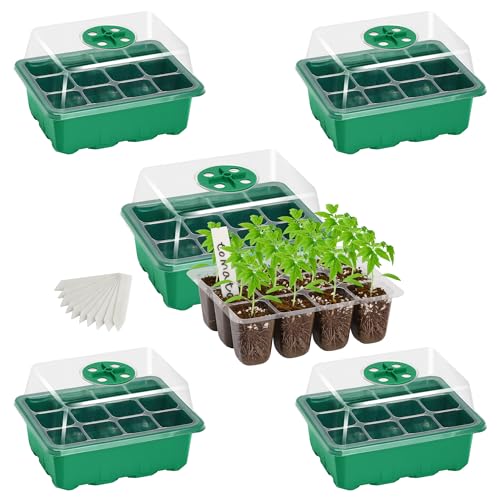
- Clear construction makes roots and seedlings easy to monitor
- Adjustable vents help regulate humidity and temperature
- Roomy 1.5-inch cells suit larger vegetable seeds
Best For: Starting larger seeds in small, observable batches
Best Multipack Value
Mr. Pen 120-Cell Seed Starter Kits

- Ten 12-cell trays provide 120 total growing cells
- Vented domes help retain moisture and provide airflow
- Includes a shovel and scoop for planting tasks
Best For: Starting a large batch of seedlings
Best All-in-One Setup
Patigrow 60-Cell Self-Watering Tray

- Self-watering system supports consistent moisture
- Built-in LED strips include brightness and timer controls
- 60 cells, dome, mat, stand, tools, and labels included
Best For: Beginners needing integrated watering and grow lighting
High-Count Patio Starter

- 144 cells across 24 trays
- 1.5-inch cells with drainage slits
- Includes five labeling stakes
Best For: Large batches of patio seedlings
Humidity-Control Pick

- Five 12-cell trays with bases and domes
- Adjustable vents regulate humidity
- Clear trays support root monitoring
Best For: Controlled germination of larger seeds
Transplant-Friendly Choice

- 120 biodegradable wood-pulp cells
- Peat pots can be planted directly
- Includes 100 labels and two tools
Best For: Seedlings headed into patio soil or containers
Best Adjustable-Ventilation Set – Gardzen 5-Pack Seed Starter Trays
For gardeners comparing seed starting trays for patios, the Gardzen 5-pack offers substantial capacity in a reusable-style setup with 200 total cells. Its clear vented domes let you monitor seedlings while adjusting airflow and humidity.
Best For: Patio gardeners starting many vegetable, flower, or herb seedlings and cuttings.
Pros:
- Five 40-cell trays provide 200 total cells for larger planting projects.
- Adjustable dome vents help regulate ventilation.
- Clear domes, drainage holes, and attached stickers support easier monitoring and fitting.
Cons:
- The 40-cell format may be more capacity than needed for a small patio project.
- The listed tray dimensions require dedicated shelf or table space.
This is a practical choice when you want a multi-tray system for succession planting or a sizable batch of seedlings. The vented domes and visible growth area make it especially convenient for managed patio propagation.
Best for Easy Transplanting – Lift-Out 9-Cell Seed Starter Tray
For small-space seed starting trays for patios, this modular nine-cell design emphasizes handling individual seedlings rather than managing a full tray at once. Lift-out handles help raise each soil plug, while the bottom tray supports bottom watering.
Best For: Patio gardeners who want individual care and straightforward transplanting for small batches.
Pros:
- Lift-out handles help remove soil plugs with less squeezing or turning.
- Nine removable cells can be filled, cleaned, or managed individually.
- Bottom watering and five drainage openings per cell support moisture management.
- Reusable components include the cells, stabilizer frame, and bottom tray.
Cons:
- Nine cells offer less capacity than the multi-pack systems in this roundup.
- Individual components may require more assembly and cleanup than a one-piece tray.
The compact tabletop footprint suits a patio shelf or small work area. Choose it when transplanting convenience and individualized seedling care matter more than starting a large number of plants at once.
Best Reusable Silicone Tray – Burpee SuperSeed 36-Cell Tray
The Burpee SuperSeed is a reusable option among seed starting trays for patios, with flexible silicone cells designed to pop seedlings out for transplanting. Its watering tray includes channels and corner slots to help manage drainage and excess water.
Best For: Gardeners who prioritize gentle transplanting and reuse for indoor-to-patio seedlings.
Pros:
- Flexible food-grade silicone cells help seedlings release during transplanting.
- Deep watering channels and molded corner slots support drainage and aeration.
- Alphanumeric rows and the included Plant-o-Gram help identify seedlings.
- Top-shelf dishwasher-safe construction simplifies cleaning.
Cons:
- It is a single 36-cell tray rather than a multi-tray kit.
- The supplied details specify indoor usage, so patio placement may require a protected setup.
This tray is a strong fit for gardeners who reuse their equipment and want to minimize root disturbance. The flexible cells and contained watering design make moving seedlings to patio containers or beds more manageable.
Best Space-Saving Greenhouse Kit – MIXC 5-Pack Propagator Trays
For gardeners seeking seed starting trays for patios with humidity control, the MIXC five-pack combines 40-cell trays, bottom trays, and clear domes. Adjustable vents let you regulate the enclosed environment, while stackable bottom trays help conserve storage space.
Best For: Patio or indoor growers starting multiple batches of small seeds in a controlled setup.
Pros:
- Five trays provide 200 cells for larger seed-starting projects.
- Adjustable dome vents help manage temperature and humidity.
- Transparent components make it easier to observe growth without disturbing seedlings.
- Includes two garden tools and 10 plant labels.
Cons:
- The 1.5-by-1.5-by-2-inch cells are intended for small seeds and may not suit larger starts.
- The listed dome height and overall footprint require adequate shelf space.
- The supplied details list indoor usage, so outdoor patio use may need protection from weather.
This kit suits gardeners who want a mini-propagation setup with visibility and adjustable ventilation. Its stackable bottom trays are useful when storing or organizing several trays in a limited patio gardening area.
Best for Large Seeds – Bonviee 5-Pack Seed Starter Trays
For gardeners looking for seed starting trays for patios, the Bonviee 5-pack offers a practical setup for starting larger vegetables in individual 12-cell trays. Clear lids make it easy to monitor seedlings, while adjustable vents help manage humidity and temperature.
Best For: Patio gardeners starting larger seeds such as tomatoes, peppers, eggplants, and potatoes.
Pros:
- Clear trays and lids allow root and seedling observation without disturbing plants.
- Adjustable vents provide control over humidity and temperature.
- 1.5-inch cells accommodate larger seeds and include drainage holes.
- Includes five trays, watertight bases, humidity domes, and plant labels.
Cons:
- Listed for indoor use, so patio placement may require a sheltered setup.
- The 12-cell design offers less capacity per tray than the 60-cell option.
This is a useful choice when visibility, vent control, and roomier cells matter more than maximum seed capacity. Its stated heat-mat resistance also adds flexibility for controlled germination.
Best Multipack Value – Mr. Pen 120-Cell Seed Starter Kits
If you need seed starting trays for patios in larger quantities, the Mr. Pen kit supplies ten 12-cell trays for a total of 120 cells. Each tray includes a vented humidity dome, base, drainage holes, and simple planting tools.
Best For: Gardeners starting many seedlings at once and wanting a complete multi-tray kit.
Pros:
- Ten trays provide 120 total cells for larger planting projects.
- Transparent domes retain moisture while adjustable vents support ventilation.
- Drain holes help reduce overwatering and root rot concerns.
- Includes a shovel and scoop for planting and transplanting.
Cons:
- The larger 10-set may be more than needed for a small patio garden.
- Listed for indoor use, so outdoor patio use may require protection from weather.
Choose this kit when quantity and included accessories are priorities. Its lightweight plastic construction and root-release design make it suited to repeated seed-starting tasks.
Best All-in-One Setup – Patigrow 60-Cell Self-Watering Tray
For seed starting trays for patios that also support indoor growing, the Patigrow combines 60 cells with self-watering, adjustable ventilation, and built-in grow lights. The elevated design includes a capillary mat, stand, tools, labels, and lighting controls.
Best For: Beginners who want consistent moisture and supplemental light in one seed-starting system.
Pros:
- Self-watering design helps maintain moisture while reducing overwatering risk.
- Two LED strips offer adjustable brightness and timer functions.
- Two adjustable vents and enlarged drainage holes support airflow and root health.
- Includes a dome, base, capillary mat, stand, labels, tools, and grow-light components.
Cons:
- It is a single kit rather than a multipack of separate trays.
- Its 16.6-inch width and powered lighting system require more setup space and access to power.
This is the most feature-rich option of the three. It makes sense for growers who want to simplify moisture and lighting management, especially when patio or indoor conditions do not provide dependable sunlight.
High-Count Patio Starter – 144-Cell Seed Trays
For gardeners starting many varieties at once, these seed starting trays for patios provide 144 cells across 24 compact trays. The 1.5-inch-square, 2.25-inch-deep cells include drainage slits to help manage moisture, while the included stakes make labeling easier.
Best For: Patio gardeners raising large batches of herbs, flowers, vegetables, or succulents.
Pros:
- 144 cells offer substantial planting capacity.
- Deep cells are designed to support healthy root development.
- Reusable plastic construction and drainage slits support repeated seed starting.
- Includes five plant stakes for organization.
Cons:
- No humidity domes or bases are included.
- The many small trays may require a separate system for watering and transport.
This is a practical choice when quantity and flexibility matter most. Its compact six-cell format suits patio organization, though gardeners seeking humidity control will need additional equipment.
Humidity-Control Pick – Bonviee 60-Cell Starter Kit
These seed starting trays for patios are suited to gardeners who want more control over germination conditions. The five 12-cell sets include clear trays, bases, humidity domes with adjustable vents, drainage holes, and labels, while the transparent design lets you monitor roots without disturbing seedlings.
Best For: Starting larger seeds such as tomatoes, peppers, potatoes, and eggplants with adjustable humidity and temperature control.
Pros:
- Adjustable vents help regulate humidity and temperature.
- Clear trays make root and seedling monitoring easier.
- Includes bases, domes, drainage-hole trays, and 10 labels.
- Designed to work with a heat mat.
Cons:
- The set has 60 cells, fewer than the 144-cell option.
- It is listed for indoor use, so patio placement may require careful protection.
Choose this kit when environmental control is more important than maximum capacity. Its complete dome-and-base setup is especially useful for gardeners who want to observe and adjust early growth conditions.
Transplant-Friendly Choice – 120-Cell Peat Pot Kit
For gardeners who want to move seedlings directly into containers or patio soil, these seed starting trays for patios use breathable, decomposable peat pots. The 12 trays provide 120 cells, and the kit includes 100 plant labels plus two transplant tools for a more organized setup.
Best For: Growing herbs, vegetables, flowers, succulents, and microgreens with minimal root disturbance during transplanting.
Pros:
- Peat pots can be planted directly into soil or containers.
- Natural wood-pulp material decomposes after planting.
- 120 cells provide ample capacity for mixed seedlings.
- Includes labels and two transplant tools.
Cons:
- Peat pots may require closer moisture management than rigid plastic trays.
- No humidity domes or separate base trays are listed.
This kit stands out for gardeners prioritizing easy transplanting and reduced root disturbance. Its biodegradable construction is convenient for patio growing, but it is less suited to those wanting a reusable plastic system or built-in humidity control.
How We Picked the Best Seed Starting Trays for Patios
We focused on the features that matter most in a compact outdoor growing area: tray footprint, cell size, drainage, humidity control, durability, and ease of transplanting. We also considered whether each kit includes useful accessories such as bases, plant labels, domes, vents, or self-watering components.
Because patio conditions vary, we included both simple trays for experienced growers and more complete kits for beginners. Reusable construction was prioritized where product details supported repeated use, while larger multi-pack options were considered for gardeners starting many varieties at once.
Quick Comparison
| Best For | Look For |
|---|---|
| Small patios | Compact trays with fewer cells and stackable or easy-to-move designs |
| Many seedlings | High-cell-count kits or multipacks with multiple bases |
| Easy transplanting | Removable, flexible, or lift-out cells |
| Moisture-sensitive seeds | Clear humidity domes with adjustable vents |
| Less frequent watering | Self-watering bases or reservoirs |
Key Buying Factors for Seed Starting Trays for Patios
Footprint and Cell Count
Measure your available shelf, table, or balcony space before choosing a kit. More cells can reduce the cost per seedling, but densely packed trays may be harder to move and can limit airflow. Smaller trays are easier to protect from wind and temperature swings.
Drainage and Water Control
Drainage holes help prevent soggy soil and root problems, while a base catches excess water on a patio surface. A self-watering design can reduce daily maintenance, but seedlings still need careful monitoring because consistently saturated mix can damage young roots.
Humidity Domes and Venting
Domes retain moisture during germination, especially when patio air is dry or breezy. Adjustable vents are valuable because you can gradually reduce humidity after sprouting and improve airflow as seedlings grow.
Transplanting and Reuse
Flexible or removable cells make it easier to release seedlings without disturbing delicate roots. If you plan to start seeds every season, choose sturdy plastic or silicone components that are simple to wash and disinfect between uses.
Who Should Buy Which Seed Starting Trays for Patios?
Choose a compact, lower-cell tray if you have a small patio or are testing a few vegetables and flowers. A multipack or high-cell system is better for gardeners starting several varieties or succession crops. Look for lift-out or flexible cells if transplanting speed and root protection are priorities.
Beginners may prefer a complete kit with domes, bases, labels, and watering features, while experienced growers may get better value from straightforward reusable trays. For exposed patios, prioritize stable bases, vented covers, and a design that can be moved indoors during cold nights or strong weather.