Starting seeds indoors does not require a greenhouse or a large growing shelf. The right compact tray can turn a windowsill, countertop, or narrow plant rack into a productive propagation space.
These 10 picks cover simple reusable trays, vented humidity domes, self-watering designs, and kits with grow lights or heat mats. Use the guide below to match capacity and features to your available space and growing routine.
Best 10 Seed Starting Trays for Small Spaces Picks for 2026
Best Multipack Value
Gardzen 40-Cell Seed Starter Trays

- Five trays with 40 cells each
- Adjustable vents and clear humidity domes
- Drainage holes and reusable plastic
Best For: Starting a large number of seedlings in organized batches
Best Windowsill Starter
Ferry Morse Jiffy Windowsill Greenhouse
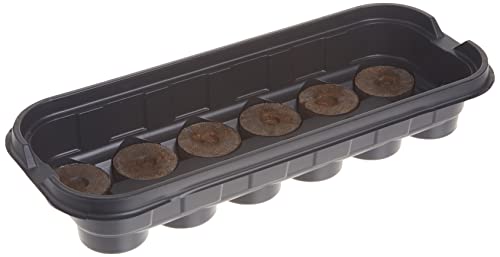
- Compact 12-space tray
- Includes expanding 36mm peat pellets
- Clear dome retains heat and moisture
Best For: Simple seed starting on a narrow windowsill
Best for Easy Transplanting

- Flexible silicone cells pop out seedlings
- Drainage and watering channels
- Reusable and dishwasher safe
Best For: Indoor growers prioritizing gentle, simple transplanting
Best All-in-One Lighted Kit

- Six compact 12-cell kits
- Full-spectrum LED grow lights
- Elevated vented domes and drainage
Best For: Small indoor spaces with limited natural light
Best Modular Pick
Lift-Out Handle Seed Starter Tray

- Nine removable cells for individual care
- Lift-out handles simplify transplanting
- Bottom watering and reusable construction
Best For: Small-batch starting in compact indoor spaces
Best All-in-One Setup
Seed Starter Tray Kit with Lights and Heat Mat

- Six trays with 72 small cells
- Includes grow lights and heat mat
- Humidity domes and four timing settings
Best For: Indoor gardeners starting many seedlings
Best for Comfort
MIXC 120-Cell Humidity Dome Kit

- Ten reusable trays with 120 cells
- Includes domes, bases, and labels
- Adjustable vents and drainage holes
Best For: High-volume seed starting with humidity control
Best Modular Value
10-Pack 12-Cell Seed Starter Trays

- 10 separate trays provide 120 cells total
- Adjustable vents and drainage base trays
- Includes labels and two gardening tools
Best For: Organizing many seed varieties in compact growing spaces
Best All-in-One Indoor Setup
60-Cell Self-Watering Tray With Grow Light

- Built-in LED strips include brightness and timer controls
- Self-watering system uses a capillary mat
- 60 cells with dome, vents, stand, and accessories
Best For: Indoor growers with room for a wider, integrated propagation unit
Best for Larger Seeds

- Five trays provide 60 cells total
- 1.5-inch cells suit larger seeds
- Clear lids, vents, drainage, and heat-mat compatibility
Best For: Starting larger vegetable seeds in organized indoor batches
Best Multipack Value – Gardzen 40-Cell Seed Starter Trays
For gardeners comparing seed starting trays for small spaces, the Gardzen five-pack offers substantial capacity in a stackable-style rectangular format. Each tray has 40 cells, a clear vented humidity dome, drainage, and a base for managing moisture indoors or in a greenhouse.
Best For: Gardeners who want to start many seeds while keeping each kit organized and easy to monitor.
Pros:
- Five 40-cell trays provide room for up to 200 seedlings.
- Adjustable dome vents help manage humidity and airflow.
- Drainage holes and clear domes support straightforward watering and monitoring.
- Reusable plastic construction is designed for repeated seed-starting use.
Cons:
- The larger 40-cell format may be more capacity than needed for a very small windowsill.
- The set does not include a grow light or seed-starting medium.
This is a practical choice when small-space gardening still requires a high number of starts. Its main advantage is the combination of five trays, vented domes, and drainage-focused design.
Best Windowsill Starter – Ferry Morse Jiffy Windowsill Greenhouse
The Ferry Morse Jiffy Windowsill Greenhouse is a compact option for seed starting trays for small spaces. Its slender tray holds 12 peat pellets beneath a clear dome, creating a simple setup for flowers, vegetables, or cuttings on an indoor windowsill.
Best For: Beginners and apartment gardeners who need a small, ready-to-expand seed-starting system.
Pros:
- Compact 12-space design suits windowsills and other tight indoor areas.
- Included 36mm Jiffy-7 pellets expand into growing pots and medium.
- Clear dome helps retain heat and moisture.
- Can be used for seeds or cuttings.
Cons:
- Its 12-plant capacity is limited for larger growing projects.
- Peat pellets provide a single included growing-medium format rather than a reusable cell system.
Choose this kit when footprint and simplicity matter more than capacity. It includes the tray, dome, and pellets, so it requires fewer separate supplies to begin.
Best for Easy Transplanting – Burpee SuperSeed 36-Cell Tray
The Burpee SuperSeed is a strong choice among seed starting trays for small spaces when transplanting convenience is a priority. Its 36 flexible silicone cells pop out seedlings, while molded drainage slots, a watering tray, and side handles help simplify routine care.
Best For: Indoor growers who want reusable cells and less root disturbance during transplanting.
Pros:
- Flexible silicone cells make seedlings easier to remove at transplant time.
- Drainage slots and deep watering channels help manage excess water.
- Alphanumeric rows and an included Plant-o-Gram aid seedling identification.
- Reusable tray is easy to clean and top-shelf dishwasher safe.
Cons:
- No humidity dome or grow light is listed among the included components.
- The 36-cell tray may still require supplemental lighting for indoor growing.
This tray is particularly useful for gardeners who reuse their equipment each season. The silicone cells and water-management features make it more transplant-focused than a basic disposable starter tray.
Best All-in-One Lighted Kit – MIXC 12-Cell Seed Starter
The MIXC kit combines a compact 12-cell tray with a full-spectrum LED grow light, making it a useful all-in-one option for seed starting trays for small spaces. Elevated vented domes provide extra headroom, while drainage holes and removable inner trays support indoor care.
Best For: Indoor gardeners with limited natural light who want a small kit with built-in illumination.
Pros:
- Six 12-cell kits provide multiple compact growing units.
- Full-spectrum LED lights support seedling growth in low-light conditions.
- Elevated adjustable domes give seedlings more room before transplanting.
- Drainage holes, watertight bases, and side grips help with watering and handling.
Cons:
- Each tray’s 12-cell capacity is smaller than a high-capacity propagation tray.
- The integrated light makes the kit more specialized than a basic tray-and-dome setup.
This is a convenient choice for small indoor growing areas where both space and sunlight are limited. The combination of six trays, elevated domes, and built-in LED lighting reduces the need to assemble separate equipment.
Best Modular Pick – Lift-Out Handle Seed Starter Tray
For seed starting trays for small spaces, this compact nine-cell design offers a practical way to give each seedling individual attention. Removable cells, lift-out handles, and bottom watering make it especially useful when transplanting a small batch of herbs, vegetables, or flowers.
Best For: Small-batch indoor starting and gardeners who want easier, lower-disturbance transplanting.
Pros:
- Lift-out handles help raise individual soil plugs without squeezing the full tray.
- Nine removable cells support separate filling, cleaning, and seedling care.
- Bottom tray supports bottom watering, while drainage holes let excess water return.
- Reusable design works indoors, outdoors, or in a greenhouse.
Cons:
- Nine cells provide less starting capacity than the larger multi-tray kits.
- It does not include a humidity dome, grow light, or heat mat.
This is a space-conscious choice for growers prioritizing transplant convenience over maximum capacity. Its modular cell design is particularly helpful when seedlings need to be moved individually.
Best All-in-One Setup – Seed Starter Tray Kit with Lights and Heat Mat
This seed starting kit combines six trays, grow lights, a heat mat, timing controls, and heightened humidity domes in one indoor setup. For seed starting trays for small spaces, it offers a more complete mini-greenhouse approach for gardeners starting many small cells at once.
Best For: Indoor growers who want integrated lighting, bottom heat, humidity control, and higher seed-starting capacity.
Pros:
- Includes six trays with 72 small cells total.
- Grow lights and a heat mat provide built-in support for indoor starting.
- Four timing settings help organize the light and heat schedule.
- Heightened humidity domes create a mini-greenhouse environment.
Cons:
- Its 10.2-by-8.07-by-6.69-inch footprint requires more dedicated space than a single compact tray.
- The setup is intended for indoor use rather than outdoor placement.
This kit is a strong fit when convenience and controlled indoor conditions matter more than having the smallest possible footprint. The included light, heat mat, and domes reduce the need to assemble separate components.
Best for Comfort – MIXC 120-Cell Humidity Dome Kit
Gardeners comparing seed starting trays for small spaces may appreciate this reusable multipack, which provides ten trays with individual base trays and humidity domes. Adjustable vents and drainage holes let you manage moisture while keeping a compact tray format for indoor or outdoor use.
Best For: Gardeners who need high seedling capacity and repeat-use humidity control across multiple trays.
Pros:
- Ten trays provide 120 cells for starting a large number of seedlings.
- Each set includes a watertight base tray, humidity dome, and plant label.
- Adjustable vents help regulate humidity and temperature.
- Drainage holes help excess water leave the growing cells.
Cons:
- The full ten-tray set needs substantially more storage and working space than a single tray.
- The supplied notes do not indicate included grow lights or a heat mat.
- The listed tray dimensions are compact, but the total multipack footprint depends on how many trays are placed out.
This is a practical choice for maximizing propagation capacity with simple humidity management. Its reusable components and included labels make it suitable for repeated seed-starting seasons.
Best Modular Value – 10-Pack 12-Cell Seed Starter Trays
For gardeners working with limited shelf, tabletop, or windowsill space, these seed starting trays for small spaces offer a practical modular setup. The 10 separate 12-cell trays let you organize different herbs, flowers, or vegetables independently instead of filling one oversized tray.
Best For: Gardeners who want multiple compact trays for organizing several seed varieties indoors or outdoors.
Pros:
- Includes 120 total cells across 10 individual trays.
- Adjustable dome vents help manage humidity and airflow.
- Drainage holes and separate base trays help contain excess water.
- Includes plant labels and two gardening tools.
Cons:
- The 12-cell format may require more handling than one larger tray.
- Plastic trays have a relatively small 7.1-by-5.5-inch footprint each, which may limit room for larger seedlings.
This is a flexible choice when organization matters as much as capacity. Its separate mini-greenhouse design makes it easier to rotate, inspect, and manage small groups of plants in a compact growing area.
Best All-in-One Indoor Setup – 60-Cell Self-Watering Tray With Grow Light
This Patigrow kit combines a 60-cell tray, self-watering system, humidity dome, and LED grow lights in one indoor unit. For seed starting trays for small spaces, its integrated lighting and elevated design can reduce the need to assemble separate equipment, though its 16.6-inch width requires a larger dedicated surface.
Best For: Indoor growers who need built-in lighting and moisture support for a larger batch of seedlings.
Pros:
- Includes two LED strips with adjustable brightness and timer functions.
- Capillary mat and base support a self-watering setup.
- 60 cells provide substantial starting capacity in one unit.
- Adjustable vents and enlarged drainage holes support moisture and airflow control.
Cons:
- At 16.6 inches wide and 11 inches deep, it needs more surface space than modular mini trays.
- The integrated light system adds components and power cords to manage.
This is the most complete option for indoor propagation when consistent light and watering are priorities. It is less suitable for very narrow windowsills, but it can simplify setup on a dedicated shelf, table, or plant stand.
Best for Larger Seeds – Bonviee 5-Pack 12-Cell Trays
The Bonviee 5-pack is a compact option for gardeners starting larger seeds in a controlled indoor setup. Each 12-cell tray has 1.5-inch square cells, while clear lids, adjustable vents, and drainage holes make it easier to monitor germination without disturbing seedlings.
Best For: Indoor gardeners starting tomatoes, peppers, eggplants, potatoes, and other larger-seeded plants in small batches.
Pros:
- Five separate 12-cell trays provide 60 cells total.
- 1.5-inch square cells offer room for larger seeds.
- Clear trays allow root and seedling monitoring without removing the lid.
- Compatible with a heat mat and equipped with adjustable vents.
Cons:
- Provides half the total cells of the 10-pack option.
- The included setup is focused on trays and humidity control; no grow light is listed.
Choose this set when cell size and visibility matter more than maximum capacity. Its five-tray format is easier to divide by crop, and the heat-mat compatibility adds flexibility for indoor germination.
How We Picked the Best Seed Starting Trays for Small Spaces
We focused on compact kits that make indoor propagation easier without demanding a full greenhouse setup. The selection considers footprint, cell count, tray durability, humidity control, drainage, transplanting convenience, and whether lighting or heat is included. Reusable components received priority because they offer better long-term value and reduce waste.
Capacity matters in a small growing area, so the list includes both low-volume windowsill trays and multi-pack options for gardeners who want to start many varieties at once. We also considered practical details such as removable cells, lift-out handles, adjustable vents, and self-watering features.
Quick Comparison
| Best For | Look For | Recommended Type |
|---|---|---|
| One or two windowsill crops | Small footprint and 6–12 cells | Windowsill greenhouse or compact kit |
| Regular indoor seed starting | Reusable trays and vented domes | Multi-pack 12-cell kits |
| Many seedlings in limited floor space | High cell count and stackable organization | Multi-pack 60- or 120-cell sets |
| Easy transplanting | Flexible or removable cells | Silicone or lift-out-cell tray |
| Low-light rooms | Integrated full-spectrum LEDs | Grow-light starter kit |
Key Buying Factors for Seed Starting Trays for Small Spaces
Footprint and Capacity
Measure your windowsill, shelf, or counter before buying. A 12-cell tray is easier to position in a narrow area, while 36-, 60-, or 120-cell systems make better use of vertical shelving but may require more attention during watering.
Humidity and Ventilation
Clear domes help retain moisture during germination, but adjustable vents are important once seedlings emerge. Choose a vented cover if you want more control over humidity and airflow, especially in warm indoor rooms.
Watering and Drainage
Drainage holes help prevent saturated soil and root problems. Base trays can catch runoff, while self-watering designs reduce the need for frequent monitoring. Bottom watering is often gentler on young seedlings than pouring water from above.
Transplanting and Reuse
Flexible silicone cells or removable inserts can release seedlings with less root disturbance. If you plan to start seeds every season, favor thick reusable plastic, replaceable components, and trays that are easy to wash and disinfect.
Light and Heat
Grow lights are useful in dim rooms and during short winter days, while heat mats can improve germination for warm-season crops. Integrated kits save setup space, but separate equipment may provide more flexibility as your collection grows.
Who Should Buy Which Seed Starting Trays for Small Spaces?
Choose a windowsill greenhouse if you are starting a few herbs, flowers, or vegetables and want the smallest possible setup. Choose a basic vented multi-pack for dependable seasonal propagation and several varieties. Choose removable or flexible cells if transplant shock is a major concern. Choose a grow-light or heat-mat kit for dark rooms, cool homes, or early-season growing. Choose a high-cell-count bundle if you need maximum output from a compact shelf and can keep watering consistent.